

Chronic Wrist Pain Treatment in Plano, TX
Chronic wrist pain may cause persistent aching, stiffness, burning, tingling, numbness, weakness, or reduced grip comfort. Symptoms can interfere with typing, lifting, writing, and completing routine hand movements. Board-certified Dr. Robert J. Nocerini, MD, at NorthStar Joint & Spine evaluates the pattern, duration, and possible source of discomfort. Each care plan is personalized according to the patient’s medical history, diagnostic findings, previous care, and functional goals. For more information, contact us today or schedule an appointment online. We are conveniently located at 7704 San Jacinto Pl Suite 200 Plano, TX 75024.
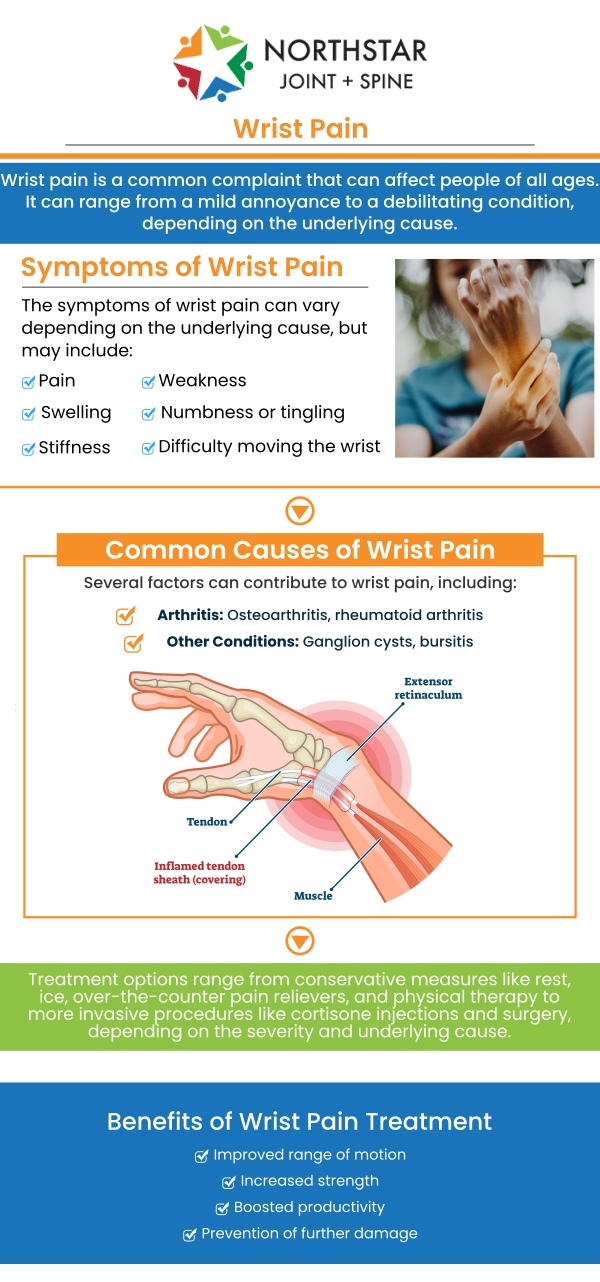
Table of Contents:
What is considered chronic wrist pain?
How long does wrist discomfort need to last before it is considered chronic?
What conditions may contribute to chronic wrist pain?
Can chronic wrist pain affect grip strength and hand coordination?
How is chronic wrist pain evaluated?
How is a chronic wrist pain treatment plan personalized?
Explore Chronic Wrist Pain Treatment With Board-Certified Dr. Robert J. Nocerini, MD at Northstar Joint and Spine
Chronic wrist pain can make typing, writing, gripping, lifting, opening containers, and completing routine hand movements uncomfortable. Symptoms may remain localized around the wrist or extend into the hand, fingers, forearm, or arm. Depending on the underlying cause, patients may also experience stiffness, burning, tingling, numbness, weakness, swelling, or reduced grip control.
At NorthStar Joint & Spine in Plano, TX, board-certified Dr. Robert J. Nocerini, MD, evaluates persistent wrist discomfort and nerve-related hand symptoms. Board-certified in Pain Medicine and Anesthesiology, he brings more than 26 years of clinical experience to each consultation. Dr. Nocerini considers the location, duration, and pattern of symptoms, as well as the patient’s medical history, diagnostic findings, previous care, daily hand-use demands, and functional goals.
Wrist pain may be considered chronic when it continues for approximately 12 weeks or longer. The discomfort may remain present every day, occur during specific movements, or improve temporarily before returning. Chronic symptoms can involve the joints, nerves, tendons, ligaments, or other structures that support wrist and hand movement.
Patients may describe chronic wrist pain as:
• Persistent aching or soreness
• Burning or electric-like discomfort
• Stiffness after rest or inactivity
• Tingling or numbness in the fingers
• Weakness while gripping objects
• Clicking or catching during movement
• Reduced wrist flexibility
• Discomfort that extends into the hand or forearm
• Symptoms that worsen during typing or repetitive hand use
• Pain that interrupts sleep
The duration of symptoms is only one part of the evaluation. Wrist discomfort may need medical attention sooner when it is accompanied by increasing numbness, weakness, reduced coordination, swelling, or difficulty holding objects. Dr. Nocerini evaluates how the symptoms affect everyday activities rather than relying only on how long they have been present.
Wrist discomfort is commonly described as chronic when it lasts for three months or longer. However, patients do not need to wait 12 weeks before seeking an evaluation. Pain that continues for several days or weeks, repeatedly returns, or becomes more difficult to manage may benefit from medical assessment.
Earlier evaluation may be appropriate when symptoms:
• Interfere with typing, writing, or gripping
• Become more frequent or intense
• Cause numbness or tingling
• Affect sleep
• Reduce hand strength
• Spread into the fingers, forearm, or arm
• Occur in both wrists
• Make objects feel difficult to hold securely
• Do not improve with basic activity adjustments
The timing and progression of symptoms can provide useful diagnostic information. Discomfort that appears mainly at night may suggest a different contributing factor than pain caused by wrist rotation or prolonged gripping. Morning stiffness may point toward joint-related changes, while burning or tingling may indicate nerve involvement.
Dr. Nocerini asks when the symptoms began, whether they are constant or intermittent, and which activities or wrist positions affect them. This information helps guide the examination and determine whether diagnostic testing may be useful.
Several conditions may contribute to ongoing wrist discomfort. Some involve the joints or surrounding tissues, while others affect nerves that travel through the wrist, arm, or cervical spine.
Possible contributing conditions include:
• Carpal tunnel syndrome
• Peripheral nerve compression
• Peripheral neuropathy
• Arthritis-related joint changes
• Rheumatoid arthritis
• Tendon irritation
• Ligament irritation
• Repeated pressure on the wrist
• Joint inflammation
• Cervical nerve irritation
• Diabetes-related nerve changes
• Persistent muscle tension in the forearm
Carpal tunnel syndrome may cause numbness, tingling, burning, or weakness affecting the thumb, index finger, middle finger, or part of the ring finger. Symptoms may become more noticeable at night or when the wrist remains bent for a prolonged period.
Arthritis-related changes may cause aching, swelling, stiffness, or reduced wrist movement. Rheumatoid arthritis may affect both wrists and may be associated with extended morning stiffness or symptoms involving additional joints.
Not every wrist symptom originates within the wrist itself. A nerve in the neck or arm may produce discomfort that travels into the wrist, hand, or fingers. Dr. Nocerini evaluates symptom distribution, sensation, grip comfort, wrist movement, and relevant diagnostic findings to determine whether the source appears localized or connected to another area.
Yes, chronic wrist pain can affect grip strength and hand coordination. Pain may cause patients to avoid fully using the wrist or hand, while stiffness may limit the position needed for a secure grip. Numbness or altered sensation can also make it harder to control small objects or judge how firmly something is being held.
Patients may experience difficulty with:
• Opening jars or containers
• Carrying bags
• Holding cups or utensils
• Turning keys or door handles
• Typing or using a computer mouse
• Writing for extended periods
• Buttoning clothing
• Picking up coins or small objects
• Holding a phone
• Maintaining a steady grip
Nerve-related symptoms may cause objects to feel less secure in the hand. Some patients notice that they drop items more frequently or have difficulty completing precise finger movements. Weakness may also become more noticeable while pinching, twisting, or lifting.
Dr. Nocerini evaluates hand sensation, wrist movement, grip comfort, and the pattern of weakness or coordination changes. Treatment is based on the suspected source of symptoms and may include medication management, activity guidance, targeted injections, nerve blocks, or Peripheral Nerve Stimulation for selected patients with persistent nerve-related discomfort.
A chronic wrist pain evaluation begins with a detailed discussion of the patient’s symptoms and medical history. Dr. Nocerini may ask where discomfort is felt, whether it travels, how long it has been present, and which movements make it better or worse.
The assessment may include:
• Evaluating wrist and finger movement
• Checking areas of tenderness
• Assessing hand sensation
• Reviewing grip comfort and strength
• Identifying positions that reproduce symptoms
• Discussing numbness, tingling, or burning sensations
• Reviewing available imaging or nerve study findings
• Considering symptoms in the neck, arm, or forearm
• Discussing previous care and its results
• Reviewing how symptoms affect daily activities
Diagnostic findings are considered together with the patient’s reported symptoms and physical examination. This helps Dr. Nocerini distinguish between joint-related discomfort, nerve compression, peripheral neuropathy, or symptoms originating from another area.
A personalized treatment plan is based on the source, severity, and pattern of wrist symptoms. Dr. Nocerini also considers the patient’s medical history, current medications, previous treatment response, daily hand-use requirements, and functional goals.
Treatment recommendations may include medication management, activity modifications, targeted injections, nerve blocks, or Peripheral Nerve Stimulation when clinically appropriate. The initial plan may focus on one option so the patient’s response can be assessed clearly.
Progress is monitored by reviewing changes in:
• Pain frequency and intensity
• Wrist stiffness and movement
• Numbness or tingling
• Grip comfort
• Sleep interruptions
• Ability to type, lift, and hold objects
• Hand coordination
• Medication response
• Overall daily function
At NorthStar Joint & Spine, Dr. Robert J. Nocerini, MD, provides individualized chronic wrist pain care for patients in Plano and nearby communities, including Legacy West, Granite Park, Willow Bend, Frisco, Allen, Richardson, The Colony, and North Dallas. His goal is to identify possible contributing sources, reduce persistent discomfort, and support more comfortable wrist and hand use during everyday activities.
Board-certified in Pain Medicine and Anesthesiology, Dr. Robert J. Nocerini, MD, provides personalized chronic wrist pain care at NorthStar Joint & Spine in Plano, TX. He evaluates persistent aching, stiffness, burning, tingling, numbness, weakness, and discomfort that may extend into the hand, fingers, or forearm. Each assessment considers the duration and pattern of symptoms, diagnostic findings, medical history, previous care, and the effect wrist pain has on gripping, typing, lifting, and other daily activities.
Treatment recommendations are tailored to the suspected source and severity of symptoms. Care may include medication management, targeted injections, nerve blocks, activity guidance, or Peripheral Nerve Stimulation for selected patients with ongoing nerve-related discomfort. Dr. Nocerini monitors changes in pain, sensation, wrist movement, grip comfort, and hand coordination to help patients manage chronic symptoms and use their hands more comfortably. For more information, contact us today or schedule an appointment online. We are conveniently located at 7704 San Jacinto Pl Suite 200 Plano, TX 75024. We proudly serve patients from Plano TX, Frisco TX, Allen TX, McKinney TX, Richardson TX, Carrollton TX, Addison TX, The Colony TX, North Dallas TX, and surrounding communities throughout Collin County and the Dallas-Fort Worth area.

Check Out Our 5 Star Reviews


Additional Services You May Need
▸ Lower Back Pain
▸ Back Pain
▸ Shoulder Pain
▸ Chronic Pain
▸ Epidural Steroid Injections
▸ Spinal Cord Stimulation
▸ Viscosupplementation
▸ Genicular Nerve Blocks
▸ Facet Injections
▸ Joint Injections
▸ Sacroiliac Joint Injections
▸ Lumbar and Cervical
▸ Facet Medial Branch Blocks
▸ Diagnostic Nerve Blocks
▸ Medication Management
▸ Neck Pain Doctor
▸ Diabetic Peripheral Neuropathy
▸ Headaches
▸ Suboxone
▸ Peripheral Nerve Stimulation
▸ Wrist Pain
▸ Spine
▸ Joints
▸ Muscles
▸ Bones

Additional Services You May Need
▸ Lower Back Pain
▸ Back Pain
▸ Shoulder Pain
▸ Chronic Pain
▸ Epidural Steroid Injections
▸ Spinal Cord Stimulation
▸ Viscosupplementation
▸ Genicular Nerve Blocks
▸ Facet Injections
▸ Joint Injections
▸ Sacroiliac Joint Injections
▸ Lumbar and Cervical
▸ Facet Medial Branch Blocks
▸ Diagnostic Nerve Blocks
▸ Medication Management
▸ Neck Pain Doctor
▸ Diabetic Peripheral Neuropathy
▸ Headaches
▸ Suboxone
▸ Peripheral Nerve Stimulation
▸ Wrist Pain
▸ Spine
▸ Joints
▸ Muscles
▸ Bones





 Send Text
 How May I Help You?
