

What Are the Common Sore Wrist Causes?
Sore wrist causes may include joint inflammation, ligament irritation, repeated pressure, arthritis-related changes, or nerve compression. Symptoms can involve aching, stiffness, burning, tingling, numbness, weakness, or reduced grip comfort. Board-certified Dr. Robert J. Nocerini, MD, at NorthStar Joint & Spine evaluates the location, pattern, and severity of each patient’s symptoms. Each care plan is personalized according to the suspected source, medical history, diagnostic findings, and daily functional needs. For more information, contact us today or schedule an appointment online. We are conveniently located at 7704 San Jacinto Pl Suite 200 Plano, TX 75024.
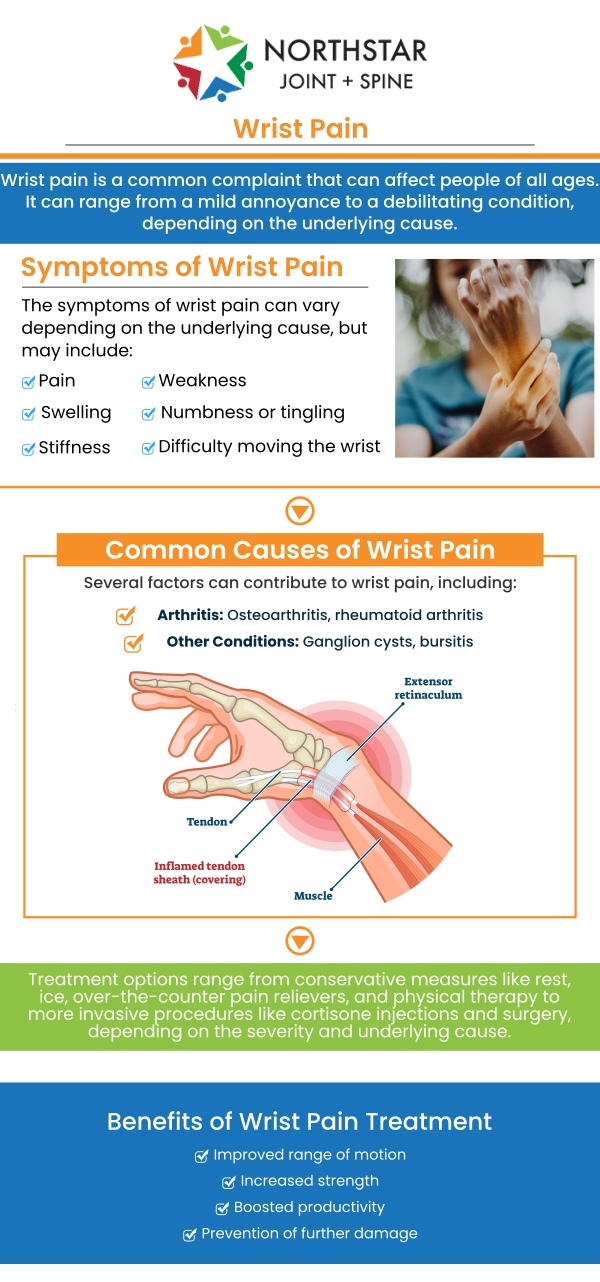
Table of Contents:
Can ligament strain contribute to soreness in the wrist?
Are nerve-related conditions linked to a sore wrist?
Can an untreated sprain lead to lasting wrist soreness?
Can wrist soreness develop from repeated pressure on the joint?
How are common sore wrist causes evaluated?
Understand Common Sore Wrist Causes With Board-Certified Dr. Robert J. Nocerini, MD at NorthStar Joint and Spine
A sore wrist may make typing, writing, gripping, lifting, turning a handle, or completing household tasks uncomfortable. Symptoms can develop gradually or become noticeable after repeated hand use. Depending on the cause, soreness may occur with stiffness, swelling, weakness, clicking, numbness, tingling, or discomfort that extends into the hand or forearm.
At NorthStar Joint & Spine in Plano, TX, board-certified Dr. Robert J. Nocerini, MD, evaluates persistent wrist soreness and nerve-related symptoms. Board-certified in Pain Medicine and Anesthesiology, he brings more than 26 years of clinical experience to each evaluation. Dr. Nocerini considers the location of discomfort, activities that worsen it, diagnostic findings, medical history, and the effect symptoms have on everyday hand function.
Yes, ligament strain can contribute to wrist soreness. Ligaments are strong bands of tissue that connect bones and help keep the wrist stable during movement. When a ligament is stretched beyond its comfortable range, the wrist may become tender, stiff, swollen, or painful during gripping and rotation.
Symptoms associated with ligament strain may include:
• Localized soreness around the wrist joint
• Tenderness when pressure is applied
• Swelling or mild discoloration
• Reduced comfort while bending the wrist
• Weakness when gripping or holding objects
• Pain during pushing or pulling movements
• A feeling of instability during hand use
The severity of symptoms depends on the ligament involved and the extent of tissue strain. Mild symptoms may improve with temporary activity adjustments, while persistent soreness may require further evaluation. Discomfort that continues, worsens, or affects hand strength should not be ignored.
Dr. Nocerini may evaluate wrist movement, tenderness, grip comfort, and joint stability. Available imaging or other diagnostic findings may also be reviewed when necessary to determine whether the symptoms involve a ligament, joint, tendon, or nearby nerve.
Yes, nerve-related conditions can cause soreness, burning, tingling, numbness, sensitivity, or weakness in the wrist and hand. A nerve may become compressed or irritated near the wrist, forearm, elbow, or neck. The location and pattern of symptoms can help indicate where the nerve may be affected.
Nerve-related wrist symptoms may include:
• Tingling in the fingers
• Numbness that becomes more noticeable at night
• Burning or electric-like discomfort
• Weakness while gripping objects
• Difficulty with fine hand movements
• Symptoms extending into the forearm
• Reduced sensation in part of the hand
• Discomfort that worsens during prolonged wrist positioning
Carpal tunnel syndrome is one possible cause of wrist and hand symptoms. It occurs when the median nerve becomes compressed as it passes through a narrow space in the wrist. Other peripheral nerves may also contribute to symptoms depending on which fingers and areas of the hand are affected.
Wrist soreness can also originate from a nerve in the cervical spine. In these cases, symptoms may begin near the neck or shoulder and extend through the arm toward the wrist or hand. Dr. Nocerini evaluates sensation, strength, reflexes, symptom distribution, and wrist movement to help determine whether discomfort is localized or connected to another area.
Treatment recommendations depend on the source of nerve irritation. Care may include medication management, activity guidance, targeted nerve blocks, or Peripheral Nerve Stimulation for selected patients with persistent nerve-related discomfort.
A wrist sprain that does not receive appropriate evaluation or enough time to recover may contribute to ongoing soreness, stiffness, or reduced stability. Returning too quickly to activities that repeatedly load the wrist can continue to irritate sensitive tissues and make normal movement uncomfortable.
Possible signs of lingering wrist concerns include:
• Soreness that continues for several weeks
• Pain during gripping, twisting, or lifting
• Reduced wrist movement
• Weakness or difficulty holding objects
• Clicking or catching sensations
• Swelling that repeatedly returns
• A feeling that the wrist is unstable
• Discomfort during everyday hand use
Persistent symptoms do not always mean that a ligament remains strained. Joint irritation, tendon sensitivity, arthritis-related changes, or nerve compression can produce similar discomfort. This is why an assessment may be useful when soreness does not improve as expected.
Dr. Nocerini reviews how the symptoms began, whether they have changed, and which activities continue to cause discomfort. A focused examination can help determine whether additional diagnostic information is needed and guide an individualized care plan.
Yes, repeated pressure on the wrist may contribute to soreness and stiffness. Typing, gripping, lifting, using handheld tools, leaning on the wrist, or holding the hand in one position for extended periods can place ongoing demand on the joint and nearby tissues.
Repeated pressure may affect:
• Wrist joints
• Tendons surrounding the joint
• Ligaments that support wrist stability
• Nerves passing through narrow spaces
• Muscles controlling hand and finger movement
Symptoms may build gradually and become more noticeable later in the day. Some patients experience an ache across the wrist, while others notice burning, tingling, or weakness. Remaining in a bent wrist position for long periods may also increase pressure around nearby nerves.
Patients may benefit from changing positions regularly, pacing repetitive tasks, and avoiding movements that consistently increase symptoms. Complete inactivity is not always necessary, but activities should be adjusted when they repeatedly cause worsening soreness, numbness, or weakness.
A wrist evaluation begins with a discussion of when soreness started, where it is located, and which activities make it better or worse. Dr. Nocerini may ask whether symptoms extend into the hand, fingers, forearm, arm, or neck and whether numbness, tingling, weakness, or swelling is present.
The assessment may include:
• Reviewing medical history and current medications
• Evaluating wrist movement and joint tenderness
• Checking hand sensation and grip comfort
• Assessing finger and wrist strength
• Identifying positions that reproduce symptoms
• Reviewing available imaging or nerve study findings
• Determining how discomfort affects everyday activities
Treatment is based on the suspected source of symptoms rather than soreness alone. Recommendations may include medication management, targeted joint injections, nerve blocks, activity guidance, or Peripheral Nerve Stimulation when clinically appropriate. Dr. Nocerini monitors changes in pain, sensation, wrist movement, and hand function to determine whether the care plan is providing meaningful improvement.
NorthStar Joint & Spine provides personalized wrist evaluations for patients in Plano and nearby communities, including Legacy West, Granite Park, Willow Bend, Frisco, Allen, Richardson, The Colony, and North Dallas. Dr. Robert J. Nocerini, MD, focuses on helping patients understand the possible cause of wrist soreness and explore appropriate options for improved comfort and daily hand use.
Board-certified in Pain Medicine and Anesthesiology, Dr. Robert J. Nocerini, MD, evaluates persistent wrist soreness at NorthStar Joint & Spine. Common causes may include ligament irritation, joint inflammation, repeated pressure, arthritis-related changes, or nerve compression affecting the wrist and hand. Symptoms may involve aching, stiffness, burning, tingling, numbness, weakness, or reduced comfort while gripping, typing, lifting, and completing everyday tasks.
Dr. Nocerini carefully reviews the location and pattern of symptoms, medical history, diagnostic findings, and activities that increase discomfort. Treatment recommendations are personalized according to the suspected source, symptom severity, previous care, and functional needs. His goal is to reduce wrist discomfort, support hand function, and help patients perform daily activities more comfortably. For more information, contact us today or schedule an appointment online. We are conveniently located at 7704 San Jacinto Pl Suite 200 Plano, TX 75024. We proudly serve patients from Plano TX, Frisco TX, Allen TX, McKinney TX, Richardson TX, Carrollton TX, Addison TX, The Colony TX, North Dallas TX, and surrounding communities throughout Collin County and the Dallas-Fort Worth area.

Check Out Our 5 Star Reviews


Additional Services You May Need
▸ Lower Back Pain
▸ Back Pain
▸ Shoulder Pain
▸ Chronic Pain
▸ Epidural Steroid Injections
▸ Spinal Cord Stimulation
▸ Viscosupplementation
▸ Genicular Nerve Blocks
▸ Facet Injections
▸ Joint Injections
▸ Sacroiliac Joint Injections
▸ Lumbar and Cervical
▸ Facet Medial Branch Blocks
▸ Diagnostic Nerve Blocks
▸ Medication Management
▸ Neck Pain Doctor
▸ Diabetic Peripheral Neuropathy
▸ Headaches
▸ Suboxone
▸ Peripheral Nerve Stimulation
▸ Wrist Pain
▸ Spine
▸ Joints
▸ Muscles
▸ Bones

Additional Services You May Need
▸ Lower Back Pain
▸ Back Pain
▸ Shoulder Pain
▸ Chronic Pain
▸ Epidural Steroid Injections
▸ Spinal Cord Stimulation
▸ Viscosupplementation
▸ Genicular Nerve Blocks
▸ Facet Injections
▸ Joint Injections
▸ Sacroiliac Joint Injections
▸ Lumbar and Cervical
▸ Facet Medial Branch Blocks
▸ Diagnostic Nerve Blocks
▸ Medication Management
▸ Neck Pain Doctor
▸ Diabetic Peripheral Neuropathy
▸ Headaches
▸ Suboxone
▸ Peripheral Nerve Stimulation
▸ Wrist Pain
▸ Spine
▸ Joints
▸ Muscles
▸ Bones





 Send Text
 How May I Help You?
