

Wrist Pain Treatment in Plano, TX
If wrist pain is interfering with your daily tasks, effective treatment is key to recovery. Board-Certified Dr. Robert J. Nocerini, MD, at Northstar Joint and Spine, focuses on identifying the cause of your wrist pain and developing a customized plan to alleviate it. Whether caused by repetitive stress or wear-and-tear, our team utilizes a variety of treatments to reduce inflammation, restore function, and help you regain comfort and movement in your wrist. For more information, contact us today or schedule an appointment online. We are conveniently located at 7704 San Jacinto Pl Suite 200 Plano, TX 75024.
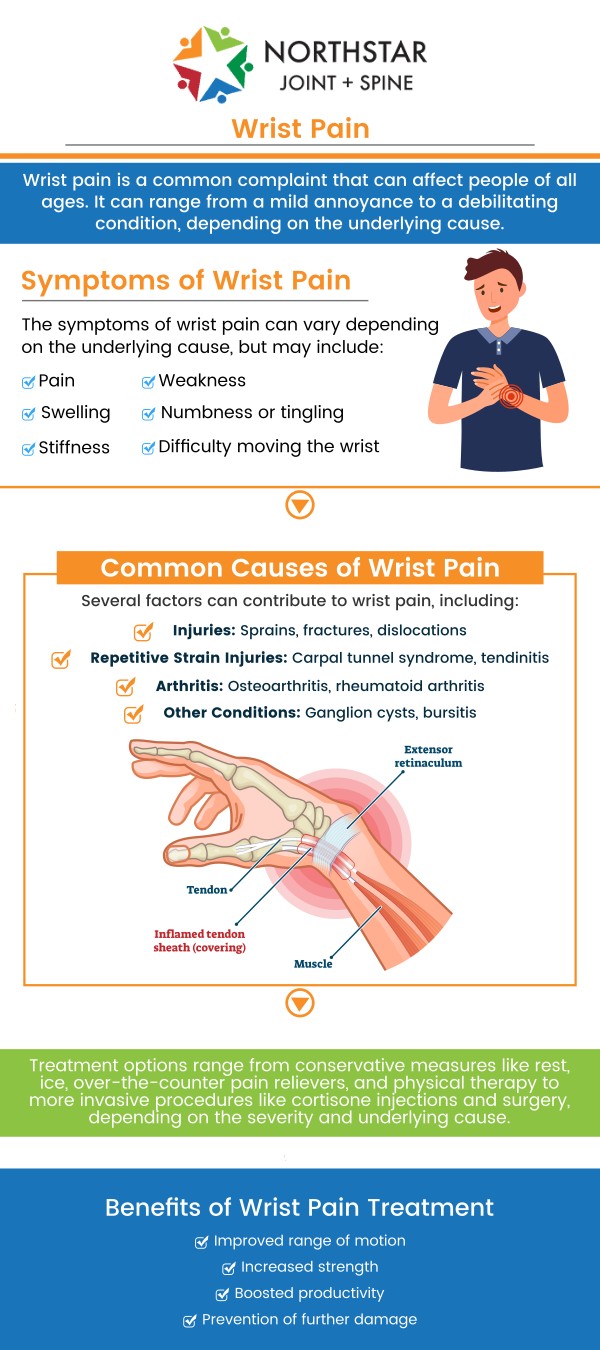
Table of Contents:
How do I know if my wrist pain is serious?
What can cause wrist pain?
Why do my wrists hurt so much?
How can I relieve wrist pain?
Which doctor should I see for wrist pain in Plano, TX?
How Does Board-Certified Dr. Robert Nocerini at Northstar Joint and Spine in Plano, TX Treat Wrist Pain?
The wrists are complex joints that connect the forearms to the hands. They enable several important functions that are fundamental to our day-to-day lives, including writing, eating, drinking, and driving. Because the wrists are used all throughout the day, they can be subjected to wear and tear, which can result in pain and limited range of motion. They can also cause pain when strained, which can limit strength and mobility. Fortunately, there are medical professionals who dedicate their practice to treating wrist pain and can help their patients restore form and function to these important joints.
Recognizing when wrist pain requires prompt medical attention can help you protect long-term comfort and mobility. While many mild cases improve naturally with rest and simple care, certain signs suggest that the discomfort may be more significant and should be evaluated by a healthcare professional. Paying attention to the intensity of your symptoms and how they affect your daily routine can guide you in deciding when it’s time to seek help.
Some indicators that your wrist pain may need medical attention include the inability to twist the wrist, difficulty holding or gripping objects, or persistent discomfort that interferes with normal tasks. You may also notice warmth, redness, or swelling that does not improve, or pain that remains unchanged despite home care such as gentle stretching or support. If your discomfort lasts longer than two weeks or continues to interrupt sleep, work, or daily activities, a professional evaluation is recommended. Visible changes in the wrist’s shape or alignment, or sensations such as clicking, weakness, or stiffness that worsen over time, may also signal the need for assessment.
Persistent wrist pain can be connected to issues involving the joints, tendons, ligaments, or surrounding soft tissues. A healthcare provider can perform a detailed examination, determine the underlying cause, and recommend targeted care to restore comfort and function. Seeking guidance early helps prevent ongoing strain, protects your range of motion, and ensures you receive timely support tailored to your specific needs.
Wrist pain can develop for many different reasons, and understanding the possible causes can help you identify when it’s time to seek professional evaluation. In many cases, discomfort develops gradually due to overuse, underlying health conditions, or changes in the structures within the wrist. Below are some of the most common reasons people experience ongoing or recurring wrist pain.
Repetitive Stress
Repeated motions—such as typing, lifting, or certain sports movements—can place continuous pressure on the wrist. Over time, this repetitive strain may lead to discomfort, stiffness, and reduced flexibility.
Carpal Tunnel Syndrome
This condition occurs when the median nerve becomes compressed as it passes through the carpal tunnel in the wrist. People often experience tingling, numbness, and weakness, especially during activities that require gripping.
Rheumatoid Arthritis
As an autoimmune condition, rheumatoid arthritis can cause inflammation in the wrist joints. This often leads to swelling, tenderness, stiffness, and limited motion, especially in the morning or after periods of rest.
Osteoarthritis
Osteoarthritis develops when cartilage within the wrist joint gradually wears down. This can result in pain, grinding sensations, and decreased ease of movement.
Ganglion Cysts
These fluid-filled cysts commonly appear along the wrist and can cause discomfort, pressure, or changes in the way the wrist feels during certain motions.
Tendon Conditions
Tendon-related issues can lead to pain during lifting, gripping, or repetitive hand activities. These concerns often develop gradually and can cause localized tenderness.
Kienbock’s Disease
This condition affects blood flow to one of the small wrist bones. Over time, limited circulation can lead to ongoing pain, stiffness, and reduced function.
Nerve Compression
Beyond carpal tunnel, other nerves in the wrist and forearm can become compressed, causing discomfort, tingling, or a feeling of weakness.
Soft Tissue Strain
Overuse and daily mechanical stress can affect the ligaments and surrounding soft tissues, causing soreness and difficulty with certain movements.
If wrist pain persists, becomes more frequent, or starts to limit your daily activities, a professional evaluation can help determine the exact cause and guide you toward effective treatment.
There are several reasons why an individual may be experiencing wrist pain, from soft tissue conditions to degenerative conditions, including tendonitis, arthritis, and repetitive strain.
Wrist Sprain — The ligaments of the wrist can become stretched beyond their normal limits, known as a sprain. This often results from excessive strain, repetitive use, or overextension. Symptoms include pain, swelling, and limited movement. Treatment typically involves rest, ice, and physical therapy.
Wrist Tendonitis — Inflammation of the tendons is known as tendonitis, which can affect any of these connective tissues. Wrist tendonitis can develop when one or more tendons become inflamed, which causes a dull, aching pain, along with morning stiffness and, sometimes, mild swelling or warmth.
Wrist Tenosynovitis — The term “tenosynovitis” is often used interchangeably with “tendonitis,” and while these two conditions are distinct, they often cause the same symptoms.
Carpal Tunnel Syndrome — Affecting 7.8 percent of American workers, carpal tunnel syndrome is one of the most common wrist conditions in the United States. In most cases, it results from dysfunction of one of the nerves in the wrist, and can cause pain, tenderness, discomfort and limited range of motion.
Arthritis — There are a few different types of arthritis that may affect the wrist, including rheumatoid arthritis (RA), gout arthritis, osteoarthritis (OA) and septic bacterial arthritis.
Ganglion Cyst — Ganglion cysts are benign, fluid-filled capsules that cause swelling and/or pain and can occur along any tendon sheath, including the wrists.
Cubital Tunnel Syndrome — Also known as ulnar neuropathy, cubital tunnel syndrome results when the ulnar nerve (also known as the funny bone nerve) is compressed.
Carpal Boss — Carpal bosses are firm, immovable bumps on the back of the hand/wrist, and are created by a small area of osteoarthritis occurring at the junction of the wrist bones.
Finding relief from wrist pain often begins with simple, supportive steps you can take at home. Many people benefit from gentle stretching that helps improve flexibility in the hand, fingers, and forearm. Strength-building exercises can also promote better stability, reducing strain during everyday activities. Alternating warm and cool applications may ease stiffness and soothe discomfort, while periods of rest give the wrist time to settle. Some individuals also find relief through ergonomic adjustments, such as modifying their keyboard position, using supportive mouse pads, or taking regular breaks during repetitive tasks.
If these methods do not provide enough improvement, consulting a healthcare professional like Dr. Robert J. Nocerini, MD, at Northstar Joint and Spine in Plano, TX, is recommended. Dr. Nocerini can evaluate the underlying cause of your discomfort and suggest targeted strategies to restore comfortable movement. Depending on the nature of your symptoms, he may recommend personalized stretching routines, supportive bracing, or coordinated physical therapy to improve flexibility, strength, and wrist function. Additional therapeutic options may be offered to reduce ongoing irritation and enhance daily mobility.
If you’re searching for a trusted doctor for wrist pain in Plano, TX, Dr. Robert J. Nocerini, MD, at Northstar Joint and Spine offers attentive, personalized care focused on restoring comfortable movement and reducing ongoing discomfort. As a board-certified pain management specialist with extensive experience in diagnosing wrist-related concerns, he takes a thoughtful, detailed approach to understanding what may be causing your symptoms and how they’re affecting your daily life.
During your visit, Dr. Nocerini takes time to discuss when your wrist pain started, what activities make it worse, and how it impacts tasks such as typing, lifting, or simple day-to-day motions. He performs a careful evaluation to pinpoint the source of your discomfort and recommends only the most appropriate testing if needed. His approach centers on clarity, comfort, and developing a plan that aligns with your goals.
Treatment options may include targeted therapies to ease inflammation, procedures designed to improve joint function, or supportive strategies that enhance mobility and reduce strain. Dr. Nocerini explains every step so you feel informed and confident about your care. Patients appreciate his calm manner, strong communication, and commitment to offering modern, effective solutions tailored to their needs.
If wrist pain is slowing you down or making everyday tasks more challenging, scheduling a visit with Dr. Robert J. Nocerini at Northstar Joint and Spine can help you find lasting relief through thoughtful, individualized care.
At Northstar Joint and Spine, Board-Certified Dr. Robert Nocerini, MD offers comprehensive wrist pain treatment tailored to restore mobility and comfort. He evaluates the underlying causes of pain, whether related to overuse, inflammation, or joint disorders, and develops targeted solutions that promote long-term relief. His treatment plans emphasize restoring strength and flexibility through a combination of advanced diagnostic tools and evidence-based therapies.
Dr. Nocerini’s wrist pain care approach focuses on optimizing hand and wrist function to support daily activities. Patients benefit from personalized care that includes non-surgical techniques, ultrasound-guided therapies, and precision-guided procedures to reduce discomfort and improve range of motion. With a commitment to individualized treatment, Dr. Nocerini ensures each patient receives the attention and care they deserve for lasting improvement.
Our kind and compassionate professionals are experienced in treating wrist pain with a variety of different therapies and can help you find relief so you can live your life without worrying about wrist pain. For more information, contact us today or schedule an appointment online. We are conveniently located at 7704 San Jacinto Pl Suite 200 Plano, TX 75024. We proudly serve patients from Plano TX, Frisco TX, Allen TX, McKinney TX, Richardson TX, Carrollton TX, Addison TX, The Colony TX, North Dallas TX, and surrounding communities throughout Collin County and the Dallas-Fort Worth area.

Check Out Our 5 Star Reviews


Additional Services You May Need
▸ Lower Back Pain
▸ Back Pain
▸ Shoulder Pain
▸ Chronic Pain
▸ Epidural Steroid Injections
▸ Spinal Cord Stimulation
▸ Viscosupplementation
▸ Genicular Nerve Blocks
▸ Facet Injections
▸ Joint Injections
▸ Sacroiliac Joint Injections
▸ Lumbar and Cervical
▸ Facet Medial Branch Blocks
▸ Diagnostic Nerve Blocks
▸ Medication Management
▸ Neck Pain Doctor
▸ Diabetic Peripheral Neuropathy
▸ Headaches
▸ Suboxone
▸ Peripheral Nerve Stimulation
▸ Wrist Pain
▸ Spine
▸ Joints
▸ Muscles
▸ Bones

Additional Services You May Need
▸ Lower Back Pain
▸ Back Pain
▸ Shoulder Pain
▸ Chronic Pain
▸ Epidural Steroid Injections
▸ Spinal Cord Stimulation
▸ Viscosupplementation
▸ Genicular Nerve Blocks
▸ Facet Injections
▸ Joint Injections
▸ Sacroiliac Joint Injections
▸ Lumbar and Cervical
▸ Facet Medial Branch Blocks
▸ Diagnostic Nerve Blocks
▸ Medication Management
▸ Neck Pain Doctor
▸ Diabetic Peripheral Neuropathy
▸ Headaches
▸ Suboxone
▸ Peripheral Nerve Stimulation
▸ Wrist Pain
▸ Spine
▸ Joints
▸ Muscles
▸ Bones





 Send Text
 How May I Help You?
