

What Is Peripheral Nerve Stimulation (PNS)?
Peripheral Nerve Stimulation (PNS) is a non-invasive treatment that targets specific nerves to block pain signals, offering relief from chronic conditions. It is particularly effective for patients dealing with neuropathy, complex regional pain syndrome, and other nerve-related pain. By using a small implanted device, PNS delivers electrical impulses to interrupt pain transmission, helping patients regain mobility and reduce their reliance on medication. At Northstar Joint and Spine in Plano, TX, Board-Certified Dr. Robert J. Nocerini, MD, offers tailored PNS therapy to improve the quality of life for those with chronic pain. For more information, contact us today or schedule an appointment online. We are conveniently located at 7704 San Jacinto Pl Suite 200 Plano, TX 75024.
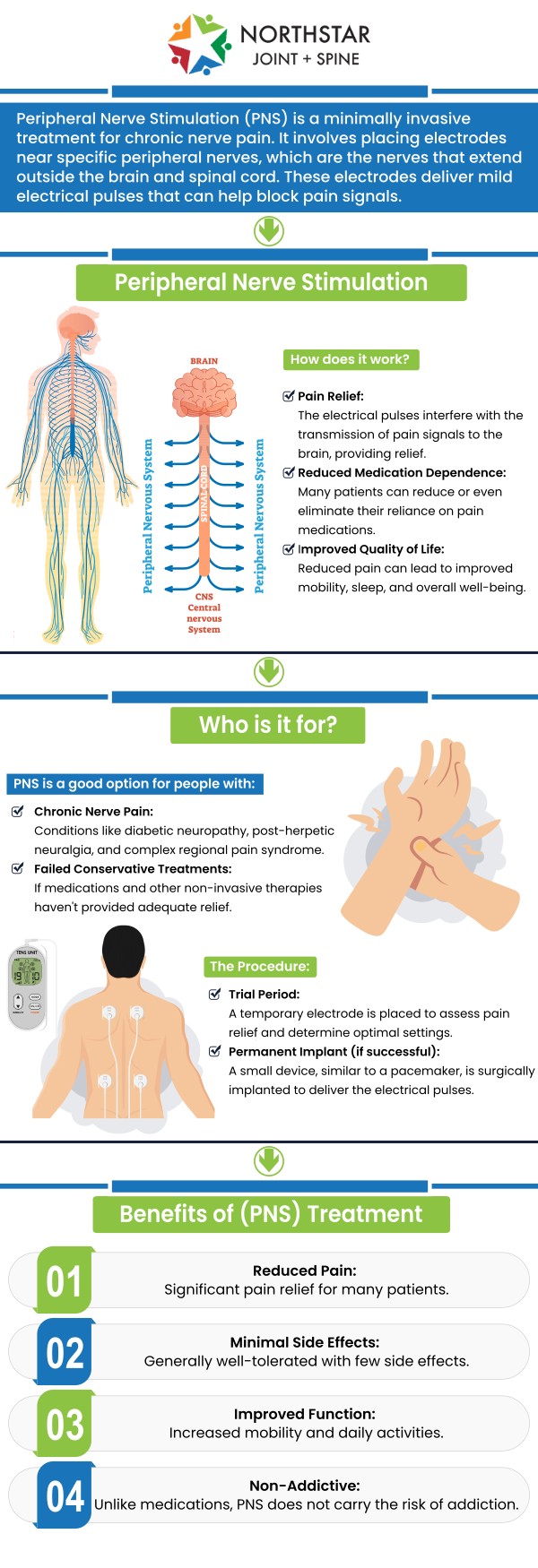
Table of Contents:
What conditions can peripheral nerve stimulation help treat?
What is the success rate of peripheral nerve stimulation?
Who is an ideal candidate for peripheral nerve stimulation therapy?
What are the main benefits of peripheral nerve stimulation?
How long does the relief from Peripheral Nerve Stimulation last?
Peripheral Nerve Stimulation for Long-Term Pain Relief With Dr. Robert J. Nocerini, MD in Plano, TX
Peripheral nerve stimulation (PNS) is an effective treatment for a variety of chronic conditions. It can help manage pain caused by neuropathic issues, such as peripheral neuropathy, which affects the hands and feet. PNS can also be beneficial for patients experiencing pain from conditions like complex regional pain syndrome (CRPS), failed back surgery syndrome, and chronic headaches. Patients dealing with fibromyalgia, sciatica, or other chronic conditions affecting the nerves may also benefit from PNS. The therapy works by stimulating the nerves to interrupt pain signals, providing long-lasting relief for individuals whose pain has not been alleviated by traditional methods.
At Northstar Joint and Spine, Dr. Robert J. Nocerini, MD, offers personalized treatment plans using PNS to provide relief to patients suffering from these chronic conditions. By targeting specific nerves responsible for pain, PNS can significantly improve the quality of life for many patients.
The success rate of peripheral nerve stimulation (PNS) varies depending on the individual and their specific condition. However, studies show that PNS can provide significant relief to up to 70% of patients who undergo the procedure. Many patients report a noticeable reduction in pain and an improvement in function after receiving PNS treatment. While not all patients may experience complete relief, PNS remains a promising option for individuals seeking alternatives to medication or more invasive procedures.
Dr. Robert J. Nocerini, MD, at Northstar Joint and Spine, works closely with each patient to determine the potential benefits of PNS, ensuring a tailored approach to maximize success. By evaluating the patient’s specific condition, medical history, and treatment goals, Dr. Nocerini helps patients achieve the best possible outcomes.
Ideal candidates for peripheral nerve stimulation therapy are individuals who have chronic pain that has not responded well to traditional treatments, including medication, physical therapy, or other forms of intervention. PNS is particularly helpful for those with nerve-related pain, such as patients suffering from neuropathy or complex regional pain syndrome. Those who have not found adequate relief from other treatments may benefit from the non-invasive nature of PNS.
Patients who are considering PNS should also be in good overall health, as this helps ensure the effectiveness of the procedure and minimizes risks. Dr. Robert J. Nocerini, MD, at Northstar Joint and Spine, carefully assesses each patient to determine if PNS is an appropriate treatment for their unique pain condition.
Peripheral nerve stimulation offers several key benefits, making it a preferred treatment for many individuals with chronic pain. First and foremost, PNS provides targeted pain relief, focusing on specific nerves responsible for discomfort. This precision can help minimize overall medication use and reduce the risk of side effects from pharmaceuticals.
Another benefit is the minimally invasive nature of PNS. The procedure involves implanting a small device near the nerve, which can be done with a relatively quick recovery period. Most patients experience minimal downtime, allowing them to return to normal activities much faster than with more invasive treatments.
PNS also offers long-term pain management for individuals who have not had success with other treatments. Dr. Robert J. Nocerini, MD, and the team at Northstar Joint and Spine aim to help patients regain control of their lives by providing consistent relief from chronic pain.
The duration of pain relief provided by peripheral nerve stimulation (PNS) can vary from patient to patient. Some individuals experience relief for several months, while others may enjoy long-term benefits that last for years. The length of time the relief lasts depends on various factors, including the specific condition being treated, the patient’s overall health, and the proper placement of the stimulator.
For many patients, the relief from PNS significantly improves their quality of life and can reduce the need for ongoing pain medications. Regular follow-up visits with Dr. Robert J. Nocerini, MD, at Northstar Joint and Spine, can help determine the long-term effectiveness of the treatment and whether any adjustments are needed to maintain pain relief.
Dr. Nocerini is committed to providing long-term solutions for chronic pain relief, ensuring that each patient receives the most effective care possible.
If you’re struggling with chronic pain that hasn’t responded to traditional treatments, Peripheral Nerve Stimulation (PNS) could provide the relief you need. At Northstar Joint and Spine in Plano, TX, Dr. Robert J. Nocerini, MD, specializes in offering PNS therapy to patients suffering from conditions like neuropathy, complex regional pain syndrome, and failed back surgery syndrome. By targeting specific nerves, PNS blocks pain signals from reaching the brain, offering a long-term, non-invasive solution that doesn’t rely on medication. Dr. Nocerini’s personalized approach ensures that each patient receives customized care for optimal pain relief and improved quality of life.
At Northstar Joint and Spine in Plano, Dr. Nocerini works closely with each patient to develop a treatment plan tailored to their specific needs. With Peripheral Nerve Stimulation, patients can experience significant pain reduction, better mobility, and fewer dependencies on pain medications. Located in Plano, TX, Northstar Joint and Spine is committed to providing advanced pain management options, offering PNS as a safe and effective alternative for long-term pain control. For more information, contact us today or schedule an appointment online. We are conveniently located at 7704 San Jacinto Pl Suite 200 Plano, TX 75024. We proudly serve patients from Plano TX, Frisco TX, Allen TX, McKinney TX, Richardson TX, Carrollton TX, Addison TX, The Colony TX, North Dallas TX, and surrounding communities throughout Collin County and the Dallas-Fort Worth area.

Check Out Our 5 Star Reviews


Additional Services You May Need
▸ Lower Back Pain
▸ Back Pain
▸ Shoulder Pain
▸ Chronic Pain
▸ Epidural Steroid Injections
▸ Spinal Cord Stimulation
▸ Viscosupplementation
▸ Genicular Nerve Blocks
▸ Facet Injections
▸ Joint Injections
▸ Sacroiliac Joint Injections
▸ Lumbar and Cervical
▸ Facet Medial Branch Blocks
▸ Diagnostic Nerve Blocks
▸ Medication Management
▸ Neck Pain Doctor
▸ Diabetic Peripheral Neuropathy
▸ Headaches
▸ Suboxone
▸ Peripheral Nerve Stimulation
▸ Wrist Pain
▸ Spine
▸ Joints
▸ Muscles
▸ Bones

Additional Services You May Need
▸ Lower Back Pain
▸ Back Pain
▸ Shoulder Pain
▸ Chronic Pain
▸ Epidural Steroid Injections
▸ Spinal Cord Stimulation
▸ Viscosupplementation
▸ Genicular Nerve Blocks
▸ Facet Injections
▸ Joint Injections
▸ Sacroiliac Joint Injections
▸ Lumbar and Cervical
▸ Facet Medial Branch Blocks
▸ Diagnostic Nerve Blocks
▸ Medication Management
▸ Neck Pain Doctor
▸ Diabetic Peripheral Neuropathy
▸ Headaches
▸ Suboxone
▸ Peripheral Nerve Stimulation
▸ Wrist Pain
▸ Spine
▸ Joints
▸ Muscles
▸ Bones





 Send Text
 How May I Help You?
