

Back Pain That Does Not Improve With Rest in Plano, TX
Back pain that does not improve with rest may be related to underlying issues involving the muscles, joints, discs, or nerves of the spine. Persistent discomfort can interfere with daily activities, mobility, and overall quality of life, making professional evaluation important. Many patients in Plano, TX, seek care when their symptoms continue despite reducing activity or allowing time for recovery. At Northstar Joint and Spine, Dr. Robert J. Nocerini, MD, Board-Certified, evaluates persistent back pain to identify the source of discomfort and provide personalized treatment recommendations based on each patient’s condition. For more information, contact us today or book an appointment online. We are conveniently located at 7704 San Jacinto Pl Suite 200 Plano, TX 75024.
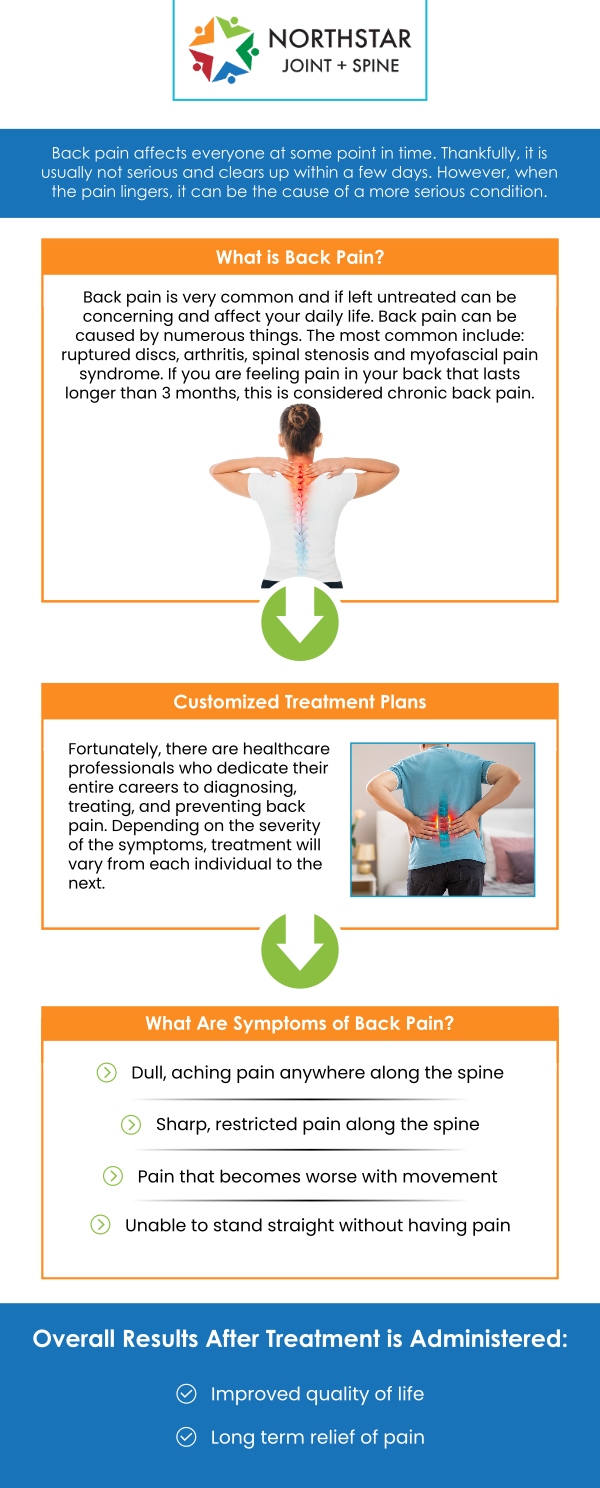
Table of Contents:
Understanding Back Pain That Does Not Improve With Rest
What causes back pain that does not improve with rest?
Can persistent back pain indicate an underlying spinal condition?
Why does back pain continue even after avoiding activities?
How Is Persistent Back Pain Evaluated at Northstar Joint and Spine?
When should ongoing back pain be checked by a specialist?
Treatment Options for Back Pain That Does Not Improve With Rest in Plano, TX
Find Persistent Back Pain Care in Plano, TX
Back pain that does not improve with rest can be frustrating and concerning, especially when taking a break from activities does not provide the relief you expected. Many people assume that resting will allow back discomfort to resolve, but persistent symptoms may indicate that a deeper issue needs to be evaluated. Ongoing back pain can involve muscles, joints, spinal discs, nerves, or other structures that require a more detailed assessment.
Patients throughout Plano, TX, including communities such as West Plano, Frisco, and Allen, often seek answers when back pain begins affecting their ability to work, sleep comfortably, exercise, or complete daily responsibilities. At Northstar Joint and Spine, Board-certified Dr. Robert J. Nocerini, MD, focuses on identifying the source of persistent back pain through a comprehensive evaluation and personalized treatment approach.
Understanding why pain continues despite rest can help patients recognize when professional care may be beneficial and what steps may help improve their quality of life.
Rest can sometimes help the body recover from temporary discomfort, but it is not always enough to resolve ongoing back pain. The spine is a complex structure made up of vertebrae, discs, joints, muscles, and nerves that work together during movement and daily activities.
When one of these structures continues to contribute to symptoms, simply reducing activity may not address the underlying cause. Some conditions require targeted treatment to reduce discomfort and restore function.
• Persistent back pain may appear as:
• Constant aching or pressure in the lower back
• Pain that returns after temporary relief
• Stiffness that affects movement
• Discomfort that worsens with certain positions
• Pain that extends into the hips, buttocks, or legs
Understanding the pattern of symptoms helps providers determine what may be contributing to ongoing discomfort.
Several conditions may contribute to back pain that continues even after reducing physical activity. Common causes include:
Spinal Disc Changes
The discs between the vertebrae act as cushions that help absorb pressure during movement. Changes in these discs may contribute to ongoing discomfort, especially when they affect nearby spinal structures.
Some patients may experience:
• Persistent lower back pain
• Increased discomfort with certain positions
• Pain that may extend into other areas
A detailed evaluation can help determine whether disc-related changes may be contributing to symptoms.
Facet Joint Problems
Facet joints help support spinal movement and stability. When these small joints become irritated, pain may continue even when a person reduces activity.
• Facet-related symptoms may include:
• Pain with standing or extending the back
• Stiffness after periods of inactivity
• Discomfort during twisting movements
Nerve-Related Conditions
Back pain that does not improve with rest may sometimes involve irritation around spinal nerves. When nerves are affected, symptoms may feel sharper or may travel beyond the lower back.
• Possible signs include:
• Pain extending into the buttocks or legs
• Tingling sensations
• Numbness
• Changes in strength or movement
Inflammatory Conditions Affecting the Spine
Some inflammatory conditions can cause persistent back pain that does not respond well to simple rest. These conditions may require specialized evaluation to determine the appropriate management approach.
Degenerative Spine Changes
Over time, changes in the spine may affect how joints, discs, and other structures function. These changes may contribute to ongoing discomfort that continues despite activity modification.
Yes, persistent back pain may sometimes be associated with an underlying spinal condition. While many cases of back pain improve with conservative care, symptoms that continue despite rest may require a closer evaluation.
Some spinal conditions that may contribute to ongoing pain include:
• Disc-related conditions
• Facet joint degeneration
• Spinal narrowing affecting nerves
• Nerve compression conditions
• Arthritis-related changes
Persistent symptoms do not always mean there is a serious condition, but they may indicate that the source of pain has not yet been identified.
At Northstar Joint and Spine, Board-certified Dr. Robert J. Nocerini, MD, reviews each patient’s symptoms, medical history, and physical findings to determine whether additional testing or targeted treatment may be appropriate.
Many patients expect back pain to disappear after limiting physical activity, but rest alone may not address the reason symptoms are occurring. Avoiding activities may temporarily reduce stress on the spine, but it does not always correct problems involving spinal structures.
Back pain may continue because:
The Source of Pain Has Not Been Identified
Without understanding the specific cause, patients may only be reducing activities without addressing the underlying problem.
The Spine Requires Targeted Care
Certain conditions may respond better to treatments designed for specific pain sources rather than general rest.
Weakness or Stiffness May Develop
Extended periods of reduced activity may contribute to stiffness and reduced support from surrounding muscles, which can sometimes affect comfort and mobility.
Nerve-Related Symptoms May Require Specialized Treatment
When nerves are involved, rest may not provide sufficient relief because the irritation may continue without targeted intervention.
A comprehensive evaluation can help determine why symptoms are lasting and what treatment options may be appropriate.
A thorough evaluation helps identify the structures contributing to ongoing discomfort. During an appointment, board-certified Dr. Robert J. Nocerini, MD, may review:
• How long have the symptoms been present
• The location and type of pain
• Activities that increase or reduce symptoms
• Whether pain affects sleep or daily function
• Whether symptoms extend into the legs or other areas
A physical examination may assess:
• Range of motion
• Muscle strength
• Movement patterns
• Areas of sensitivity
• Neurological function
Depending on the findings, diagnostic imaging may be considered to provide additional information about the spine and surrounding structures.
The goal is to understand the reason behind persistent pain rather than simply manage symptoms temporarily.
Back pain that continues despite rest may benefit from evaluation by a spine specialist, especially when symptoms begin interfering with normal activities.
Consider seeking professional guidance if:
• Pain continues for an extended period
• Symptoms repeatedly return
• Rest does not provide a meaningful improvement
• Daily activities become difficult
• Pain affects sleep or mobility
• Symptoms extend into the legs
• Numbness, tingling, or weakness develops
Early evaluation may help identify the source of discomfort and allow patients to explore appropriate treatment options.
Treatment for persistent back pain depends on the underlying cause, symptoms, and individual goals. After a complete evaluation, treatment options may include conservative approaches and minimally invasive procedures.
At Northstar Joint and Spine, available treatment approaches may include:
• Personalized pain management strategies
• Medication guidance when appropriate
• Physical therapy recommendations
• Epidural steroid injections for certain nerve-related conditions
• Nerve blocks to help identify and manage specific pain sources
• Other targeted spine treatments based on evaluation results
If you are experiencing back pain that does not improve with rest, you may be a candidate for specialized treatment options after determining the cause of your symptoms.
Back pain that continues despite rest can affect your comfort, movement, and daily routine. Understanding why symptoms are lasting is an important step toward finding an effective solution.
Northstar Joint and Spine provides personalized spine care for patients in Plano and surrounding areas. Under the guidance of Board-certified Dr. Robert J. Nocerini, MD, patients receive comprehensive evaluations focused on identifying the source of back pain and exploring appropriate treatment options.
Whether symptoms are related to spinal joints, discs, nerves, or other structures, a customized approach can help patients better understand their condition and make informed decisions about their care. For more information, contact us today or book an appointment online. We are conveniently located at 7704 San Jacinto Pl Suite 200 Plano, TX 75024. We proudly serve patients from Plano TX, Frisco TX, Allen TX, McKinney TX, Richardson TX, Carrollton TX, Addison TX, The Colony TX, North Dallas TX, and surrounding communities throughout Collin County and the Dallas-Fort Worth area.

Check Out Our 5 Star Reviews


Additional Services You May Need
▸ Lower Back Pain
▸ Back Pain
▸ Shoulder Pain
▸ Chronic Pain
▸ Epidural Steroid Injections
▸ Spinal Cord Stimulation
▸ Viscosupplementation
▸ Genicular Nerve Blocks
▸ Facet Injections
▸ Joint Injections
▸ Sacroiliac Joint Injections
▸ Lumbar and Cervical
▸ Facet Medial Branch Blocks
▸ Diagnostic Nerve Blocks
▸ Medication Management
▸ Neck Pain Doctor
▸ Diabetic Peripheral Neuropathy
▸ Headaches
▸ Suboxone
▸ Peripheral Nerve Stimulation
▸ Wrist Pain
▸ Spine
▸ Joints
▸ Muscles
▸ Bones

Additional Services You May Need
▸ Lower Back Pain
▸ Back Pain
▸ Shoulder Pain
▸ Chronic Pain
▸ Epidural Steroid Injections
▸ Spinal Cord Stimulation
▸ Viscosupplementation
▸ Genicular Nerve Blocks
▸ Facet Injections
▸ Joint Injections
▸ Sacroiliac Joint Injections
▸ Lumbar and Cervical
▸ Facet Medial Branch Blocks
▸ Diagnostic Nerve Blocks
▸ Medication Management
▸ Neck Pain Doctor
▸ Diabetic Peripheral Neuropathy
▸ Headaches
▸ Suboxone
▸ Peripheral Nerve Stimulation
▸ Wrist Pain
▸ Spine
▸ Joints
▸ Muscles
▸ Bones





 Send Text
 How May I Help You?
