

Diagnosis & Treatment for Pain and Swelling in the Wrist in Plano, TX
Pain accompanied by swelling in the wrist can make everyday hand movements surprisingly difficult. Typing, gripping a cup, turning a key, driving, or lifting household items may become uncomfortable when inflammation, joint changes, tendon irritation, or nerve-related problems affect the wrist. At NorthStar Joint & Spine in Plano, TX, our team looks beyond the visible swelling to determine what may be contributing to the symptoms. Board-Certified Dr. Robert J. Nocerini, MD, considers the location of discomfort, changes in sensation, movement limitations, medical history, and other clinical findings when developing an individualized pain management approach. For more information, contact us today or schedule an appointment online. We are conveniently located at 7704 San Jacinto Pl Suite 200 Plano, TX 75024.
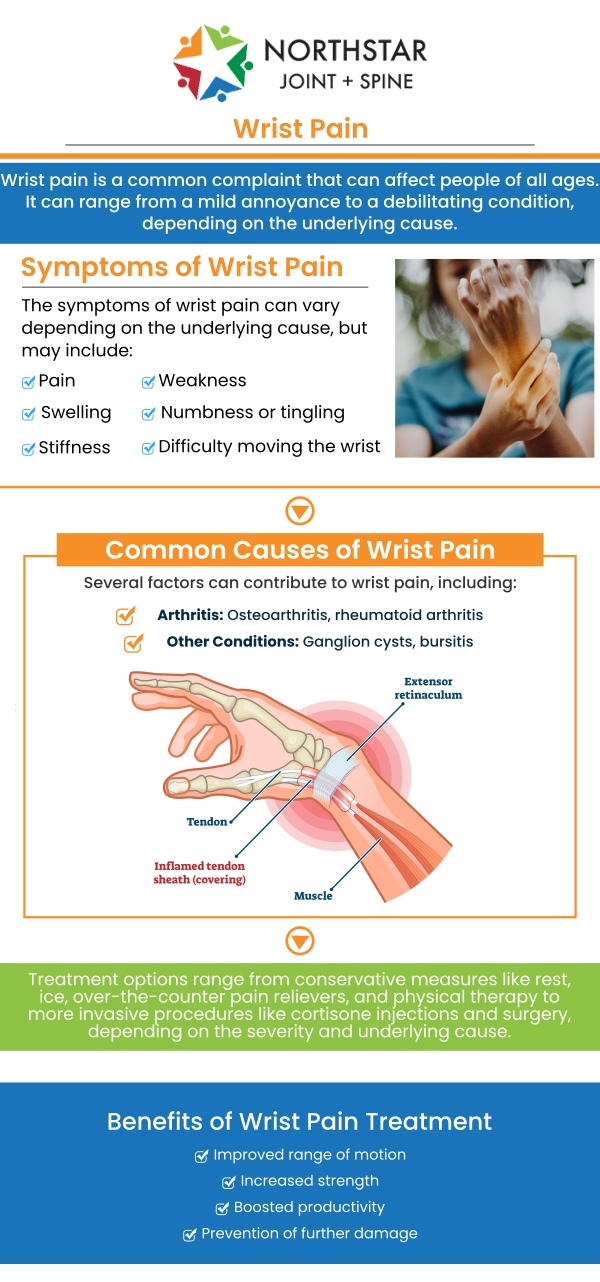
Table of Contents:
Understanding Pain and Swelling in the Wrist: When to Seek Immediate Care
What causes a wrist to suddenly swell and become painful?
What red-flag symptoms with wrist swelling require urgent specialist evaluation?
Common Causes of Wrist Swelling and Pain We Treat
Wrist Arthritis & Inflammatory Joint Effusions
How can I tell if my swollen wrist is caused by tendonitis, arthritis, or a cyst?
Why does swelling cause increased numbness or tingling in the fingers?
Advanced Diagnostics & Non-Surgical Treatments for Swollen Wrist Pain
What to Expect During Your Evaluation in Plano, TX
Should I apply heat or ice to a painful, swollen wrist?
Can wrist swelling lead to long-term joint or nerve damage if left untreated?
Can interventional procedures help me avoid surgical intervention for wrist pain and swelling?
How soon after treatment can I return to typing, driving, or daily household tasks?
Why choose NorthStar Joint & Spine for wrist pain & swelling relief?
Wrist swelling can develop for different reasons, and the timing of symptoms can provide useful information. A gradual increase in swelling may be associated with an underlying joint or soft-tissue condition, while sudden and significant swelling accompanied by other concerning symptoms may require prompt medical attention.
Our team recommends paying attention to changes such as:
• Rapidly increasing swelling
• Severe or unusual wrist pain
• Significant difficulty moving the wrist or fingers
• New numbness or loss of sensation
• Noticeable weakness in the hand
• Marked redness or warmth accompanied by fever
• Significant changes in hand color or temperature
These symptoms do not necessarily point to one specific diagnosis, but they should not be ignored. A timely assessment can help determine whether the problem involves the wrist joint, surrounding tissues, nerves, or another source.
Sudden wrist swelling and pain may have several possible explanations, including irritation within a joint, inflammation involving surrounding tissues, tendon problems, or a cystic structure. The cause cannot be determined from swelling alone.
The way symptoms appeared, the location of swelling, movement limitations, and any associated numbness or tingling can help narrow down possible causes. A professional evaluation is particularly important when symptoms appear abruptly or become difficult to manage.
Prompt evaluation is appropriate when wrist swelling is accompanied by severe pain, rapidly worsening symptoms, significant weakness, loss of sensation, major difficulty moving the hand, or pronounced redness and warmth with fever.
Changes such as a hand becoming unusually pale, blue, cold, or markedly different from the unaffected side also deserve immediate medical attention. Dr. Nocerini can assess persistent wrist symptoms and determine whether specialized pain management is appropriate.
Swelling and pain may involve one structure or several areas around the wrist. Determining the source is important because joint-related symptoms may require a different approach than nerve-related or tendon-related discomfort.
Potential contributors include:
• Wrist arthritis and degenerative joint changes
• Inflammation involving the wrist joint
• Tendon irritation
• Nerve compression
• Ganglion cysts
• Repetitive hand and wrist activity
• Conditions involving nearby nerves or the cervical spine
At NorthStar Joint & Spine, our evaluation focuses on distinguishing among these possibilities so that treatment recommendations are based on the patient’s actual presentation rather than the presence of swelling alone.
Arthritis-related changes may cause the wrist to become stiff, tender, and uncomfortable during movement. In some situations, irritation within the joint may also contribute to fluid accumulation, creating visible or palpable swelling.
Patients may notice greater discomfort with gripping, rotating the wrist, typing, or performing repetitive hand activities. Dr. Nocerini considers these symptom patterns along with examination findings when determining whether joint-related changes may be contributing to wrist pain and swelling.
Tendon-related problems often become more noticeable when a particular wrist or hand movement repeatedly engages the affected tendon. Arthritis tends to produce symptoms centered around the joint, such as stiffness, aching, and discomfort with movement.
A ganglion cyst may appear as a localized lump or area of fullness near the wrist and can sometimes cause discomfort or pressure on nearby structures. Because these conditions can overlap in appearance and symptoms, an examination may be needed to distinguish among them.
Swelling around the wrist can sometimes place additional pressure on nearby nerves. When a nerve becomes compressed or irritated, a person may experience tingling, numbness, burning, or altered sensation in parts of the hand or fingers.
The distribution of these sensations can provide useful information about which nerve may be involved. At NorthStar Joint & Spine, our team considers sensory changes alongside wrist symptoms to determine whether nerve-related factors may be contributing to the problem.
A treatment plan for wrist pain and swelling begins with identifying the most likely source of symptoms. Depending on the clinical findings, diagnostic imaging or additional evaluation may be considered to provide more information about the wrist joint, soft tissues, or surrounding structures.
Management options may include:
• Medication management when clinically appropriate
• Targeted injections for selected sources of wrist pain
• Nerve blocks for specific nerve-related pain patterns
• Joint-focused procedures when appropriate
• Diagnostic procedures that help identify a suspected pain source
• Peripheral nerve stimulation (PNS) for selected patients with persistent nerve-related pain
The right treatment depends on the diagnosis, symptom severity, medical history, and response to previous care. Our team discusses the purpose of a recommended procedure and considers whether its potential benefits fit the patient’s individual circumstances.
Board-Certified Dr. Robert J. Nocerini, MD, uses the findings from the evaluation to help determine whether a targeted, non-surgical approach may be appropriate for managing persistent wrist discomfort.
When you visit NorthStar Joint & Spine, we want to understand how your wrist symptoms developed and how they affect your normal activities. The evaluation is not limited to examining the swollen area; it also considers related symptoms that may help identify the underlying source.
Your consultation may involve discussion of:
• When swelling and pain first appeared
• Whether symptoms developed gradually or suddenly
• The exact location of swelling and tenderness
• Movements that increase discomfort
• Changes in wrist flexibility or hand function
• Numbness, tingling, burning, or weakness
• Repetitive activities involving the hand or wrist
• Previous treatment and your response
• Relevant medical history
A focused examination may assess wrist movement, strength, sensation, tenderness, and other findings. If additional diagnostic information is needed, appropriate imaging or testing may be considered.
Cold may be more comfortable for some people when swelling is prominent, while warmth may feel better when stiffness is the primary concern. Avoid placing either directly against the skin, and seek evaluation if swelling or pain persists or worsens.
Persistent swelling may reflect an underlying joint, tendon, or nerve problem that needs attention. Whether lasting problems develop depends on the underlying condition, so ongoing or worsening symptoms should be evaluated rather than ignored.
Some patients may benefit from targeted, non-surgical pain management depending on the source of their symptoms. However, no procedure can guarantee that surgery will never be necessary; the appropriate approach depends on the diagnosis and individual clinical findings.
The timeframe varies according to the procedure performed and your individual response. Dr. Nocerini provides activity guidance based on the treatment provided, your symptoms, and the demands of your normal routine.
Persistent wrist swelling can affect far more than hand comfort. It may interfere with work, computer use, driving, household responsibilities, and activities that require grip or wrist movement. Our team takes those practical concerns into account when evaluating your symptoms.
Dr. Robert J. Nocerini, MD, brings his experience in pain medicine and anesthesiology to the assessment of musculoskeletal and nerve-related pain. His approach centers on understanding the likely source of discomfort before recommending a treatment strategy.
At NorthStar Joint & Spine in Plano, TX, patients receive individualized attention throughout the evaluation process, with management recommendations shaped around their symptoms, clinical findings, medical history, and personal goals. For more information, contact us today or schedule an appointment online. We are conveniently located at 7704 San Jacinto Pl Suite 200 Plano, TX 75024. We proudly serve patients from Plano TX, Frisco TX, Allen TX, McKinney TX, Richardson TX, Carrollton TX, Addison TX, The Colony TX, North Dallas TX, and surrounding communities throughout Collin County and the Dallas-Fort Worth area.

Check Out Our 5 Star Reviews


Additional Services You May Need
▸ Lower Back Pain
▸ Back Pain
▸ Shoulder Pain
▸ Chronic Pain
▸ Epidural Steroid Injections
▸ Spinal Cord Stimulation
▸ Viscosupplementation
▸ Genicular Nerve Blocks
▸ Facet Injections
▸ Joint Injections
▸ Sacroiliac Joint Injections
▸ Lumbar and Cervical
▸ Facet Medial Branch Blocks
▸ Diagnostic Nerve Blocks
▸ Medication Management
▸ Neck Pain Doctor
▸ Diabetic Peripheral Neuropathy
▸ Headaches
▸ Suboxone
▸ Peripheral Nerve Stimulation
▸ Wrist Pain
▸ Spine
▸ Joints
▸ Muscles
▸ Bones

Additional Services You May Need
▸ Lower Back Pain
▸ Back Pain
▸ Shoulder Pain
▸ Chronic Pain
▸ Epidural Steroid Injections
▸ Spinal Cord Stimulation
▸ Viscosupplementation
▸ Genicular Nerve Blocks
▸ Facet Injections
▸ Joint Injections
▸ Sacroiliac Joint Injections
▸ Lumbar and Cervical
▸ Facet Medial Branch Blocks
▸ Diagnostic Nerve Blocks
▸ Medication Management
▸ Neck Pain Doctor
▸ Diabetic Peripheral Neuropathy
▸ Headaches
▸ Suboxone
▸ Peripheral Nerve Stimulation
▸ Wrist Pain
▸ Spine
▸ Joints
▸ Muscles
▸ Bones





 Send Text
 How May I Help You?
