

Thoracic Spine Pain Treatment in Plano, TX
Patients seeking thoracic spine pain treatment in Plano, TX, can receive personalized care from board-certified Dr. Robert J. Nocerini, MD, at Northstar Joint & Spine. He evaluates symptoms such as middle back pain, stiffness, muscle tightness, and discomfort that may spread around the ribs. Treatment recommendations are tailored to each patient’s diagnosis, medical history, symptom severity, and daily functional needs. For more information, contact us today or schedule an appointment online. We are conveniently located at 7704 San Jacinto Pl Suite 200 Plano, TX 75024.
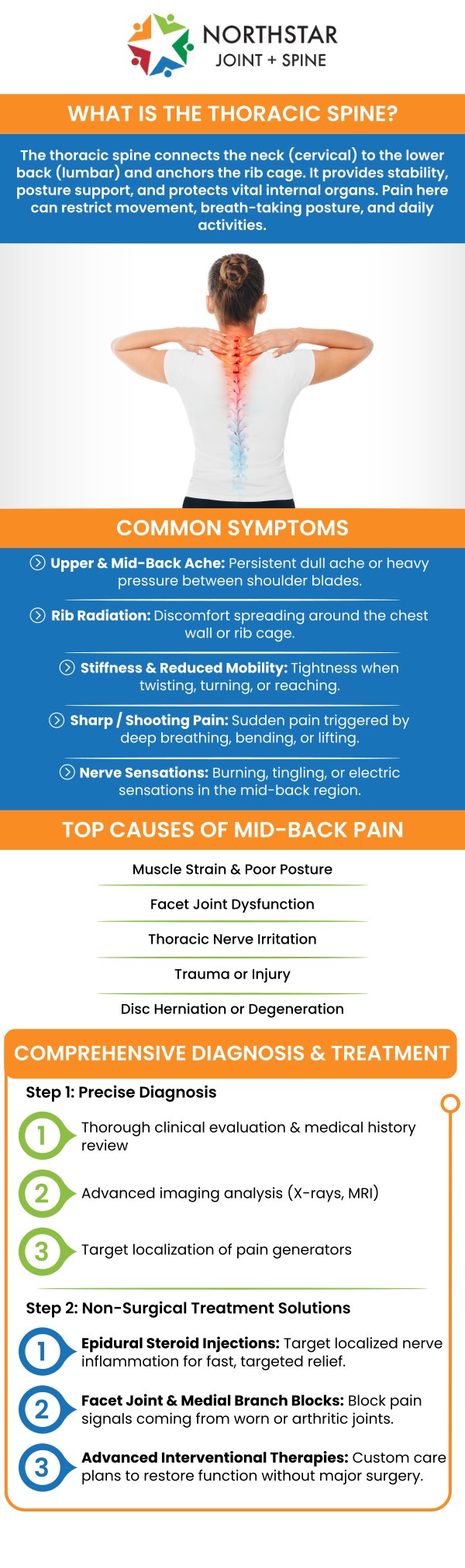
Table of Contents:
What is thoracic spine pain?
What are the common symptoms of thoracic spine pain?
What causes pain in the thoracic spine?
How is thoracic spine pain diagnosed?
When should thoracic spine pain be medically evaluated?
Explore Thoracic Spine Pain Treatment in Plano, TX With Board-Certified Dr. Robert J. Nocerini, MD at Northstar Joint and Spine
Thoracic spine pain affects the middle and upper portion of the back between the neck and lower back. Although this region is generally more stable than other areas of the spine, discomfort can still develop from changes involving the spinal joints, discs, nerves, muscles, or surrounding structures. Symptoms may interfere with sitting, standing, sleeping, turning, reaching, and completing routine daily activities.
At Northstar Joint & Spine in Plano, TX, board-certified Dr. Robert J. Nocerini, MD, provides individualized evaluations for patients experiencing persistent thoracic spine pain. Board-certified in Pain Medicine and Anesthesiology, Dr. Nocerini brings more than 26 years of clinical experience to the management of chronic pain conditions. He carefully reviews each patient’s symptoms, medical history, diagnostic findings, previous care, and functional limitations before developing a personalized treatment plan.
Thoracic spine pain refers to discomfort affecting the middle portion of the spine, which extends from the base of the neck to the lower edge of the rib cage. This area contains 12 vertebrae and supports the upper body while helping protect important internal structures. The thoracic spine also connects with the ribs, allowing it to contribute to posture, rotation, and upper-body movement.
Pain in this area may remain localized between the shoulder blades or spread around the ribs and chest wall. Some patients describe a dull ache, pressure, tightness, stiffness, or sharp discomfort. Others experience burning, tingling, or radiating sensations when nearby nerves are irritated.
Thoracic discomfort may be temporary, or it may become chronic when symptoms continue for several months. Persistent pain can affect sleep, concentration, movement, and the ability to remain comfortable during work or household activities. Because several conditions can produce similar symptoms, a detailed evaluation is often needed to identify the source.
Symptoms vary depending on the structures involved and the severity of the condition. Some patients experience pain only during certain movements, while others notice ongoing discomfort even when resting.
Common symptoms may include:
• Aching or pressure in the middle or upper back
• Stiffness between the shoulder blades
• Sharp pain during twisting, reaching, or bending
• Discomfort that spreads around the ribs
• Burning, tingling, or electric-like sensations
• Increased pain after prolonged sitting or standing
• Tenderness along the middle portion of the spine
• Reduced ability to rotate the upper body
• Muscle tightness or spasms
• Pain that interrupts sleep
• Numbness or altered sensation around the torso
• Difficulty maintaining a comfortable posture
Symptoms may become more noticeable after long periods at a desk, repeated upper-body movement, or certain sleeping positions. Pain that follows the path of a rib may be associated with irritation of a thoracic spinal nerve. When nerve involvement is present, patients may also report sensitivity, numbness, or a band-like sensation around the chest or abdomen.
Because discomfort in the thoracic region can sometimes resemble symptoms arising from another part of the body, patients should receive an appropriate medical assessment rather than attempting to determine the cause on their own.
Thoracic spine pain can result from several conditions involving the spinal joints, discs, nerves, muscles, and nearby connective structures. Postural strain is a common contributor, particularly among people who spend long periods sitting, working at a computer, or leaning forward. Ongoing muscle tension may also produce aching and stiffness between the shoulder blades.
Other possible causes include:
• Thoracic facet joint pain
• Arthritis-related spinal changes
• Degenerative disc changes
• Bulging or herniated thoracic discs
• Spinal nerve compression or irritation
• Thoracic radiculopathy
• Scoliosis or altered spinal alignment
• Muscle tension and limited flexibility
• Vertebral compression fractures associated with weakened bones
• Inflammation involving spinal joints or surrounding tissues
Facet joints are small joints located along the back of the spine that help guide movement. When these joints become irritated, patients may experience localized discomfort that worsens with extension, rotation, or prolonged positioning.
A thoracic disc condition may place pressure on nearby nerves and cause radiating discomfort, numbness, or tingling around the torso. Vertebral compression fractures may occur in patients with osteoporosis or reduced bone strength and can cause persistent pain, reduced mobility, loss of height, or changes in posture.
Dr. Nocerini evaluates the symptom pattern and clinical findings to determine which structures may be contributing to the patient’s discomfort.
Diagnosis begins with a detailed discussion of the patient’s symptoms and health history. Dr. Nocerini may ask when the pain began, where it is located, how it feels, whether it travels, and which movements or positions make it better or worse. He also reviews how the symptoms affect sleep, work, movement, and daily responsibilities.
The evaluation may include:
• Reviewing current and previous medical conditions
• Discussing medications and earlier treatments
• Assessing posture and spinal movement
• Checking areas of tenderness
• Evaluating strength, sensation, and reflexes
• Reviewing available X-rays, CT scans, or MRI results
• Determining whether symptoms follow a specific nerve pathway
Imaging may be recommended when more information is needed about the vertebrae, discs, joints, or surrounding structures. Diagnostic procedures, such as targeted nerve blocks or medial branch blocks, may also be considered when the source of pain is not clear from the examination and imaging alone.
Once the contributing condition is identified, Dr. Nocerini explains the findings and discusses appropriate treatment options. Care may include medication management, activity modifications, targeted injections, epidural steroid injections, facet injections, medial branch blocks, or other pain-relieving procedures based on the diagnosis.
Thoracic spine pain should be evaluated when it persists, becomes more intense, returns frequently, or begins interfering with normal activities. Patients should also seek care when discomfort affects sleep, limits upper-body movement, or does not improve with initial measures.
Medical evaluation is particularly important when pain occurs with:
• Numbness, tingling, or burning sensations
• Weakness or reduced coordination
• Pain that spreads around the ribs or torso
• Difficulty walking or maintaining balance
• Noticeable changes in posture or height
• Symptoms that continue for several weeks
• Increasing reliance on medication without adequate relief
• New changes in bladder or bowel control
Sudden severe pain, difficulty breathing, chest pressure, rapidly worsening weakness, or changes in bladder or bowel control require immediate medical attention.
At Northstar Joint & Spine, Dr. Robert J. Nocerini, MD, provides personalized thoracic spine pain evaluations for patients in Plano and nearby communities, including Legacy West, Granite Park, Willow Bend, Frisco, Allen, Richardson, The Colony, and North Dallas. His goal is to identify the source of discomfort, explain the available options clearly, and develop a focused care plan that supports improved comfort, mobility, and daily function.
Board-certified in Pain Medicine and Anesthesiology, Dr. Robert J. Nocerini, MD, provides personalized care for thoracic spine pain at Northstar Joint & Spine in Plano, TX. Thoracic spine pain affects the middle and upper back and may cause aching, stiffness, sharp discomfort, muscle tightness, or pain that spreads around the ribs. Dr. Nocerini carefully evaluates each patient’s symptoms, medical history, diagnostic findings, and daily limitations to identify the possible source of discomfort.
Treatment recommendations are based on the patient’s diagnosis, symptom severity, and functional goals. Care may include medication management, targeted injections, epidural steroid injections, facet injections, or medial branch blocks when appropriate. Dr. Nocerini focuses on reducing discomfort, improving movement, and helping patients manage thoracic spine pain through a clear and individualized treatment plan. For more information, contact us today or schedule an appointment online. We are conveniently located at 7704 San Jacinto Pl Suite 200 Plano, TX 75024. We proudly serve patients from Plano TX, Frisco TX, Allen TX, McKinney TX, Richardson TX, Carrollton TX, Addison TX, The Colony TX, North Dallas TX, and surrounding communities throughout Collin County and the Dallas-Fort Worth area.

Check Out Our 5 Star Reviews


Additional Services You May Need
▸ Lower Back Pain
▸ Back Pain
▸ Shoulder Pain
▸ Chronic Pain
▸ Epidural Steroid Injections
▸ Spinal Cord Stimulation
▸ Viscosupplementation
▸ Genicular Nerve Blocks
▸ Facet Injections
▸ Joint Injections
▸ Sacroiliac Joint Injections
▸ Lumbar and Cervical
▸ Facet Medial Branch Blocks
▸ Diagnostic Nerve Blocks
▸ Medication Management
▸ Neck Pain Doctor
▸ Diabetic Peripheral Neuropathy
▸ Headaches
▸ Suboxone
▸ Peripheral Nerve Stimulation
▸ Wrist Pain
▸ Spine
▸ Joints
▸ Muscles
▸ Bones

Additional Services You May Need
▸ Lower Back Pain
▸ Back Pain
▸ Shoulder Pain
▸ Chronic Pain
▸ Epidural Steroid Injections
▸ Spinal Cord Stimulation
▸ Viscosupplementation
▸ Genicular Nerve Blocks
▸ Facet Injections
▸ Joint Injections
▸ Sacroiliac Joint Injections
▸ Lumbar and Cervical
▸ Facet Medial Branch Blocks
▸ Diagnostic Nerve Blocks
▸ Medication Management
▸ Neck Pain Doctor
▸ Diabetic Peripheral Neuropathy
▸ Headaches
▸ Suboxone
▸ Peripheral Nerve Stimulation
▸ Wrist Pain
▸ Spine
▸ Joints
▸ Muscles
▸ Bones





 Send Text
 How May I Help You?
