

Is Acromioclavicular Arthritis the Reason for My Shoulder Pain?
Acromioclavicular arthritis occurs when the small joint at the top of the shoulder gradually loses its protective cushioning, leading to stiffness, reduced range of motion, and discomfort during activities such as lifting, reaching, or overhead movement. At Northstar Joint and Spine in Plano, TX, Board-Certified Pain Specialist Dr. Robert J. Nocerini, provides focused evaluation and personalized, non-surgical care to help patients manage AC joint–related shoulder pain and improve everyday function. For more information, contact us today or schedule an appointment online. We are conveniently located at 7704 San Jacinto Pl Suite 200 Plano, TX 75024.
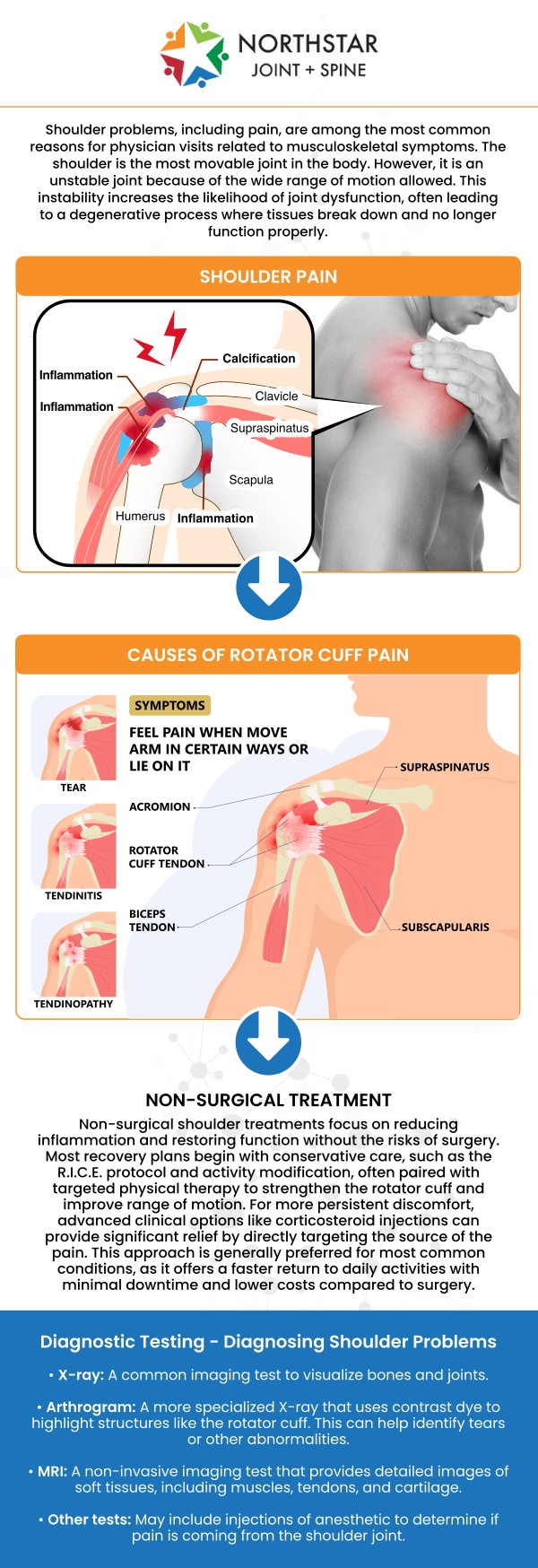
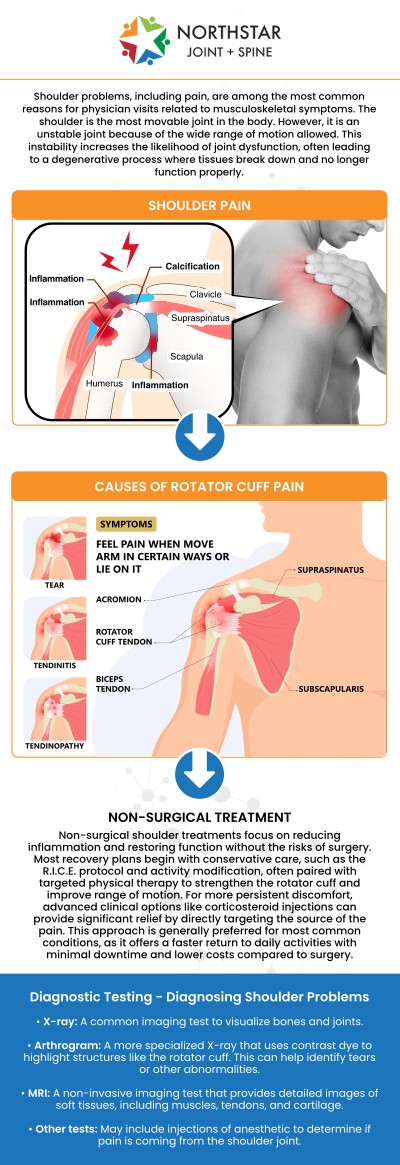
Table of Contents:
What is AC or Acromioclavicular Arthritis?
What causes AC Arthritis?
What are the symptoms of AC Arthritis?
How is AC Arthritis diagnosed?
How is AC Arthritis treated?
Acromioclavicular Arthritis Care by Board-Certified Dr. Robert J. Nocerini, MD in Plano, TX at Northstar Joint and Spine
Acromioclavicular (AC) arthritis is a degenerative condition that affects the acromioclavicular joint, a small but essential joint located at the top of the shoulder where the clavicle (collarbone) meets the acromion, which is part of the shoulder blade. This joint plays a critical role in allowing smooth shoulder movement, particularly during activities that involve lifting the arm, reaching across the body, or performing overhead motions. Because of its frequent use in daily life, the AC joint is especially susceptible to gradual wear over time.
AC arthritis develops when the protective cartilage within the joint begins to thin and break down. Cartilage normally acts as a cushion that allows bones to glide smoothly against one another. As this cushioning diminishes, increased friction occurs within the joint space. Over time, the body may respond by forming bone spurs, which can further limit motion and contribute to discomfort. Unlike larger joints such as the hip or knee, the AC joint is small, so even minor changes in cartilage thickness can significantly impact function.
Many individuals experience AC arthritis as part of the natural aging process. It is particularly common in adults over the age of 40, though it can also appear earlier depending on joint mechanics and repetitive use patterns. Because the AC joint helps stabilize the shoulder, degeneration in this area can influence the way the entire shoulder complex moves, sometimes leading to compensatory strain in surrounding muscles and soft tissues.
At Northstar Joint and Spine, patients with shoulder joint degeneration are evaluated with a focus on understanding how AC arthritis affects their daily activities and overall comfort. Under the care of Dr. Robert J. Nocerini, MD, the goal is to identify the specific joint changes contributing to symptoms and to provide clear, individualized education about the condition. Understanding what AC arthritis is can help patients recognize symptoms early and make informed decisions about managing shoulder health over time.
AC arthritis is primarily caused by progressive joint degeneration that occurs as the shoulder is used repeatedly over many years. The acromioclavicular joint experiences constant stress during routine activities such as lifting objects, pushing, pulling, and reaching overhead. Each time the arm moves, small forces pass through this joint, gradually affecting the cartilage that protects the bone surfaces. As cartilage wears down, the joint becomes less efficient and more sensitive to pressure.
One common contributing factor is repetitive shoulder motion. Occupations or hobbies that involve frequent arm elevation, upper-body loading, or sustained shoulder use can accelerate joint changes. Over time, these repetitive forces may alter the joint’s alignment and increase mechanical stress within the AC joint. Even everyday activities, when performed consistently over decades, can influence how quickly degeneration occurs.
Postural patterns also play a role in the development of AC arthritis. Poor shoulder or upper-back posture can shift how weight and movement are distributed across the shoulder joint complex. When posture places added strain on the top of the shoulder, the AC joint may absorb more force than intended, contributing to earlier cartilage breakdown. Muscle imbalances around the shoulder and upper back can further affect joint stability and load distribution.
Another contributing factor is reduced joint space that naturally occurs with age. As cartilage thins, the distance between the bones decreases, increasing friction during movement. The body may attempt to stabilize the joint by forming extra bone along the edges, which can limit motion and contribute to stiffness. Genetic factors may also influence cartilage resilience, making some individuals more prone to joint degeneration than others.
At Northstar Joint and Spine in Plano, TX, Dr. Robert J. Nocerini carefully evaluates lifestyle factors, movement patterns, and joint mechanics when assessing patients with AC arthritis. Understanding the underlying causes allows for a more targeted approach to care, helping patients address contributing factors while focusing on long-term shoulder function and comfort.
Symptoms of AC arthritis often develop gradually and may vary in intensity depending on activity level and the degree of joint degeneration. One of the most common signs is localized discomfort at the top of the shoulder, near where the collarbone meets the shoulder blade. This sensation is often described as an ache or pressure that becomes more noticeable during certain movements.
Many individuals experience increased symptoms when reaching across the body, lifting objects, or raising the arm overhead. These motions place direct stress on the acromioclavicular joint, making discomfort more noticeable. Activities such as fastening a seatbelt, carrying groceries, or performing upper-body exercises may become challenging as the joint becomes less tolerant of load.
Stiffness in the shoulder is another frequent symptom. Some patients notice reduced flexibility, especially after periods of rest. This stiffness can make it harder to achieve a full range of motion, particularly during the first movements of the day or after prolonged sitting. In some cases, a grinding or clicking sensation may be felt during shoulder motion, reflecting changes in the joint surfaces.
Swelling or visible enlargement at the top of the shoulder can also occur as the body responds to joint changes. This may be related to bone spur formation or mild inflammation within the joint. While strength in the shoulder may remain intact, discomfort can lead to reduced use of the arm, which may gradually affect muscle conditioning over time.
At Northstar Joint and Spine, Dr. Robert J. Nocerini, MD, focuses on identifying how these symptoms affect each patient’s daily routine and functional goals. By carefully assessing symptom patterns, patients receive a clearer understanding of how AC arthritis is influencing their shoulder and what steps can be taken to improve comfort and mobility.
Diagnosing AC arthritis begins with a detailed clinical evaluation that focuses on the patient’s symptoms, movement limitations, and daily activity challenges. A thorough medical history helps identify when symptoms began, which movements tend to increase discomfort, and how the shoulder functions during routine tasks. This information provides important insight into whether the acromioclavicular joint is the primary source of concern.
A physical examination is a key component of the diagnostic process. During the exam, the provider assesses the shoulder range of motion, joint tenderness, and how the shoulder responds to specific movements that load the AC joint. Certain positioning tests can help isolate the acromioclavicular joint from other structures in the shoulder, allowing for a more precise evaluation. Comparing both shoulders can also reveal subtle differences in mobility or sensitivity.
Imaging studies are often used to confirm the diagnosis and assess the extent of joint changes. X-rays can show narrowing of the joint space, bone spurs, or changes in joint alignment that are consistent with arthritis. In some cases, advanced imaging such as MRI may be recommended to evaluate surrounding soft tissues and ensure that other shoulder structures are not contributing to symptoms.
Accurate diagnosis is essential because shoulder discomfort can arise from multiple joints and tissues working together. Differentiating AC arthritis from other shoulder conditions helps guide appropriate care decisions. At Northstar Joint and Spine in Plano, TX, Dr. Robert J. Nocerini uses a careful, step-by-step approach to diagnosis, ensuring that findings align with the patient’s symptoms and functional concerns. This thorough evaluation allows patients to move forward with clarity and confidence regarding their condition.
Treatment for AC arthritis is tailored to the severity of symptoms, functional limitations, and individual goals. Many care plans begin with conservative, non-surgical approaches aimed at reducing joint stress and improving shoulder mechanics. Activity modification is often an important first step, helping patients identify movements that place excessive strain on the AC joint and adjust them when possible.
Targeted physical therapy may be recommended to strengthen surrounding muscles and improve shoulder stability. By enhancing muscle support and optimizing movement patterns, therapy can reduce the load placed directly on the acromioclavicular joint. Improved posture and flexibility can also play a significant role in easing joint stress during daily activities.
Interventional pain management options may be considered when symptoms persist despite initial measures. These approaches are designed to address localized joint discomfort and improve quality of life without surgical intervention. The specific strategy depends on each patient’s presentation and overall health profile.
At Northstar Joint and Spine, care is guided by Board-Certified Pain Specialist Dr. Robert J. Nocerini, MD, who emphasizes individualized treatment planning. Patients receive clear explanations of available options, expected outcomes, and long-term strategies for maintaining shoulder function. The goal is to help patients manage AC arthritis effectively while supporting continued mobility, comfort, and participation in everyday activities.
At Northstar Joint and Spine in Plano, TX, patients seeking focused care for acromioclavicular arthritis receive individualized attention from Dr. Robert J. Nocerini, a board-certified pain specialist. Dr. Nocerini provides thorough evaluations to identify how AC joint degeneration is affecting shoulder movement, comfort, and daily activities. His approach emphasizes precise diagnosis and education, helping patients in Plano and nearby North Texas communities better understand their condition and the factors contributing to ongoing shoulder joint discomfort.
Care for acromioclavicular arthritis at Northstar Joint and Spine is centered on non-surgical, evidence-based pain management strategies tailored to each patient’s needs. Dr. Robert J. Nocerini develops personalized treatment plans designed to reduce joint stress, improve shoulder mobility, and support long-term function. Conveniently located in Plano, TX, the clinic serves patients throughout Collin County who are looking for specialized AC arthritis care delivered with clinical expertise, clear communication, and a strong focus on improving quality of life. For more information, contact us today or schedule an appointment online. We are conveniently located at 7704 San Jacinto Pl Suite 200 Plano, TX 75024. We proudly serve patients from Plano TX, Frisco TX, Allen TX, McKinney TX, Richardson TX, Carrollton TX, Addison TX, The Colony TX, North Dallas TX, and surrounding communities throughout Collin County and the Dallas-Fort Worth area.

Check Out Our 5 Star Reviews


Additional Services You May Need
▸ Lower Back Pain
▸ Back Pain
▸ Shoulder Pain
▸ Chronic Pain
▸ Epidural Steroid Injections
▸ Spinal Cord Stimulation
▸ Viscosupplementation
▸ Genicular Nerve Blocks
▸ Facet Injections
▸ Joint Injections
▸ Sacroiliac Joint Injections
▸ Lumbar and Cervical
▸ Facet Medial Branch Blocks
▸ Diagnostic Nerve Blocks
▸ Medication Management
▸ Neck Pain Doctor
▸ Diabetic Peripheral Neuropathy
▸ Headaches
▸ Suboxone
▸ Peripheral Nerve Stimulation
▸ Wrist Pain
▸ Spine
▸ Joints
▸ Muscles
▸ Bones

Additional Services You May Need
▸ Lower Back Pain
▸ Back Pain
▸ Shoulder Pain
▸ Chronic Pain
▸ Epidural Steroid Injections
▸ Spinal Cord Stimulation
▸ Viscosupplementation
▸ Genicular Nerve Blocks
▸ Facet Injections
▸ Joint Injections
▸ Sacroiliac Joint Injections
▸ Lumbar and Cervical
▸ Facet Medial Branch Blocks
▸ Diagnostic Nerve Blocks
▸ Medication Management
▸ Neck Pain Doctor
▸ Diabetic Peripheral Neuropathy
▸ Headaches
▸ Suboxone
▸ Peripheral Nerve Stimulation
▸ Wrist Pain
▸ Spine
▸ Joints
▸ Muscles
▸ Bones





 Send Text
 How May I Help You?
