

How Can a Pain Management Doctor Help Manage Shoulder Arthritis in Plano, TX?
Arthritis of the shoulder occurs when the cartilage in the joint wears down, leading to pain, stiffness, and reduced mobility. This condition can make everyday activities like lifting or reaching difficult and may cause long-term discomfort if left untreated. Board-certified Dr. Robert Nocerini, MD, at Northstar Joint and Spine, provides specialized care in diagnosing and treating shoulder arthritis, helping patients regain function and alleviate pain. For more information, contact us today or schedule an appointment online. We are conveniently located at 7704 San Jacinto Pl Suite 200 Plano, TX 75024.
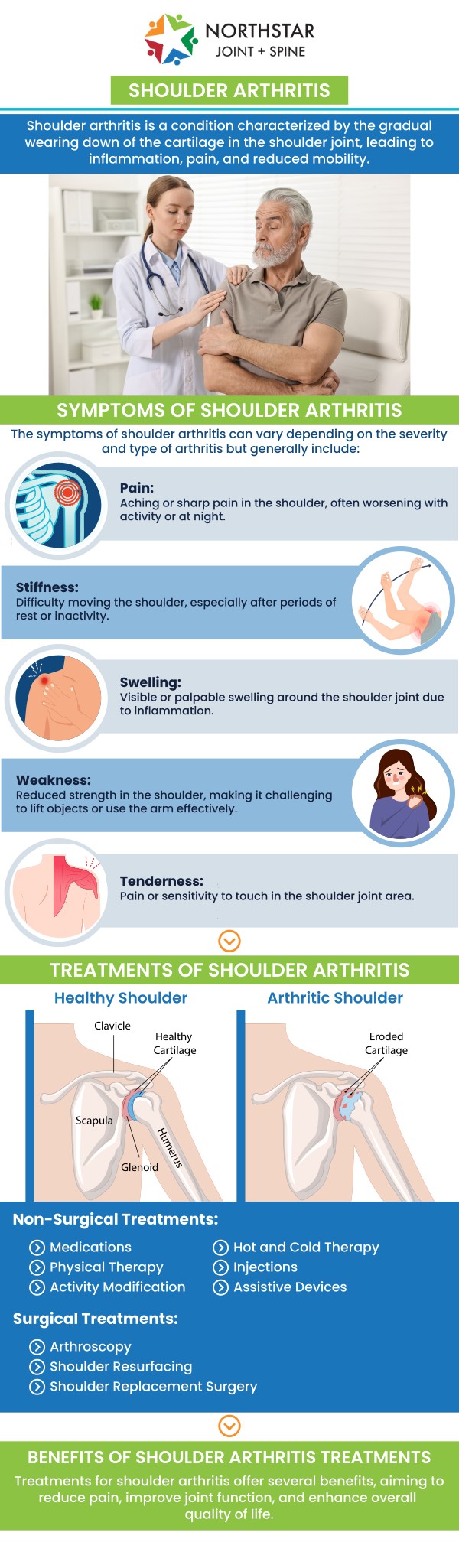
Table of Contents:
What is arthritis of the shoulder?
What are the types of shoulder arthritis?
What causes shoulder arthritis?
What are the symptoms of shoulder arthritis?
How is shoulder arthritis diagnosed?
Board-Certified Dr. Robert J. Nocerini, MD, Offers Advanced Non-Surgical Shoulder Arthritis Treatments at Northstar Joint and Spine in Plano, TX
Arthritis of the shoulder occurs when the cartilage that cushions the bones of the joint begins to wear down over time. The shoulder joint, a ball-and-socket joint, allows for a wide range of motion. As the cartilage erodes, the bones begin to rub against one another, causing discomfort and inflammation. The degree of cartilage damage can vary depending on the type of arthritis and the stage of the condition.
In the early stages, shoulder arthritis might cause mild discomfort, especially with certain movements like reaching overhead or lifting. As the arthritis progresses, the pain becomes more persistent and can interfere with daily activities such as carrying objects, lifting, or even performing routine tasks. With time, the joint may lose its full range of motion, making it harder to perform basic actions such as dressing or combing hair.
Recognizing shoulder arthritis early is crucial for preventing further damage to the joint. Treatment options range from physical therapy and anti-inflammatory medications to more advanced measures like corticosteroid injections, depending on the severity of the condition.
There are over 100 different types of arthritis, but the most common types affecting the shoulder joint are osteoarthritis and rheumatoid arthritis. Each type has distinct causes and characteristics, but all lead to damage in the shoulder joint.
• Osteoarthritis (OA):
Osteoarthritis is the most frequent form of shoulder arthritis and typically develops as part of the natural aging process. Over time, the cartilage in the shoulder joint gradually breaks down, causing bone-on-bone friction, pain, and limited mobility. It is often aggravated by repetitive motion and long-term use of the shoulder.
• Rheumatoid Arthritis (RA):
Rheumatoid arthritis is an autoimmune disorder where the body’s immune system attacks healthy joints, tissues, and organs. It mainly affects women of childbearing age (15-44 years) and causes inflammation in the joints’ lining, leading to pain, stiffness, swelling, and potential joint deformities. The condition typically impacts joints symmetrically, such as both hands or both feet at the same time. Rheumatoid arthritis affects women two to three times more often than men and is most commonly seen in the hands and feet.
Each type of arthritis affects the shoulder joint differently, so a tailored treatment plan is necessary to manage the symptoms and slow the progression of the disease.
Shoulder arthritis develops when the protective cartilage in the shoulder joint deteriorates, leading to friction between the bones. The most common cause is aging, as the cartilage naturally breaks down over time. This process, known as osteoarthritis, typically affects people as they get older. The cartilage that cushions the joint becomes thinner, reducing its ability to protect the bones. Over time, the bones begin to rub against each other, causing pain and discomfort.
Another contributing factor is overuse. Repetitive motions or frequent use of the shoulder joint, especially those involving overhead movements, can accelerate cartilage breakdown. Activities that require the shoulder to be used continuously or under strain may lead to the early onset of arthritis.
Genetics also plays a significant role in the development of shoulder arthritis. If you have a family history of arthritis, there may be an increased likelihood of developing the condition yourself. Certain genetic factors may make the cartilage in your joints more susceptible to wear and tear.
Lastly, inflammatory conditions, such as rheumatoid arthritis, can lead to shoulder arthritis. In rheumatoid arthritis, the immune system mistakenly attacks the synovium, which is the lining of the joint, causing inflammation and damage to the cartilage. Over time, this inflammation can lead to arthritis. Other systemic inflammatory conditions can also contribute to the breakdown of joint tissues and lead to arthritis.
Recognizing these contributing factors early on can help in diagnosing the condition and developing a personalized treatment plan.
Symptoms of shoulder arthritis can vary depending on the type and severity of the condition. Common symptoms include:
• Pain and Tenderness:
Pain in the shoulder joint often worsens with movement, particularly during overhead motions or lifting. The pain can become constant as the condition progresses.
• Stiffness and Limited Range of Motion:
The shoulder joint may feel tight, making it difficult to move the arm freely. Activities like reaching behind your back or lifting objects overhead may become more challenging.
• Grinding, Clicking, or Popping Sensations:
As the cartilage deteriorates, the bones may rub together, leading to grinding or popping sensations during shoulder movement.
• Swelling and Warmth:
Inflammation can cause swelling around the joint, and the shoulder may feel warm to the touch, especially during flare-ups.
• Bone Spurs:
As arthritis progresses, bone spurs can form around the edges of the joint, restricting movement and adding discomfort as they rub against surrounding tissues.
• Narrowed Joint Space:
X-rays may show a narrowing of the space between the bones as cartilage wears away.
These symptoms can significantly affect the ability to perform everyday tasks, but early detection and treatment can help manage pain and preserve joint function.
Diagnosing shoulder arthritis begins with a thorough discussion of your symptoms, including when the pain started, which movements trigger discomfort, and any limitations in shoulder movement. Dr. Nocerini will also perform a physical exam to assess your shoulder’s range of motion, strength, and areas of tenderness or swelling.
Imaging studies are crucial for confirming the diagnosis. X-rays help identify joint space narrowing, bone spurs, and other signs of arthritis. If needed, an MRI provides detailed images of the soft tissues, such as cartilage and tendons, while a CT scan may be used for further bone detail if necessary. Combining clinical evaluation with imaging results allows Dr. Nocerini to accurately diagnose the condition and create a personalized treatment plan.
At Northstar Joint and Spine, Dr. Robert J. Nocerini, MD, a board-certified specialist, offers cutting-edge, non-surgical treatments for patients with shoulder arthritis. Dr. Nocerini uses a comprehensive, patient-centered approach to manage the symptoms of shoulder arthritis, helping to reduce pain and improve mobility without the need for invasive procedures. His non-surgical treatments are designed to alleviate discomfort, enhance joint function, and slow the progression of arthritis, allowing patients to maintain an active lifestyle.
Dr. Nocerini’s goal is to provide the most effective, minimally invasive options tailored to each patient’s unique needs. By combining proven techniques with personalized care, he ensures optimal outcomes and a faster recovery time. Whether you’re dealing with mild stiffness or more severe pain, Northstar Joint and Spine offers advanced non-surgical treatments that help patients return to the activities they enjoy, all while focusing on long-term joint health and pain management. For more information, contact us today or schedule an appointment online. We are conveniently located at 7704 San Jacinto Pl Suite 200 Plano, TX 75024. We proudly serve patients from Plano TX, Frisco TX, Allen TX, McKinney TX, Richardson TX, Carrollton TX, Addison TX, The Colony TX, North Dallas TX, and surrounding communities throughout Collin County and the Dallas-Fort Worth area.

Check Out Our 5 Star Reviews


Additional Services You May Need
▸ Lower Back Pain
▸ Back Pain
▸ Shoulder Pain
▸ Chronic Pain
▸ Epidural Steroid Injections
▸ Spinal Cord Stimulation
▸ Viscosupplementation
▸ Genicular Nerve Blocks
▸ Facet Injections
▸ Joint Injections
▸ Sacroiliac Joint Injections
▸ Lumbar and Cervical
▸ Facet Medial Branch Blocks
▸ Diagnostic Nerve Blocks
▸ Medication Management
▸ Neck Pain Doctor
▸ Diabetic Peripheral Neuropathy
▸ Headaches
▸ Suboxone
▸ Peripheral Nerve Stimulation
▸ Wrist Pain
▸ Spine
▸ Joints
▸ Muscles
▸ Bones

Additional Services You May Need
▸ Lower Back Pain
▸ Back Pain
▸ Shoulder Pain
▸ Chronic Pain
▸ Epidural Steroid Injections
▸ Spinal Cord Stimulation
▸ Viscosupplementation
▸ Genicular Nerve Blocks
▸ Facet Injections
▸ Joint Injections
▸ Sacroiliac Joint Injections
▸ Lumbar and Cervical
▸ Facet Medial Branch Blocks
▸ Diagnostic Nerve Blocks
▸ Medication Management
▸ Neck Pain Doctor
▸ Diabetic Peripheral Neuropathy
▸ Headaches
▸ Suboxone
▸ Peripheral Nerve Stimulation
▸ Wrist Pain
▸ Spine
▸ Joints
▸ Muscles
▸ Bones





 Send Text
 How May I Help You?
