

What Causes Spinal Stenosis?
Spinal stenosis is commonly caused by age-related changes that narrow the spaces within the spine and place pressure on nearby nerves. Common causes may include arthritis, thickened ligaments, bone spur formation, herniated discs, or disc degeneration. These changes can lead to back pain, lower back pain, leg pain, numbness, tingling, weakness, or walking difficulty. At Northstar Joint and Spine in Plano, TX, Board-Certified Dr. Robert Nocerini provides personalized evaluation to identify the cause and guide targeted care. For more information, contact us today or schedule an appointment. We are conveniently located at 7704 San Jacinto Pl Suite 200 Plano, TX 75024.
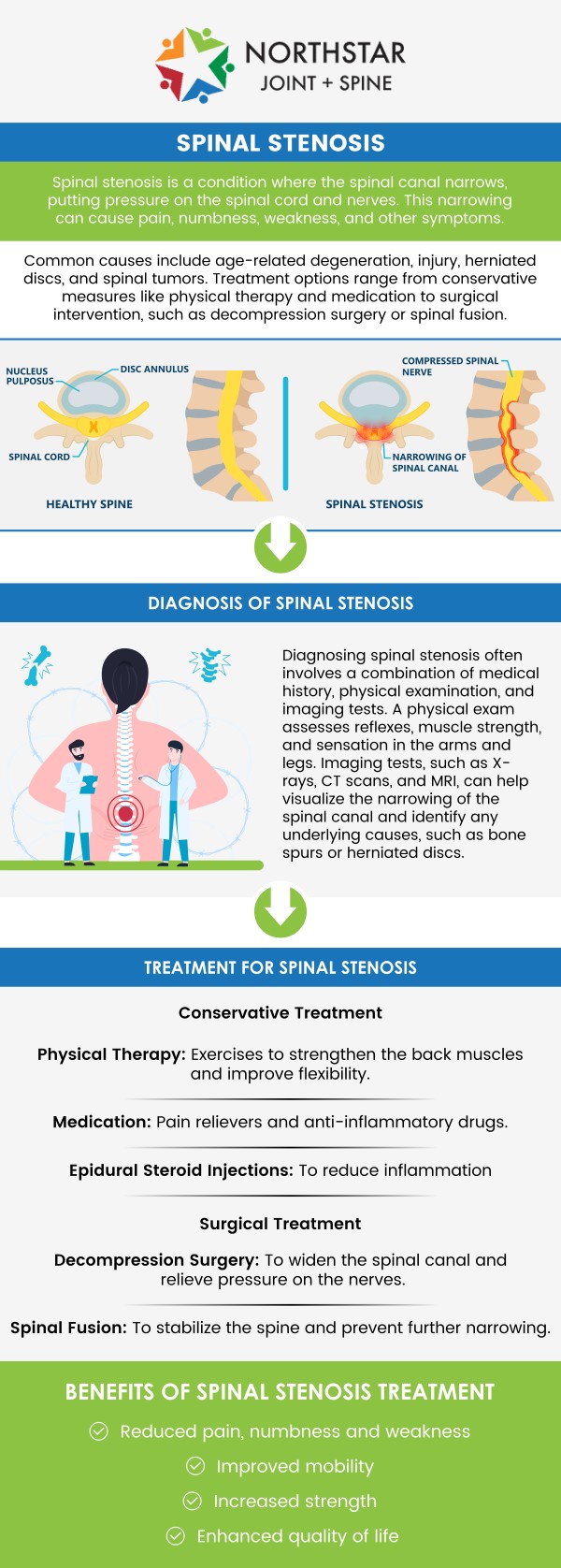
Table of Contents:
What is the main cause of spinal stenosis?
Can aging cause spinal stenosis?
Can a herniated disc lead to spinal stenosis?
What conditions increase the risk of spinal stenosis?
Get Lasting Back Pain Relief From Spinal Stenosis in Plano, TX
Will my spinal stenosis continue to get worse over time?
Can spinal stenosis cause permanent nerve damage?
What’s the difference between central stenosis and foraminal stenosis?
Understanding the Causes of Spinal Stenosis With Board-Certified Dr. Robert Nocerini at Northstar Joint and Spine in Plano, TX
The main cause of spinal stenosis is usually gradual narrowing within the spinal canal or nerve openings caused by age-related changes in the spine. Over time, the disks between the vertebrae may lose height, joints may enlarge, ligaments may become thicker, and bone spurs may develop. These changes can reduce the available space around the spinal cord or spinal nerves. When the nerves have less room, patients may experience back pain, neck pain, leg pain, numbness, tingling, cramping, weakness, or difficulty walking for longer periods. Spinal stenosis most often affects the lower back or neck, and symptoms may develop slowly, making early evaluation important.
At Northstar Joint and Spine in Plano, TX, Board-certified Dr. Robert Nocerini focuses on identifying the specific source of spinal narrowing before recommending care. This is important because spinal stenosis may involve disks, joints, ligaments, bone changes, or nerve pressure, and each patient’s symptoms can be different. A detailed clinical evaluation helps determine whether discomfort is related to lumbar spinal stenosis, cervical spinal stenosis, nerve compression, arthritis-related changes, or another spine condition. For patients searching for spinal stenosis treatment in Plano, TX, Northstar Joint and Spine provides personalized care focused on accurate diagnosis, improved mobility, and long-term symptom management. Dr. Nocerini’s approach supports patients by helping them understand what is causing their pain and what non-surgical treatment options may help reduce nerve irritation, improve function, and support a more active daily routine.
Yes, aging can cause spinal stenosis because the spine naturally changes over time. As people get older, spinal disks may lose water content and become less flexible, which can reduce the space between vertebrae. The facet joints in the spine may also enlarge due to arthritis-related changes, and ligaments that support the spine may become thicker or stiffer. These changes can gradually narrow the spinal canal or the openings where nerves exit the spine. When this narrowing affects nearby nerves, symptoms may include back pain, leg pain, neck discomfort, numbness, tingling, balance changes, or walking limitations.
Age-related spinal stenosis does not always cause symptoms right away. Some people may have narrowing visible on imaging but feel little discomfort, while others may develop symptoms that affect daily movement. This is why a personalized evaluation is important. At Northstar Joint and Spine in Plano, TX, Board-certified Dr. Robert Nocerini evaluates each patient’s symptoms, mobility, posture, and nerve-related concerns to determine how spinal changes may be affecting function. For patients looking for spinal stenosis care in Plano, TX, Dr. Nocerini provides a patient-centered approach focused on identifying the cause of pain and creating a targeted plan. Treatment may include advanced non-surgical options when appropriate to help reduce discomfort, improve walking tolerance, and support better quality of life. By addressing aging-related spine changes with a focused care strategy, Northstar Joint and Spine helps patients manage spinal stenosis with greater confidence and improved daily comfort.
Yes, a herniated disc can contribute to spinal stenosis when disc material pushes into the spinal canal or nerve opening and reduces the space available for the spinal cord or nerve roots. Spinal discs act as cushions between the vertebrae. When the outer layer weakens and the inner material moves outward, it can press near sensitive nerve structures. This may lead to symptoms such as back pain, leg pain, sciatica-like discomfort, numbness, tingling, weakness, or pain that worsens with standing, walking, bending, or certain positions. In the lower back, this may affect the buttocks, thighs, calves, or feet.
A herniated disc does not always cause spinal stenosis, but it can be an important factor when symptoms match nerve compression patterns. Some patients may also have additional spine changes, such as arthritis, thickened ligaments, or reduced disc height, which can make the narrowing more noticeable. At Northstar Joint and Spine in Plano, TX, Board-certified Dr. Robert Nocerini provides a detailed evaluation to determine whether a herniated disc, degenerative disc changes, or another spinal condition is contributing to nerve-related pain. For patients searching for herniated disc and spinal stenosis treatment in Plano, TX, Northstar Joint and Spine offers personalized care designed to identify the true source of symptoms. Dr. Nocerini’s treatment planning focuses on reducing nerve irritation, improving mobility, and helping patients return to daily activities with greater comfort. A precise diagnosis helps guide the right care path and prevents patients from relying on general treatments that may not address the source of their spinal stenosis symptoms.
Several conditions can increase the risk of spinal stenosis by changing the structure, alignment, or stability of the spine. Osteoarthritis is one of the most common contributors because it can lead to joint enlargement and bone spur formation around the spinal canal. Degenerative disc disease may also play a role when discs lose height and reduce the spacing between vertebrae. Herniated discs can narrow the spinal canal or nerve openings, while thickened ligaments may place added pressure near the spinal nerves. Other contributing factors may include scoliosis, spondylolisthesis, inflammatory arthritis, congenital narrowing of the spinal canal, or certain bone growth disorders.
Risk factors do not always mean a person will develop painful spinal stenosis, but they can increase the chance of nerve compression and mobility problems over time. Symptoms may include lower back pain, neck pain, leg cramping, numbness, tingling, weakness, or discomfort that worsens with standing or walking. At Northstar Joint and Spine in Plano, TX, Board-certified Dr. Robert Nocerini evaluates each patient’s medical history, symptom pattern, spinal mobility, and nerve function to determine which factors may be contributing to spinal stenosis. For patients seeking spinal stenosis treatment in Plano, TX, this personalized approach helps connect the cause of narrowing with the right treatment strategy. Dr. Nocerini focuses on targeted, non-surgical care options when appropriate to help reduce pain, improve function, and support better movement. Northstar Joint and Spine provides comprehensive spine care designed to help patients understand their condition, manage symptoms, and maintain a more active lifestyle.
Spinal stenosis is a spine condition that can cause lower back pain, especially in older adults, when age-related changes narrow the spaces around the spinal nerves. This narrowing may lead to back pain symptoms such as leg discomfort, numbness, tingling, weakness, cramping, or difficulty walking for long periods. Symptoms may become worse with standing or walking and may feel better when sitting or leaning forward. At Northstar Joint and Spine in Plano, TX, Board-Certified Dr. Robert Nocerini focuses on identifying the source of spinal stenosis-related back pain and creating a targeted treatment plan designed to reduce nerve pressure, improve mobility, and support long-term spine health.
Spinal stenosis may worsen gradually, especially when caused by aging, arthritis, disc changes, or bone spurs. Early evaluation can help manage symptoms and support mobility.
Severe spinal stenosis may lead to lasting nerve problems if pressure on the nerves continues. Worsening weakness, numbness, or walking difficulty should be evaluated by a doctor.
Central stenosis affects the main spinal canal, while foraminal stenosis affects the openings where nerves exit the spine. Both can cause pain, numbness, tingling, or weakness.
Understanding the causes of spinal stenosis is important because this condition often develops when the spaces within the spine become narrowed, placing pressure on the spinal cord or nearby nerves. Common causes may include age-related disc changes, arthritis, thickened ligaments, bone spur formation, herniated discs, or spinal alignment changes that reduce nerve space over time. Symptoms can vary depending on the area affected, but patients may experience back pain, neck pain, leg discomfort, numbness, tingling, weakness, or difficulty walking for longer periods.
At Northstar Joint and Spine in Plano, TX, Board-Certified Dr. Robert Nocerini provides personalized evaluation to identify what may be contributing to spinal stenosis and nerve-related symptoms. His approach focuses on understanding each patient’s condition, mobility concerns, and pain patterns before creating a targeted care plan. For patients seeking spinal stenosis treatment in Plano, TX, Northstar Joint and Spine offers patient-centered care designed to reduce discomfort, improve function, and support better long-term spine health. For more information, contact us today or schedule an appointment. We are conveniently located at 7704 San Jacinto Pl Suite 200 Plano, TX 75024. We proudly serve patients from Plano TX, Frisco TX, Allen TX, McKinney TX, Richardson TX, Carrollton TX, Addison TX, The Colony TX, North Dallas TX, and surrounding communities throughout Collin County and the Dallas-Fort Worth area.

Check Out Our 5 Star Reviews


Additional Services You May Need
▸ Lower Back Pain
▸ Back Pain
▸ Shoulder Pain
▸ Chronic Pain
▸ Epidural Steroid Injections
▸ Spinal Cord Stimulation
▸ Viscosupplementation
▸ Genicular Nerve Blocks
▸ Facet Injections
▸ Joint Injections
▸ Sacroiliac Joint Injections
▸ Lumbar and Cervical
▸ Facet Medial Branch Blocks
▸ Diagnostic Nerve Blocks
▸ Medication Management
▸ Neck Pain Doctor
▸ Diabetic Peripheral Neuropathy
▸ Headaches
▸ Suboxone
▸ Peripheral Nerve Stimulation
▸ Wrist Pain
▸ Spine
▸ Joints
▸ Muscles
▸ Bones

Additional Services You May Need
▸ Lower Back Pain
▸ Back Pain
▸ Shoulder Pain
▸ Chronic Pain
▸ Epidural Steroid Injections
▸ Spinal Cord Stimulation
▸ Viscosupplementation
▸ Genicular Nerve Blocks
▸ Facet Injections
▸ Joint Injections
▸ Sacroiliac Joint Injections
▸ Lumbar and Cervical
▸ Facet Medial Branch Blocks
▸ Diagnostic Nerve Blocks
▸ Medication Management
▸ Neck Pain Doctor
▸ Diabetic Peripheral Neuropathy
▸ Headaches
▸ Suboxone
▸ Peripheral Nerve Stimulation
▸ Wrist Pain
▸ Spine
▸ Joints
▸ Muscles
▸ Bones





 Send Text
 How May I Help You?
