

Tailbone Pain Symptoms: When to See a Tailbone Specialist?
Tailbone pain can vary in severity depending on the cause. Common symptoms include sharp or aching pain at the base of the spine, particularly when sitting, standing, or rising from a seated position. At Northstar Joint and Spine, Dr. Robert Nocerini MD, Board-Certified, and the team offer effective treatments for tailbone pain to help alleviate discomfort and promote healing. Their approach is tailored to the individual needs of each patient, ensuring that the root cause of the pain is addressed for long-term relief. For more information, please contact us today or schedule an appointment online. We are conveniently located at 7704 San Jacinto Pl Suite 200 Plano, TX 75024.
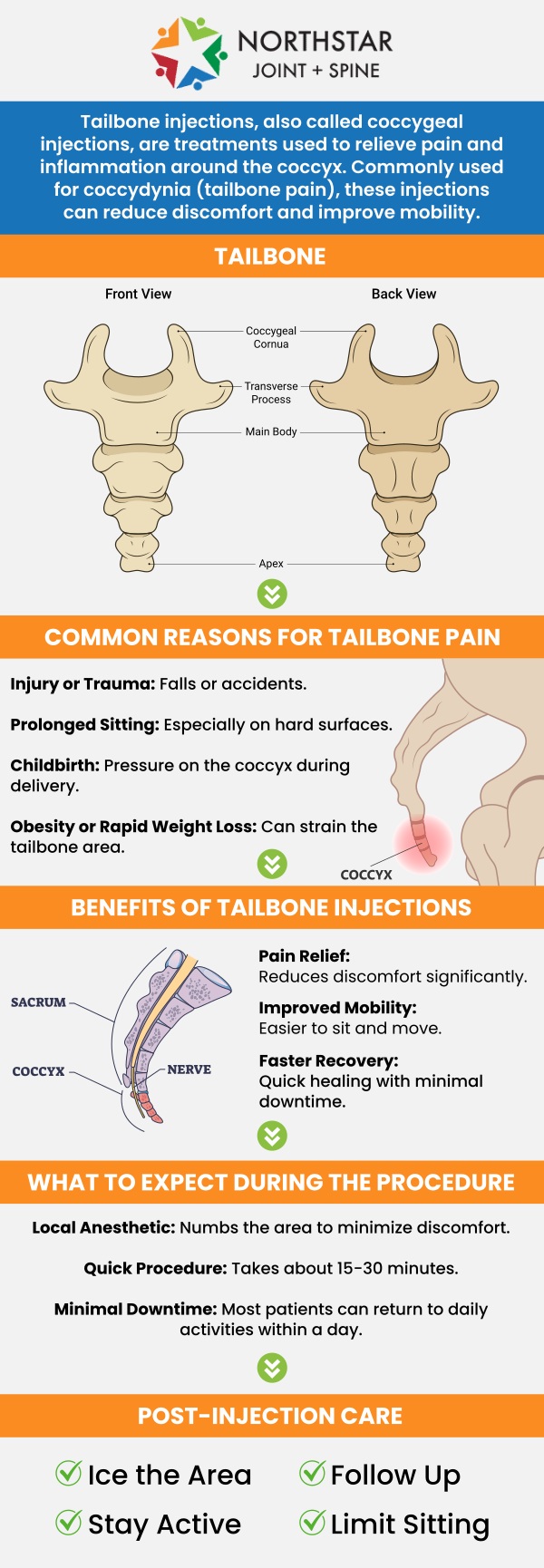
Table of Contents:
How common is tailbone pain?
What are the symptoms of tailbone pain?
What causes tailbone pain?
What happens if tailbone pain goes untreated?
Tailbone Pain Symptoms: When to See Dr. Robert Nocerini, a Tailbone Specialist in Plano, TX
Tailbone pain, also known as coccydynia, is a relatively common condition that affects the lower part of the spine. This pain can range from mild discomfort to more severe, persistent pain, and it often occurs in or around the coccyx, which is located at the base of the spine. The intensity of the pain can vary significantly between individuals, depending on the underlying cause.
Several factors can contribute to tailbone pain. One of the most common causes is childbirth, as the pressure during delivery can affect the tailbone and surrounding muscles. Additionally, a sedentary lifestyle, where prolonged sitting puts pressure on the coccyx, is another frequent contributor to this discomfort. People who spend extended periods sitting on hard surfaces are more prone to tailbone pain due to the constant pressure placed on the area.
Musculoskeletal conditions affecting the lower spine and pelvis can also lead to discomfort in the tailbone area. For example, misalignment of the spine, inflammation, or muscle imbalances around the coccyx can lead to persistent pain. As the tailbone is connected to the rest of the spine through ligaments, it is susceptible to strain, and like any other joint, it can be displaced, contributing to pain and discomfort.
Tailbone pain is particularly common among pregnant women due to the changes in posture and pressure during pregnancy and childbirth. However, it can affect both men and women, particularly those who are inactive or have poor posture.
Overall, tailbone pain is a widespread issue with multiple potential causes. It can affect individuals of all ages, and though it is often temporary, those experiencing persistent or severe discomfort should consult a healthcare provider for diagnosis and appropriate treatment.
Tailbone pain, or coccydynia, can present with a variety of symptoms depending on its cause and severity. The pain typically manifests around the tailbone area, located at the base of the spine, but it can vary in intensity and duration. Here’s a breakdown of the most common symptoms:
General Discomfort and Aching
Tailbone pain is often characterized by a dull, aching sensation in the area around the coccyx. This discomfort may be mild initially but can worsen with certain activities or postures. It is commonly triggered by prolonged sitting, especially on hard surfaces, or after repetitive movements like bending or lifting.
Sharp Pain When Aggravated
In some cases, tailbone pain can become sharp and intense, particularly when aggravated by specific movements or pressure. For example, rising from a seated position or engaging in jerky movements may cause a sudden spike in pain. This sharp pain can make everyday activities more challenging.
Radiating Pain
While tailbone pain typically stays localized to the coccyx area, some individuals may experience pain that radiates to the pelvis or down one or both legs. This can be a sign that the discomfort is linked to an underlying condition affecting the surrounding structures, such as nerve compression or inflammation.
Chronic or Acute Pain
Tailbone pain can present in two forms: acute or chronic. Acute pain is typically temporary and may resolve on its own, especially if the cause is minor. Chronic tailbone pain, on the other hand, persists for longer periods and can significantly affect a person’s ability to sit, stand, or perform daily activities. In some cases, it can be debilitating, making it difficult to maintain regular routines.
Pain at Night
In severe cases, tailbone pain can flare up at night, making it difficult to sleep comfortably. The discomfort may interfere with finding a restful position, affecting the quality of sleep.
If tailbone pain persists or becomes severe, it’s important to seek medical advice for proper diagnosis and treatment.
Tailbone pain, or coccydynia, can be caused by a variety of factors, ranging from lifestyle habits to underlying medical conditions. The pain can vary in intensity, appearing suddenly or developing over time, and it may be either acute or chronic.
Sedentary Lifestyle
A sedentary lifestyle is one of the most common contributors to tailbone pain. Sitting for extended periods, especially on hard or uncomfortable surfaces, places continuous pressure on the coccyx, leading to discomfort. Prolonged sitting can cause inflammation in the tailbone area and, over time, may lead to persistent pain. Repetitive movements, such as frequent bending or twisting, can also exacerbate the discomfort.
Pregnancy and Childbirth
Pregnancy can lead to tailbone pain due to the natural loosening of pelvic ligaments and the added pressure from the growing baby. The pressure exerted during childbirth can affect the coccyx and contribute to tailbone pain, which may continue even after delivery. This discomfort is often worsened by sitting or certain movements that put pressure on the pelvic region.
Musculoskeletal Conditions
Tailbone pain can also be a symptom of an underlying musculoskeletal condition such as misalignment of the spine, sacroiliac joint dysfunction, or other issues related to the lower back or pelvis. These conditions can place additional strain on the tailbone, leading to discomfort or pain. Conditions affecting the muscles and ligaments around the coccyx may also contribute to pain in the area.
Triggering Activities
Certain activities can trigger or worsen tailbone pain. These include prolonged sitting, lifting, or repetitive physical movements, which can cause strain on the coccyx. The pain may intensify with activities that place direct pressure on the area.
If you’re experiencing persistent or worsening tailbone pain, Dr. Robert J. Nocerini, MD, Board-Certified, at Northstar Joint and Spine, can help determine the cause and provide tailored treatment options for relief.
If tailbone pain is left untreated, the outcomes largely depend on the severity and underlying cause of the pain. In mild cases, the discomfort may resolve on its own with self-care measures such as rest, improved posture, or using a cushion for sitting. However, for more persistent or severe cases, ignoring tailbone pain can lead to a range of negative consequences that can affect daily life.
For those with chronic tailbone pain, treatment interventions at Northstar Joint and Spine are often necessary to address the underlying cause and prevent the pain from becoming more debilitating. Without appropriate care, tailbone pain can worsen over time, making it harder to sit, stand, or perform everyday activities. This can lead to a reduced quality of life and may hinder one’s ability to work, exercise, or engage in social activities.
In some instances, untreated tailbone pain can be a sign of an underlying musculoskeletal condition, such as spinal misalignment, sacroiliac joint dysfunction, or pelvic floor issues. Many of these conditions are degenerative, meaning they can worsen over time, leading to additional complications such as muscle weakness, limited range of motion, and the development of compensatory movement patterns that may strain other areas of the body.
If left unaddressed, acute tailbone pain can also evolve into a chronic condition. For example, untreated inflammation around the coccyx can lead to prolonged discomfort, making it difficult for an individual to perform simple tasks like sitting for long periods or exercising. This can also result in a cycle of discomfort that may require more intensive interventions down the line.
If you are experiencing ongoing tailbone pain, it’s important to seek help from Dr. Robert J. Nocerini, MD, Board-Certified at Northstar Joint and Spine, to receive the appropriate care and prevent the pain from becoming more severe.
Yes, tailbone pain can often be treated without surgery, especially in mild to moderate cases. Conservative treatments are typically the first line of defense and can be highly effective in alleviating discomfort. These may include using cushions or specialized pillows that relieve pressure on the coccyx while sitting, adopting better posture, and engaging in physical therapy to strengthen the muscles around the tailbone. Over-the-counter pain medications, can also be used to reduce inflammation and manage pain. In many cases, these non-invasive methods can lead to significant improvement or even complete resolution of tailbone pain.
If conservative treatments don’t provide relief, more advanced non-surgical options are available. These may include corticosteroid injections to reduce inflammation or nerve blocks to help manage pain. For individuals with underlying musculoskeletal issues, physical therapy can be tailored to address specific muscle imbalances or misalignments contributing to tailbone discomfort. Dr. Robert J. Nocerini, MD, Board-Certified, at Northstar Joint and Spine can guide you through a personalized treatment plan to address your tailbone pain effectively and help avoid the need for surgery. Most patients find significant relief with these approaches, and surgery is rarely needed unless the pain is persistent and severely debilitating.
Yes, several lifestyle changes can help alleviate tailbone pain and prevent it from worsening. One of the most effective changes is adjusting your sitting habits. Sitting for long periods, especially on hard or flat surfaces, can increase pressure on the coccyx and exacerbate pain. To reduce discomfort, try using a coccyx cushion or a donut-shaped pillow that alleviates pressure on the tailbone when sitting. Taking frequent breaks to stand or walk around, especially if you have a sedentary job, can also help reduce the strain on the tailbone. Additionally, maintaining good posture while sitting, standing, and walking is essential to avoid placing unnecessary pressure on the lower spine.
Another key lifestyle change involves incorporating gentle exercise and stretching into your daily routine. Low-impact activities like walking, swimming, or gentle yoga can promote circulation and flexibility, which helps reduce stiffness and improve overall spine health. Strengthening the muscles around the pelvis and lower back through specific exercises can provide better support to the coccyx, reducing the likelihood of recurring pain. Dr. Robert J. Nocerini, MD, Board-Certified at Northstar Joint and Spine, can provide personalized guidance on which exercises and stretches are best suited to alleviate your tailbone pain and improve long-term mobility.
If you’re experiencing discomfort at the base of your spine, Dr. Robert Nocerini, MD at Northstar Joint and Spine, specializes in diagnosing and treating tailbone pain. Tailbone pain can stem from various factors such as prolonged sitting, overuse, or musculoskeletal issues, which may cause significant discomfort and restrict daily activities. Dr. Nocerini conducts comprehensive evaluations to identify the underlying cause of the pain, ensuring targeted treatments for lasting relief.
If your tailbone pain persists despite home care or worsens with prolonged sitting, it’s time to see a specialist like Dr. Nocerini. Patients trust his expertise in providing personalized, effective care that addresses both the source of the pain and its long-term effects on mobility and quality of life. For more information, please contact us today or schedule an appointment online. We are conveniently located at 7704 San Jacinto Pl Suite 200 Plano, TX 75024. We proudly serve patients from Plano TX, Frisco TX, Allen TX, McKinney TX, Richardson TX, Carrollton TX, Addison TX, The Colony TX, North Dallas TX, and surrounding communities throughout Collin County and the Dallas-Fort Worth area.

Check Out Our 5 Star Reviews


Additional Services You May Need
▸ Lower Back Pain
▸ Back Pain
▸ Shoulder Pain
▸ Chronic Pain
▸ Epidural Steroid Injections
▸ Spinal Cord Stimulation
▸ Viscosupplementation
▸ Genicular Nerve Blocks
▸ Facet Injections
▸ Joint Injections
▸ Sacroiliac Joint Injections
▸ Lumbar and Cervical
▸ Facet Medial Branch Blocks
▸ Diagnostic Nerve Blocks
▸ Medication Management
▸ Neck Pain Doctor
▸ Diabetic Peripheral Neuropathy
▸ Headaches
▸ Suboxone
▸ Peripheral Nerve Stimulation
▸ Wrist Pain
▸ Spine
▸ Joints
▸ Muscles
▸ Bones

Additional Services You May Need
▸ Lower Back Pain
▸ Back Pain
▸ Shoulder Pain
▸ Chronic Pain
▸ Epidural Steroid Injections
▸ Spinal Cord Stimulation
▸ Viscosupplementation
▸ Genicular Nerve Blocks
▸ Facet Injections
▸ Joint Injections
▸ Sacroiliac Joint Injections
▸ Lumbar and Cervical
▸ Facet Medial Branch Blocks
▸ Diagnostic Nerve Blocks
▸ Medication Management
▸ Neck Pain Doctor
▸ Diabetic Peripheral Neuropathy
▸ Headaches
▸ Suboxone
▸ Peripheral Nerve Stimulation
▸ Wrist Pain
▸ Spine
▸ Joints
▸ Muscles
▸ Bones





 Send Text
 How May I Help You?
