

When Is Sciatic Pain an Emergency?
Sciatic pain may be a medical emergency when it occurs with new loss of bladder or bowel control, difficulty urinating, or numbness around the pelvic area. Rapidly worsening leg weakness, sudden difficulty walking, or symptoms affecting both legs also require immediate evaluation. Board-certified Dr. Robert J. Nocerini, MD, at NorthStar Joint & Spine helps patients recognize these serious warning signs. Anyone experiencing these symptoms should go to the nearest emergency department for prompt assessment. For more information, contact us today or schedule an appointment online. We are conveniently located at 7704 San Jacinto Pl Suite 200 Plano, TX 75024.
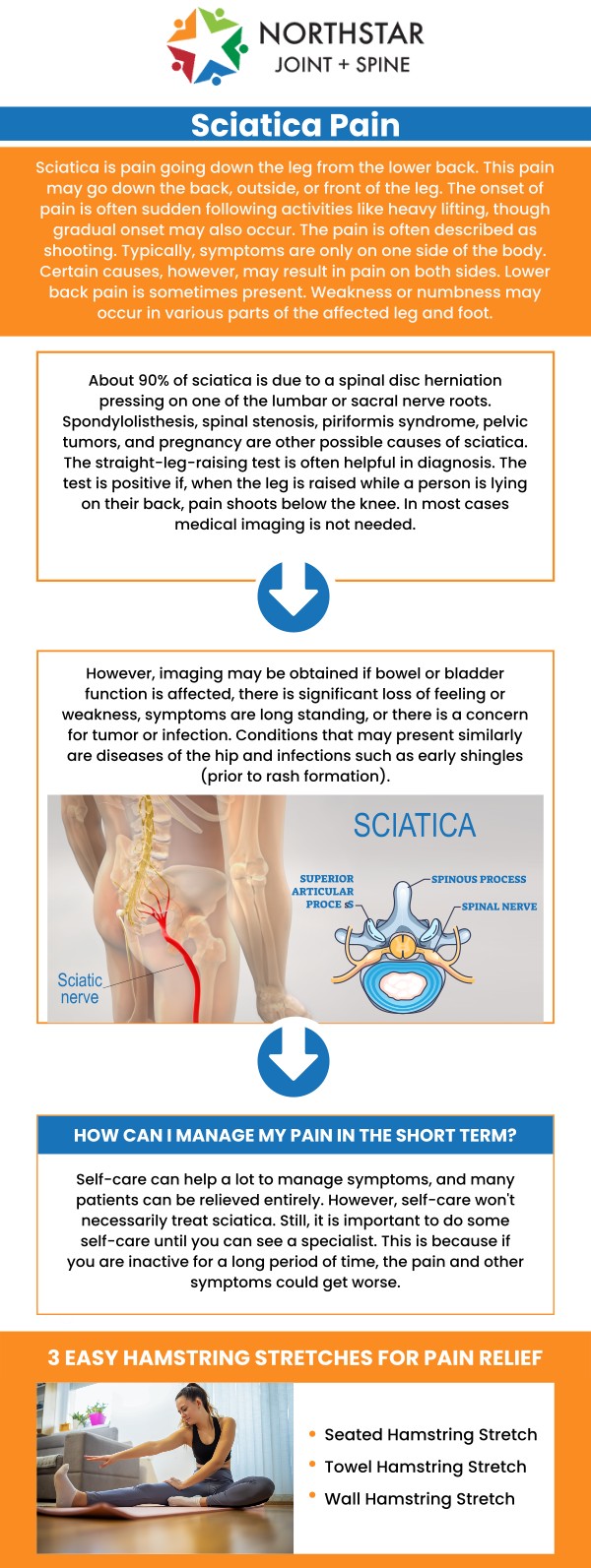
Table of Contents:
What symptoms make sciatic pain a medical emergency?
Is loss of bowel control with sciatica a serious warning sign?
When does leg weakness with sciatic pain require urgent evaluation?
Is difficulty walking with sciatic pain a warning sign?
Where should you go when sciatic pain becomes an emergency?
Learn When Sciatic Pain Is an Emergency With Board-Certified Dr. Robert J. Nocerini, MD at Northstar Joint and Spine
Sciatic pain requires emergency evaluation when it occurs with signs that nerves controlling the legs, bladder, bowel, or pelvic sensation may be severely compressed. Warning signs include new loss of bladder or bowel control, difficulty starting urination, inability to empty the bladder, numbness around the inner thighs or genital area, and rapidly worsening weakness in one or both legs. These symptoms may indicate cauda equina syndrome, a rare but serious condition requiring immediate medical attention.
Other concerning symptoms may include:
• Sudden or rapidly increasing leg weakness
• Numbness affecting the inner thighs, buttocks, or pelvic region
• Difficulty standing or walking because a leg is giving way
• Symptoms affecting both legs
• New loss of bladder or bowel sensation
• Severe pain accompanied by fever
• Rapidly worsening numbness or loss of coordination
Severe pain alone is not always an emergency, but pain combined with new neurological changes should not be monitored at home. Immediate evaluation can help identify whether significant nerve compression or another serious spinal condition is present.
Yes, new loss of bowel control with sciatic pain is a serious warning sign. The nerves at the lower end of the spinal canal help control bowel and bladder function. Compression of these nerves may cause unexpected leakage, difficulty passing stool, loss of the sensation that a bowel movement is needed, or reduced feeling around the rectal and genital areas.
Patients should also seek emergency care if they cannot urinate despite feeling that the bladder is full, begin leaking urine unexpectedly, or cannot tell whether the bladder is full or empty. These changes may occur with numbness in the saddle region, including the inner thighs, buttocks, and genital area.
Do not wait for the symptoms to improve or schedule a routine office appointment. New bowel or bladder dysfunction associated with sciatica should be evaluated immediately in an emergency department.
Leg weakness requires urgent evaluation when it is new, rapidly worsening, affecting both legs, or making it difficult to stand, climb stairs, lift the foot, or maintain balance. Weakness differs from avoiding movement because of pain. True weakness may cause the knee to buckle, the foot to drag, or the patient to lose the ability to perform movements that were previously possible.
Emergency evaluation is especially important when weakness occurs with:
• Loss of bladder or bowel control
• Difficulty urinating
• Numbness around the inner thighs or pelvic region
• Sudden difficulty walking
• Symptoms progressing over several hours
• Increasing numbness in one or both legs
• Loss of coordination or repeated falls
Serious leg weakness and bowel or bladder changes are recognized warning signs associated with severe sciatic nerve root compression. Delayed evaluation may increase the risk of lasting nerve dysfunction.
Mild, stable weakness should still be reported promptly to a physician, even when emergency warning signs are absent. A medical evaluation can determine whether the symptoms require urgent imaging or another focused assessment.
Difficulty walking can be a warning sign when it is caused by new weakness, significant numbness, reduced coordination, or an inability to control the leg. Some patients walk differently because movement increases pain, but sudden instability, dragging the foot, repeated stumbling, or a leg that gives way may indicate worsening nerve function.
Seek emergency care when difficulty walking develops together with:
• New bowel or bladder changes
• Saddle-area numbness
• Rapidly worsening leg weakness
• Symptoms affecting both legs
• Inability to stand safely
• Loss of balance or repeated falls
Cauda equina syndrome can cause leg weakness, altered sensation, and walking difficulty, although not every person experiences the same combination of symptoms. A sudden or progressive change in walking ability should therefore be taken seriously.
Walking difficulty that develops gradually without emergency symptoms still deserves timely medical evaluation. The physician may assess strength, sensation, reflexes, balance, and walking pattern to determine whether a lumbar nerve or another spinal structure is involved.
Go directly to the nearest hospital emergency department when sciatic pain occurs with new bowel or bladder dysfunction, saddle-area numbness, rapidly worsening leg weakness, or sudden difficulty walking. These symptoms require immediate neurological assessment and may require urgent imaging. A routine pain-management appointment is not appropriate for active emergency warning signs.
Call 911 or emergency medical services when the patient cannot stand or walk safely, has rapidly progressing weakness, experiences severe breathing difficulty or chest pain, becomes confused, or cannot be transported safely. Do not drive yourself when leg weakness or numbness could interfere with operating a vehicle.
When emergency warning signs are absent but sciatic pain is persistent, worsening, or interfering with normal activity, schedule a timely medical evaluation. The physician can assess the symptom pattern, strength, sensation, reflexes, and diagnostic findings to determine the source and recommend appropriate care.
Board-certified in Pain Medicine and Anesthesiology, Dr. Robert J. Nocerini, MD, helps patients understand when sciatic pain requires urgent medical attention. Emergency warning signs may include new loss of bladder or bowel control, difficulty urinating, numbness around the inner thighs or pelvic region, rapidly worsening leg weakness, or sudden difficulty standing or walking. These symptoms may indicate severe nerve compression and should not be monitored at home.
Patients experiencing these warning signs should go directly to the nearest emergency department rather than waiting for a routine appointment at NorthStar Joint & Spine. When emergency symptoms are not present, Dr. Nocerini can evaluate persistent or worsening sciatic pain, numbness, tingling, and leg discomfort to identify possible contributing factors and develop an individualized pain management plan. For more information, contact us today or schedule an appointment online. We are conveniently located at 7704 San Jacinto Pl Suite 200 Plano, TX 75024. We proudly serve patients from Plano TX, Frisco TX, Allen TX, McKinney TX, Richardson TX, Carrollton TX, Addison TX, The Colony TX, North Dallas TX, and surrounding communities throughout Collin County and the Dallas-Fort Worth area.

Check Out Our 5 Star Reviews


Additional Services You May Need
▸ Lower Back Pain
▸ Back Pain
▸ Shoulder Pain
▸ Chronic Pain
▸ Epidural Steroid Injections
▸ Spinal Cord Stimulation
▸ Viscosupplementation
▸ Genicular Nerve Blocks
▸ Facet Injections
▸ Joint Injections
▸ Sacroiliac Joint Injections
▸ Lumbar and Cervical
▸ Facet Medial Branch Blocks
▸ Diagnostic Nerve Blocks
▸ Medication Management
▸ Neck Pain Doctor
▸ Diabetic Peripheral Neuropathy
▸ Headaches
▸ Suboxone
▸ Peripheral Nerve Stimulation
▸ Wrist Pain
▸ Spine
▸ Joints
▸ Muscles
▸ Bones

Additional Services You May Need
▸ Lower Back Pain
▸ Back Pain
▸ Shoulder Pain
▸ Chronic Pain
▸ Epidural Steroid Injections
▸ Spinal Cord Stimulation
▸ Viscosupplementation
▸ Genicular Nerve Blocks
▸ Facet Injections
▸ Joint Injections
▸ Sacroiliac Joint Injections
▸ Lumbar and Cervical
▸ Facet Medial Branch Blocks
▸ Diagnostic Nerve Blocks
▸ Medication Management
▸ Neck Pain Doctor
▸ Diabetic Peripheral Neuropathy
▸ Headaches
▸ Suboxone
▸ Peripheral Nerve Stimulation
▸ Wrist Pain
▸ Spine
▸ Joints
▸ Muscles
▸ Bones





 Send Text
 How May I Help You?
