

Phantom Limb Pain Treatment in Plano, TX
Patients seeking phantom limb pain treatment in Plano, TX, can receive personalized care from board-certified Dr. Robert J. Nocerini, MD, at Northstar Joint & Spine. He evaluates symptoms such as burning, tingling, cramping, pressure, stabbing discomfort, or electric-like sensations that appear to come from a missing limb. Treatment may include medication management, targeted nerve blocks, and Peripheral Nerve Stimulation for selected patients. Each care plan is tailored to the patient’s symptom pattern, medical history, previous treatments, and daily functional needs. For more information, contact us today or schedule an appointment online. We are conveniently located at 7704 San Jacinto Pl Suite 200 Plano, TX 75024.
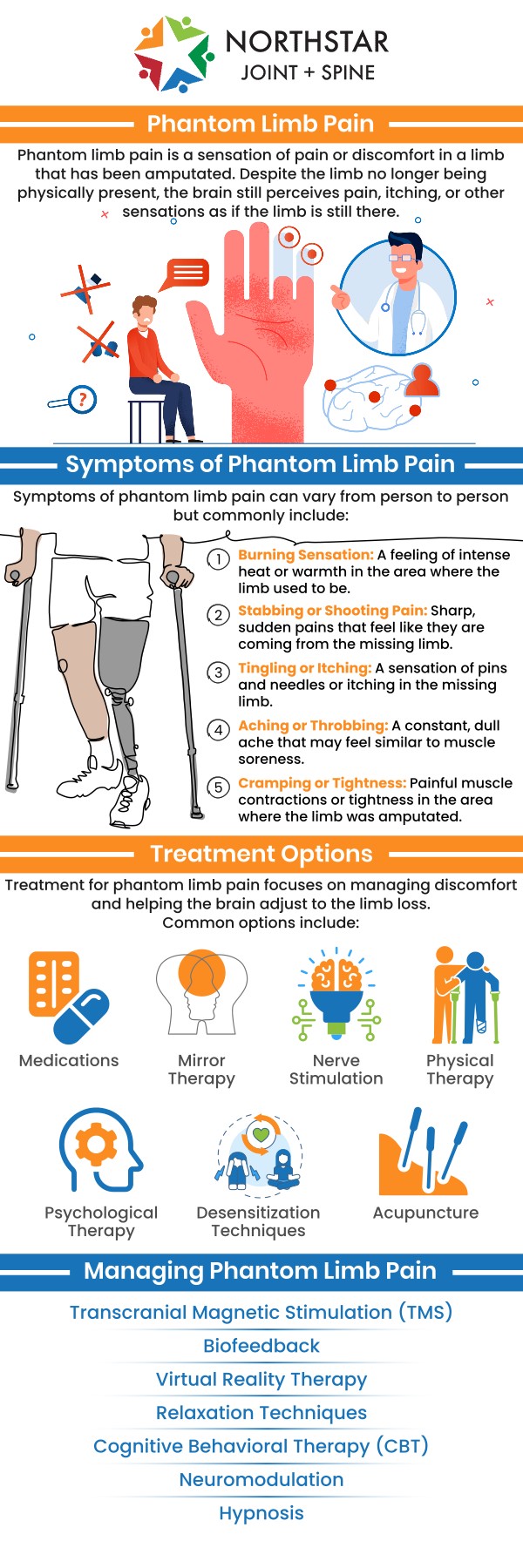
Table of Contents:
What is phantom limb pain?
What does phantom limb pain feel like?
How is phantom limb pain diagnosed?
When should phantom limb pain be medically evaluated?
Can nerve-related treatments help manage phantom limb pain?
Explore Phantom Limb Pain Treatment in Plano, TX With Board-Certified Dr. Robert J. Nocerini, MD at Northstar Joint and Spine
Phantom limb pain refers to pain or uncomfortable sensations that appear to come from a limb or part of a limb that is no longer present. The symptoms are real and may vary significantly in intensity, duration, and frequency. Some patients experience occasional discomfort, while others develop persistent symptoms that interfere with sleep, movement, concentration, and everyday activities.
At Northstar Joint & Spine in Plano, TX, board-certified Dr. Robert J. Nocerini, MD, provides individualized evaluations for patients experiencing phantom limb pain. Board-certified in Pain Medicine and Anesthesiology, Dr. Nocerini brings more than 26 years of clinical experience to the management of complex and nerve-related pain conditions. He carefully reviews each patient’s symptoms, medical history, previous care, and functional concerns before recommending appropriate treatment options.
Phantom limb pain is discomfort that feels as though it is coming from a body part that has been removed. Although the limb is no longer physically present, the nerves, spinal cord, and brain may continue to process signals associated with that area. Changes in nerve signaling and the way the brain represents the missing limb may contribute to the development of these sensations.
Phantom limb pain is different from phantom limb sensation. Phantom sensations may include the feeling that the missing limb is still present, moving, positioned in a particular way, or experiencing pressure. These sensations are not always painful. Phantom limb pain, however, involves uncomfortable symptoms such as burning, stabbing, squeezing, cramping, or electric-like discomfort.
Patients may also experience residual limb pain, which occurs in the remaining portion of the limb. Phantom and residual limb symptoms can occur at the same time, making a detailed medical evaluation important. Identifying where the discomfort seems to originate helps guide a more individualized care plan.
Phantom limb pain can feel different from one patient to another. Symptoms may begin shortly after an amputation or appear later. They may remain constant, occur in brief episodes, or become more noticeable during certain times of the day.
Common descriptions include:
• Burning or heated sensations
• Sharp, stabbing, or shooting pain
• Electric-like discomfort
• Cramping or squeezing
• Throbbing or aching
• Tingling or pins-and-needles sensations
• Pressure or tightness
• The sensation that the missing limb is positioned uncomfortably
• Pain that comes and goes without an obvious trigger
• Symptoms that interrupt sleep or concentration
Some patients feel as though the missing hand, foot, fingers, or toes are clenched or held in an uncomfortable position. Others experience sudden bursts of discomfort that last for seconds or minutes. Symptoms may also become more noticeable during stress, changes in temperature, poor sleep, or increased sensitivity around the residual limb.
Because phantom limb pain is related to complex nerve signaling, its severity does not always correspond to visible changes in the remaining tissue. A patient may experience intense discomfort even when the residual limb appears healthy. Dr. Nocerini considers the full symptom pattern rather than relying on appearance alone.
There is no single test used to confirm phantom limb pain. Diagnosis generally begins with a detailed review of the patient’s symptoms, medical history, amputation history, medications, and previous treatments. Dr. Nocerini may ask when the discomfort began, how it feels, how often it occurs, and whether it appears to come from the missing limb or the remaining portion.
The evaluation may include:
• Identifying the location and pattern of discomfort
• Distinguishing phantom pain from residual limb pain
• Examining the remaining limb and surrounding tissues
• Checking sensation, tenderness, strength, and skin condition
• Reviewing current medications and their effectiveness
• Discussing sleep, movement, and daily limitations
• Reviewing available imaging or diagnostic test results
• Determining whether nerve irritation may be contributing to symptoms
Dr. Nocerini may also evaluate for other possible sources of pain, including nerve compression, scar sensitivity, skin concerns, circulation changes, or pressure from a prosthetic device. Additional testing may be considered when symptoms suggest another condition that requires attention.
A clear diagnosis helps prevent patients from receiving treatment based only on general pain symptoms. It also allows Dr. Nocerini to develop recommendations that address the specific type and location of discomfort.
Phantom limb pain should be medically evaluated when symptoms persist, become more intense, occur more frequently, or interfere with normal activities. Patients should also seek care when discomfort makes it difficult to sleep, concentrate, move comfortably, use a prosthetic device, or complete routine responsibilities.
An evaluation may be appropriate when:
• Pain is not adequately controlled by the current plan
• Burning, shooting, or electric sensations are increasing
• Symptoms repeatedly interrupt sleep
• The remaining limb becomes increasingly sensitive
• Pain affects walking, balance, or daily movement
• New numbness or weakness develops
• Medication causes unwanted effects
• Symptoms change in location or character
• Discomfort begins limiting independence or quality of life
New redness, swelling, drainage, fever, skin breakdown, or significant changes in the residual limb should be assessed promptly. These signs may indicate a concern separate from phantom pain that requires additional medical attention.
Patients do not need to wait until symptoms become overwhelming before consulting a pain management physician. Earlier evaluation can help clarify the source of discomfort and determine whether the existing care plan should be adjusted.
Nerve-related treatments may help selected patients manage phantom limb pain, especially when persistent symptoms have not responded adequately to initial care. The appropriate option depends on the symptom pattern, location of discomfort, overall health, and results of previous treatments.
Medication management may be used to help address abnormal nerve signaling and reduce burning, shooting, or electric-like sensations. Dr. Nocerini carefully reviews current prescriptions, possible interactions, effectiveness, and safety before recommending changes.
Targeted nerve blocks may also be considered when a specific nerve appears to contribute to persistent discomfort. These procedures deliver medication near a selected nerve and may help reduce pain signals while providing useful information about the possible source of symptoms.
For certain patients, Peripheral Nerve Stimulation may be evaluated as part of an individualized treatment plan. This minimally invasive approach delivers mild electrical impulses near a targeted peripheral nerve to help modify the transmission of pain signals. Dr. Nocerini reviews the patient’s diagnosis, symptom duration, medical history, and response to previous care before determining whether this option may be appropriate.
Treatment goals may include reducing the frequency or intensity of discomfort, improving sleep, supporting movement, and helping patients participate more comfortably in daily activities. Results vary, and ongoing follow-up allows the care plan to be adjusted as symptoms and needs change.
Northstar Joint & Spine provides phantom limb pain evaluations for patients in Plano and nearby communities, including Legacy West, Granite Park, Willow Bend, Frisco, Allen, The Colony, Richardson, and North Dallas. Through detailed assessment, clear communication, and personalized treatment planning, Dr. Robert J. Nocerini, MD, helps patients explore appropriate options for managing phantom limb pain and improving daily comfort.
Board-certified in Pain Medicine and Anesthesiology, Dr. Robert J. Nocerini, MD, provides personalized care for phantom limb pain at Northstar Joint & Spine in Plano, TX. Phantom limb pain may cause burning, tingling, cramping, pressure, stabbing discomfort, or electric-like sensations that seem to come from a limb that is no longer present. Dr. Nocerini carefully evaluates each patient’s symptoms, medical history, previous treatments, and daily limitations to distinguish phantom limb pain from discomfort affecting the remaining portion of the limb.
Treatment recommendations are tailored to the location, severity, and frequency of symptoms, as well as the patient’s overall health and response to prior care. Options may include medication management, targeted nerve blocks, and Peripheral Nerve Stimulation for selected patients with persistent nerve-related discomfort. Dr. Nocerini focuses on reducing pain, improving sleep and daily function, and helping patients manage phantom limb symptoms through an individualized care plan. For more information, contact us today or schedule an appointment online. We are conveniently located at 7704 San Jacinto Pl Suite 200 Plano, TX 75024. We proudly serve patients from Plano TX, Frisco TX, Allen TX, McKinney TX, Richardson TX, Carrollton TX, Addison TX, The Colony TX, North Dallas TX, and surrounding communities throughout Collin County and the Dallas-Fort Worth area.

Check Out Our 5 Star Reviews


Additional Services You May Need
▸ Lower Back Pain
▸ Back Pain
▸ Shoulder Pain
▸ Chronic Pain
▸ Epidural Steroid Injections
▸ Spinal Cord Stimulation
▸ Viscosupplementation
▸ Genicular Nerve Blocks
▸ Facet Injections
▸ Joint Injections
▸ Sacroiliac Joint Injections
▸ Lumbar and Cervical
▸ Facet Medial Branch Blocks
▸ Diagnostic Nerve Blocks
▸ Medication Management
▸ Neck Pain Doctor
▸ Diabetic Peripheral Neuropathy
▸ Headaches
▸ Suboxone
▸ Peripheral Nerve Stimulation
▸ Wrist Pain
▸ Spine
▸ Joints
▸ Muscles
▸ Bones

Additional Services You May Need
▸ Lower Back Pain
▸ Back Pain
▸ Shoulder Pain
▸ Chronic Pain
▸ Epidural Steroid Injections
▸ Spinal Cord Stimulation
▸ Viscosupplementation
▸ Genicular Nerve Blocks
▸ Facet Injections
▸ Joint Injections
▸ Sacroiliac Joint Injections
▸ Lumbar and Cervical
▸ Facet Medial Branch Blocks
▸ Diagnostic Nerve Blocks
▸ Medication Management
▸ Neck Pain Doctor
▸ Diabetic Peripheral Neuropathy
▸ Headaches
▸ Suboxone
▸ Peripheral Nerve Stimulation
▸ Wrist Pain
▸ Spine
▸ Joints
▸ Muscles
▸ Bones





 Send Text
 How May I Help You?
