

What Symptoms Develop During Each Stage of Neck Osteoarthritis?
Neck osteoarthritis symptoms may change over time, beginning with occasional stiffness, mild aching, or discomfort after prolonged sitting. As symptoms progress, patients may notice reduced range of motion, headaches, clicking or grinding sensations, and increased pain with movement. More advanced symptoms may include numbness, tingling, burning, or weakness extending into the shoulders, arms, or hands. Board-certified Dr. Robert J. Nocerini, MD, at NorthStar Joint & Spine provides personalized evaluations based on each patient’s symptoms, diagnostic findings, and daily limitations. For more information, contact us today or schedule an appointment online. We are conveniently located at 7704 San Jacinto Pl Suite 200 Plano, TX 75024.
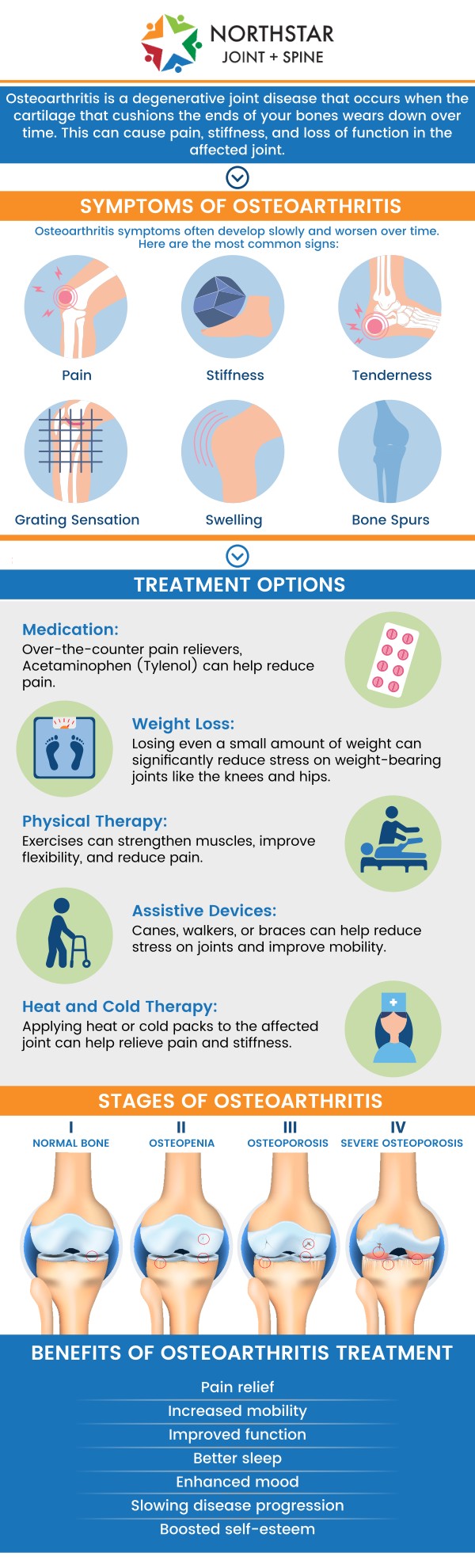
Table of Contents:
How may neck osteoarthritis symptoms change over time?
Can neck osteoarthritis cause stiffness after waking up?
Does neck osteoarthritis discomfort worsen with movement?
Can prolonged sitting increase neck osteoarthritis symptoms?
Can neck osteoarthritis cause clicking or grinding sensations?
When should neck osteoarthritis symptoms be evaluated?
Understand Symptoms During Each Stage of Neck Osteoarthritis With Board-Certified Dr. Robert J. Nocerini, MD at NorthStar Joint and Spine
Neck osteoarthritis, also called cervical spondylosis, develops as the joints, discs, and other structures of the cervical spine change over time. Some people have visible changes without noticeable symptoms, while others experience neck pain, stiffness, reduced movement, headaches, or discomfort extending toward the shoulders and arms.
Neck osteoarthritis does not always progress through clearly defined medical stages. Symptoms may instead be described as mild, moderate, or advanced according to their frequency, intensity, effect on movement, and involvement of nearby nerves. At NorthStar Joint & Spine, board-certified Dr. Robert J. Nocerini, MD, evaluates each patient’s symptom pattern, medical history, diagnostic findings, and daily limitations before recommending an individualized care plan.
During an earlier phase, symptoms may be occasional and noticeable mainly after prolonged activity or holding the neck in one position. A patient may experience mild stiffness after waking, temporary soreness at the base of the neck, or discomfort after working at a computer. Symptoms may improve after changing positions or beginning gentle daily movement.
As the condition becomes more symptomatic, pain and stiffness may occur more frequently. Turning the head, looking upward, driving, reading, or remaining seated may become less comfortable. Some patients also notice clicking, popping, or grinding sensations during neck movement. These sounds do not always indicate that the condition is severe, but they should be evaluated when accompanied by persistent pain or reduced mobility.
More advanced symptoms may include greater restriction of neck movement or discomfort that spreads toward the shoulder, upper back, arm, or hand. If a cervical nerve becomes irritated or compressed, numbness, tingling, burning sensations, or weakness may also develop. Imaging changes do not always match symptom severity, so treatment decisions should be based on the complete clinical evaluation rather than imaging alone.
Yes, neck osteoarthritis can cause stiffness after waking or after remaining still for an extended period. During rest, the neck joints and surrounding muscles may move less, making the area feel tight when a person first changes position.
Morning symptoms may include:
• Tightness across the back or sides of the neck
• Difficulty turning the head comfortably
• Aching near the base of the skull
• Reduced comfort while looking upward or downward
• Stiffness extending toward the shoulders
• A need to move gradually after waking
The type of pillow, sleeping position, duration of sleep, and position of the neck overnight may influence how symptoms feel in the morning. A neck that remains turned, elevated, or unsupported for several hours may feel more uncomfortable after waking.
Morning stiffness alone does not confirm neck osteoarthritis. Muscle tension, disc-related conditions, and other cervical spine concerns can create similar symptoms. Dr. Nocerini evaluates how long the stiffness lasts, whether gentle movement changes it, and whether it occurs with headaches, radiating discomfort, numbness, or weakness.
Neck osteoarthritis discomfort may worsen during or after movement, particularly when affected joints and surrounding structures are repeatedly loaded. Common movements that may increase symptoms include turning the head, looking upward, bending the neck forward, or repeatedly moving between positions.
Patients may notice increased discomfort while:
• Checking traffic while driving
• Looking upward toward a shelf
• Reading with the head tilted downward
• Turning toward one side
• Reaching overhead
• Using a phone or computer
• Completing repetitive upper-body tasks
• Holding the neck in an unsupported position
Movement-related pain does not mean all neck movement should be avoided. Complete inactivity may contribute to increased stiffness and reduced movement tolerance. Instead, patients may benefit from changing positions regularly and avoiding motions that repeatedly produce sharp, radiating, or progressively worsening symptoms.
The specific movement that causes discomfort can provide helpful information during an evaluation. Pain with turning may suggest a different contributing structure than symptoms produced while bending forward or looking upward. Dr. Nocerini assesses the direction, range, and quality of movement to help determine which cervical structures may be involved.
Yes, prolonged sitting can increase neck osteoarthritis symptoms, particularly when the head remains forward or the neck is held in one position. Working at a computer, reading, driving, or looking down at a phone may place continuous demand on the cervical joints and surrounding muscles.
Prolonged sitting may contribute to:
• Increasing neck stiffness
• Aching between the neck and shoulders
• Reduced comfort while turning the head
• Headaches beginning near the base of the skull
• Muscle tightness across the upper back
• Burning or radiating discomfort
• Tingling or numbness when a nerve is involved
A person may gradually shift the head forward while concentrating on a screen. This position can increase the effort required from the muscles that support the neck. Symptoms may also become more noticeable when a chair, desk, screen, or steering wheel does not allow the neck to remain comfortably aligned.
Patients may find it helpful to change positions regularly, place frequently viewed materials closer to eye level, and avoid remaining seated for long periods without movement. Persistent symptoms should be medically evaluated to determine whether they are related to neck osteoarthritis, muscle tension, a disc condition, or nerve irritation.
Yes, neck osteoarthritis may cause clicking, popping, creaking, or grinding sensations during movement. This is sometimes called crepitus. It may occur as joint surfaces, discs, ligaments, or nearby structures move during rotation, bending, or extension of the neck.
Some people notice these sensations without pain. In other cases, the sounds occur with:
• Neck stiffness
• Localized aching
• Reduced range of motion
• Tenderness near the cervical joints
• Discomfort extending toward the shoulders
• Headaches
• Symptoms that worsen during repeated movement
Clicking or grinding does not always indicate that serious changes are present. The significance depends on whether the sensation is new, painful, persistent, or accompanied by nerve-related symptoms. A detailed evaluation can help distinguish common joint sounds from symptoms that require focused care.
Patients should avoid repeatedly forcing the neck to pop or move beyond a comfortable range. Dr. Nocerini can assess the movements that produce the sensation and determine whether cervical joints, discs, muscles, or nerves may be contributing.
Medical evaluation may be appropriate when neck discomfort lasts for several weeks, returns frequently, restricts movement, or interferes with sleep, driving, work, or daily responsibilities. Patients should also schedule an evaluation when symptoms spread toward the shoulder or arm or occur with numbness, tingling, burning, or weakness.
Dr. Nocerini may review:
• The location and duration of symptoms
• Movements and positions that increase discomfort
• Morning stiffness and restricted motion
• Clicking or grinding sensations
• Headaches associated with neck symptoms
• Numbness, tingling, or weakness
• Previous care and its results
• Available imaging or diagnostic findings
• The effect of symptoms on daily activities
A focused examination may assess neck movement, tenderness, strength, sensation, and reflexes. Imaging may be reviewed when needed, but findings are interpreted together with the patient’s symptoms and examination because age-related cervical changes can also appear in people without pain.
At NorthStar Joint & Spine, Dr. Robert J. Nocerini, MD, provides personalized evaluations for patients experiencing neck osteoarthritis symptoms in Plano and nearby communities. His goal is to identify possible contributing sources, explain the findings clearly, and develop an appropriate plan focused on reducing discomfort, supporting neck movement, and improving everyday function.
Board-certified in Pain Medicine and Anesthesiology, Dr. Robert J. Nocerini, MD, evaluates symptoms associated with neck osteoarthritis at NorthStar Joint & Spine. Early symptoms may include occasional stiffness, mild aching, or discomfort after prolonged sitting, while more advanced symptoms may involve reduced range of motion, headaches, clicking or grinding sensations, and pain extending toward the shoulders or arms. Numbness, tingling, burning sensations, or weakness may also occur when nearby cervical nerves are affected.
Dr. Nocerini carefully reviews each patient’s symptom pattern, medical history, diagnostic findings, and daily limitations to determine how the condition is affecting movement and function. Treatment recommendations are personalized according to symptom severity, the structures involved, previous care, and individual goals, with a focus on reducing discomfort, supporting neck mobility, and helping patients complete everyday activities more comfortably. For more information, contact us today or schedule an appointment online. We are conveniently located at 7704 San Jacinto Pl Suite 200 Plano, TX 75024. We proudly serve patients from Plano TX, Frisco TX, Allen TX, McKinney TX, Richardson TX, Carrollton TX, Addison TX, The Colony TX, North Dallas TX, and surrounding communities throughout Collin County and the Dallas-Fort Worth area.

Check Out Our 5 Star Reviews


Additional Services You May Need
▸ Lower Back Pain
▸ Back Pain
▸ Shoulder Pain
▸ Chronic Pain
▸ Epidural Steroid Injections
▸ Spinal Cord Stimulation
▸ Viscosupplementation
▸ Genicular Nerve Blocks
▸ Facet Injections
▸ Joint Injections
▸ Sacroiliac Joint Injections
▸ Lumbar and Cervical
▸ Facet Medial Branch Blocks
▸ Diagnostic Nerve Blocks
▸ Medication Management
▸ Neck Pain Doctor
▸ Diabetic Peripheral Neuropathy
▸ Headaches
▸ Suboxone
▸ Peripheral Nerve Stimulation
▸ Wrist Pain
▸ Spine
▸ Joints
▸ Muscles
▸ Bones

Additional Services You May Need
▸ Lower Back Pain
▸ Back Pain
▸ Shoulder Pain
▸ Chronic Pain
▸ Epidural Steroid Injections
▸ Spinal Cord Stimulation
▸ Viscosupplementation
▸ Genicular Nerve Blocks
▸ Facet Injections
▸ Joint Injections
▸ Sacroiliac Joint Injections
▸ Lumbar and Cervical
▸ Facet Medial Branch Blocks
▸ Diagnostic Nerve Blocks
▸ Medication Management
▸ Neck Pain Doctor
▸ Diabetic Peripheral Neuropathy
▸ Headaches
▸ Suboxone
▸ Peripheral Nerve Stimulation
▸ Wrist Pain
▸ Spine
▸ Joints
▸ Muscles
▸ Bones





 Send Text
 How May I Help You?
