

Myofascial Pain Syndrome Treatment in Plano, TX
Patients seeking myofascial pain syndrome treatment in Plano, TX, can receive personalized care from board-certified Dr. Robert J. Nocerini, MD, at Northstar Joint & Spine. He evaluates symptoms such as deep muscle aching, sensitive trigger points, stiffness, restricted movement, and discomfort that spreads to nearby areas. Treatment recommendations may include medication management, targeted injections, stretching guidance, and activity adjustments when appropriate. Each care plan is tailored to the patient’s symptoms, medical history, previous treatments, and daily functional goals. For more information, contact us today or schedule an appointment online. We are conveniently located at 7704 San Jacinto Pl Suite 200 Plano, TX 75024.
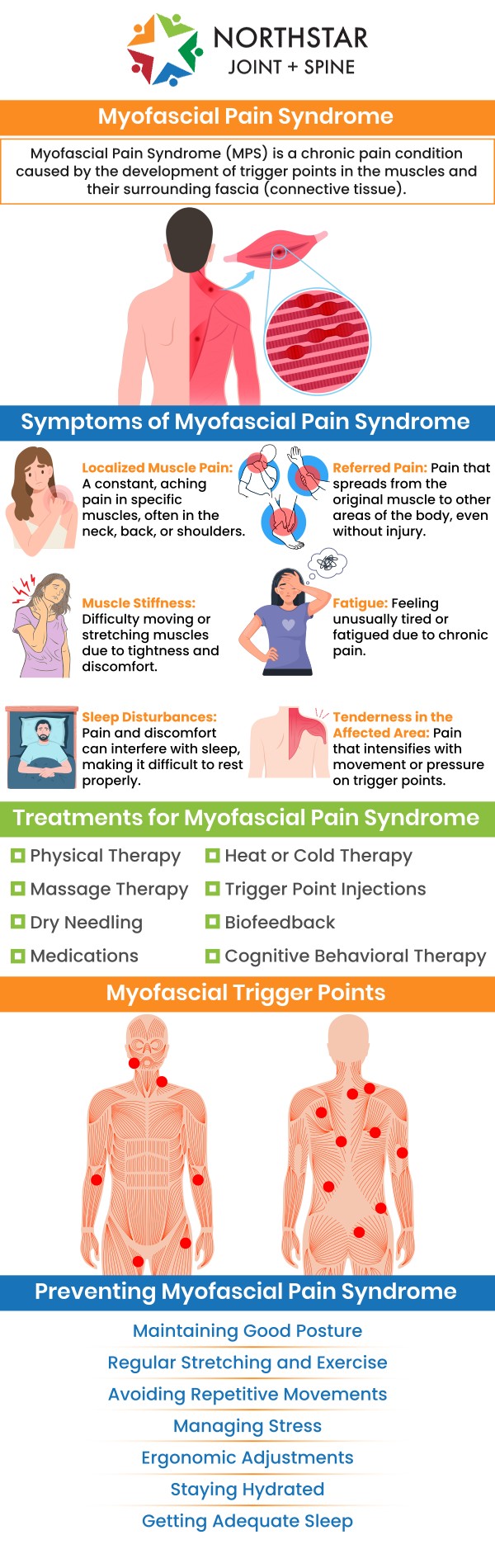
Table of Contents:
What is myofascial pain syndrome?
How common is myofascial pain syndrome?
What are the common symptoms of myofascial pain syndrome?
How does myofascial pain develop in the body?
What should you avoid if you have myofascial pain syndrome?
What causes myofascial pain syndrome?
How is myofascial pain syndrome diagnosed?
Explore Myofascial Pain Syndrome Treatment in Plano, TX With Board-Certified Dr. Robert J. Nocerini, MD at Northstar Joint and Spine
Myofascial pain syndrome is a persistent pain condition involving sensitive areas within muscles and the connective tissue surrounding them. These areas, often called trigger points, may cause localized discomfort or referred pain to another part of the body. At Northstar Joint & Spine in Plano, TX, board-certified Dr. Robert J. Nocerini, MD, evaluates muscle pain, stiffness, restricted movement, and related symptoms to develop an individualized care plan.
Board-certified in Pain Medicine and Anesthesiology, Dr. Nocerini brings more than 26 years of clinical experience to the evaluation of chronic pain conditions. He reviews each patient’s symptom pattern, daily activities, medical history, previous care, and functional limitations before recommending suitable options.
Myofascial pain syndrome is a regional pain condition that affects muscles, fascia, and nearby soft tissues. It is commonly associated with trigger points, which are highly sensitive areas found within tight bands of muscle. Pressing on a trigger point may reproduce discomfort in the same area or cause referred pain elsewhere in the body.
For example, a sensitive area in the neck or upper back may cause discomfort that spreads toward the shoulder or head. Trigger points affecting the lower back or hip region may contribute to aching or tightness in a nearby area. Symptoms may develop gradually and can become persistent when contributing factors remain unaddressed.
Myofascial pain syndrome differs from general muscle soreness because symptoms tend to continue, return repeatedly, or involve recognizable patterns of referred discomfort. The condition may also affect flexibility, sleep, concentration, posture, and tolerance for everyday movement.
Myofascial pain syndrome is considered common, particularly among people seeking care for regional muscle pain. However, its exact prevalence is difficult to determine because there is no single universally accepted set of diagnostic criteria. Its symptoms may also overlap with other pain conditions, which can delay recognition.
The condition may affect adults of different ages and activity levels. It can occur in people whose work involves prolonged sitting, repetitive movements, sustained muscle tension, or limited changes in position. It may also develop in individuals with ongoing spinal discomfort, altered movement patterns, poor sleep, or other medical conditions that affect muscle function.
Because the symptoms may initially feel like ordinary tightness or soreness, some patients delay seeking an evaluation. Persistent pain, recurring muscle knots, restricted movement, or discomfort that spreads beyond the sensitive area may indicate the need for a more detailed assessment.
Symptoms may vary depending on the muscles involved, the number of active trigger points, and how long the condition has been present. Discomfort may remain localized or spread to a predictable nearby region.
Common symptoms may include:
• Deep aching or persistent muscle discomfort
• Sensitive knots or tight bands within a muscle
• Pain that increases when a tender area is pressed
• Discomfort that spreads beyond the affected muscle
• Muscle stiffness or tightness
• Reduced flexibility or range of motion
• Symptoms that worsen during certain movements
• Difficulty finding a comfortable sleeping position
• Muscle weakness related to discomfort or limited use
• Headaches associated with sensitive neck or shoulder muscles
• Pain that continues despite rest
• Increased discomfort during periods of stress
Trigger points may be active or latent. An active trigger point produces ongoing or movement-related symptoms, while a latent point may be sensitive only when pressed. A clinical examination may also identify a brief muscle contraction, known as a local twitch response, when a sensitive area is stimulated.
Myofascial pain may develop when a muscle remains tense, overloaded, or repeatedly activated without sufficient recovery. Prolonged static positions, repetitive tasks, limited movement variety, and inefficient posture may place continued demand on particular muscle groups.
As muscle fibers remain contracted, a sensitive area may form within a tight band of tissue. This area may become painful when pressed and may contribute to altered movement. The patient may then compensate by relying on nearby muscles, potentially creating additional tightness and discomfort.
Poor sleep, emotional stress, limited activity, nutritional concerns, and certain medical conditions may also contribute to persistent muscle sensitivity. Muscle overuse or underuse, postural factors, structural changes, vitamin deficiencies, and thyroid dysfunction may play a role in some cases.
The condition does not always have one clearly identifiable cause. Dr. Nocerini therefore considers the complete clinical picture rather than focusing only on the location where pain is felt.
Patients with myofascial pain syndrome should avoid repeatedly pushing through activities that clearly intensify symptoms. Continuing the same movement or position without modification may maintain muscle tension and make recovery more difficult.
It may be helpful to avoid:
• Remaining in one position for extended periods
• Repetitive movements without adequate breaks
• Sudden increases in exercise intensity
• Heavy activity that consistently worsens pain
• Ignoring recurring muscle tightness or referred discomfort
• Poorly supported sitting or sleeping positions
• Excessive pressure or aggressive self-massage over sensitive areas
• Inadequate sleep and recovery
• Depending only on temporary symptom relief without evaluation
Complete inactivity may also contribute to stiffness and reduced tolerance for movement. Activity should be adjusted rather than stopped unnecessarily. A medical evaluation can help determine which movements should be limited temporarily and which gentle activities may be appropriate.
Myofascial pain syndrome may result from a combination of muscular, postural, medical, and lifestyle factors. Common contributors include repeated muscle use, prolonged sitting, sustained muscle contraction, reduced flexibility, altered spinal mechanics, and inefficient movement patterns.
Other possible contributing factors include:
• Ongoing neck or back discomfort
• Muscle imbalance or reduced conditioning
• Repetitive occupational tasks
• Poor-quality sleep
• Psychological stress and persistent muscle tension
• Vitamin or nutritional deficiencies
• Thyroid or metabolic conditions
• Joint stiffness that changes normal movement
• Limited recovery between demanding activities
• Temperature changes that increase muscle tightness
Not every patient has the same contributing factors. Identifying what maintains the symptoms is an important part of developing an appropriate care plan.
Myofascial pain syndrome is primarily diagnosed through the patient’s medical history and a focused clinical examination. There is no single laboratory or imaging test that confirms every case. Dr. Nocerini may ask where symptoms occur, whether pain spreads, which activities aggravate it, and how it affects sleep, work, and daily movement.
During the examination, he may evaluate:
• Muscle tenderness and tight bands
• Areas that reproduce familiar discomfort
• Referred pain patterns
• Range of motion and flexibility
• Muscle strength and coordination
• Posture and movement patterns
• Sensation and reflexes when appropriate
• Other possible sources of similar symptoms
Imaging, laboratory studies, or electrodiagnostic testing may be reviewed or recommended when necessary to evaluate other possible conditions. These tests are generally used to clarify contributing factors or rule out another source rather than directly confirm myofascial pain syndrome.
After identifying the likely source of symptoms, Dr. Nocerini may recommend medication management, targeted injections, activity adjustments, stretching guidance, or other appropriate pain-relieving strategies. Each plan is based on the affected muscles, symptom severity, medical history, and individual functional goals.
At Northstar Joint & Spine, patients from Plano, Legacy West, Granite Park, Willow Bend, Frisco, Allen, The Colony, Richardson, and nearby North Dallas communities can receive a personalized evaluation for myofascial pain syndrome. Dr. Robert J. Nocerini, MD, focuses on reducing discomfort, improving movement, and helping patients manage persistent muscle pain through attentive follow-up and individualized care.
Board-certified in Pain Medicine and Anesthesiology, Dr. Robert J. Nocerini, MD, provides personalized care for myofascial pain syndrome at Northstar Joint & Spine in Plano, TX. This condition may cause deep aching, sensitive muscle knots, stiffness, reduced range of motion, and discomfort that spreads beyond the affected area. Dr. Nocerini carefully evaluates each patient’s symptoms, medical history, daily activities, and functional limitations to identify possible trigger points and contributing factors.
Treatment recommendations are tailored to the location and severity of symptoms, previous care, and individual goals. Options may include medication management, targeted injections, activity adjustments, and stretching guidance when appropriate. Dr. Nocerini focuses on reducing persistent muscle discomfort, improving movement, and helping patients manage myofascial pain through an individualized care plan and ongoing follow-up. For more information, contact us today or schedule an appointment online. We are conveniently located at 7704 San Jacinto Pl Suite 200 Plano, TX 75024. We proudly serve patients from Plano TX, Frisco TX, Allen TX, McKinney TX, Richardson TX, Carrollton TX, Addison TX, The Colony TX, North Dallas TX, and surrounding communities throughout Collin County and the Dallas-Fort Worth area.

Check Out Our 5 Star Reviews


Additional Services You May Need
▸ Lower Back Pain
▸ Back Pain
▸ Shoulder Pain
▸ Chronic Pain
▸ Epidural Steroid Injections
▸ Spinal Cord Stimulation
▸ Viscosupplementation
▸ Genicular Nerve Blocks
▸ Facet Injections
▸ Joint Injections
▸ Sacroiliac Joint Injections
▸ Lumbar and Cervical
▸ Facet Medial Branch Blocks
▸ Diagnostic Nerve Blocks
▸ Medication Management
▸ Neck Pain Doctor
▸ Diabetic Peripheral Neuropathy
▸ Headaches
▸ Suboxone
▸ Peripheral Nerve Stimulation
▸ Wrist Pain
▸ Spine
▸ Joints
▸ Muscles
▸ Bones

Additional Services You May Need
▸ Lower Back Pain
▸ Back Pain
▸ Shoulder Pain
▸ Chronic Pain
▸ Epidural Steroid Injections
▸ Spinal Cord Stimulation
▸ Viscosupplementation
▸ Genicular Nerve Blocks
▸ Facet Injections
▸ Joint Injections
▸ Sacroiliac Joint Injections
▸ Lumbar and Cervical
▸ Facet Medial Branch Blocks
▸ Diagnostic Nerve Blocks
▸ Medication Management
▸ Neck Pain Doctor
▸ Diabetic Peripheral Neuropathy
▸ Headaches
▸ Suboxone
▸ Peripheral Nerve Stimulation
▸ Wrist Pain
▸ Spine
▸ Joints
▸ Muscles
▸ Bones





 Send Text
 How May I Help You?
