

Wrist Pain Diagnosis in Plano, TX
Wrist pain diagnosis helps identify the possible causes behind ongoing discomfort, stiffness, weakness, or changes in wrist function. At NorthStar Joint & Spine in Plano, TX, patients receive personalized evaluations to better understand the factors contributing to wrist pain. Board-Certified Dr. Robert J. Nocerini, MD, focuses on reviewing symptoms and developing individualized pain management plans based on each patient’s condition. Through detailed assessment and targeted care approaches, NorthStar Joint & Spine helps patients explore options for managing wrist pain and improving daily comfort. For more information, contact us today or schedule an appointment online. We are conveniently located at 7704 San Jacinto Pl Suite 200 Plano, TX 75024.
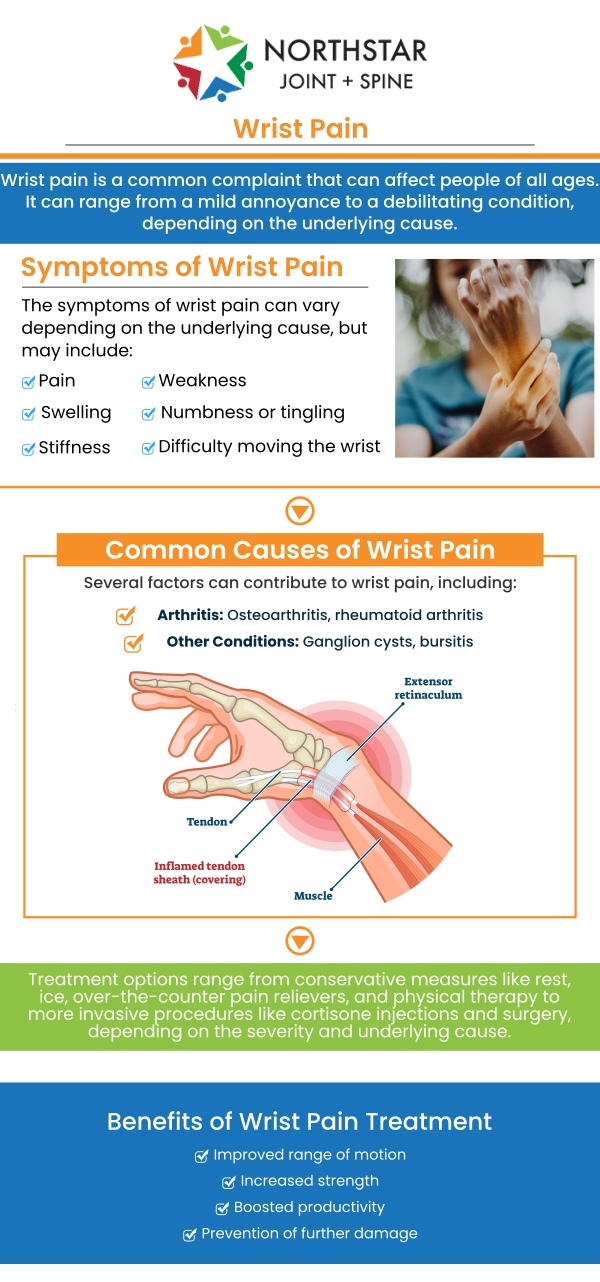
Table of Contents:
How is the cause of wrist pain diagnosed?
What tests are used to diagnose wrist pain?
What happens during a wrist pain evaluation?
When should you seek a diagnosis for wrist pain?
Wrist Pain Diagnosis With Board-Certified Dr. Robert J. Nocerini at NorthStar Joint & Spine in Plano, TX
Explore Related Services at NorthStar Joint & Spine
Wrist pain can develop for many reasons, including arthritis, tendon irritation, joint inflammation, repetitive strain, or nerve-related conditions. Because different problems can produce similar symptoms, an accurate wrist pain diagnosis is important before determining appropriate care. The location of discomfort, movements that trigger symptoms, presence of numbness or tingling, and changes in grip strength can all provide useful clues about what may be contributing to wrist pain.
At NorthStar Joint & Spine in Plano, TX, Board-Certified Dr. Robert J. Nocerini, MD, evaluates persistent wrist pain by reviewing symptoms, medical history, functional limitations, and available diagnostic information. This individualized approach helps determine whether discomfort may be related to the joint, surrounding soft tissues, or nearby nerves and guides personalized pain management recommendations.
How is the cause of wrist pain diagnosed?
Diagnosing wrist pain generally begins with a detailed discussion about how and when symptoms developed. A physician may ask where the discomfort is located, whether it remains in one area or spreads into the hand or forearm, and which movements make symptoms better or worse. Patients may also be asked whether they experience stiffness, swelling, burning sensations, numbness, tingling, or weakness.
A focused examination may assess:
• Wrist range of motion
• Areas of tenderness
• Grip strength
• Sensation in the hand and fingers
• Movements that reproduce discomfort
• Swelling or joint stiffness
• Signs suggesting possible nerve involvement
The pattern of symptoms can help narrow down possible causes. For example, discomfort primarily associated with joint movement may have different contributing factors than wrist pain accompanied by tingling or reduced sensation.
Because wrist symptoms can originate from several structures, diagnosis is based on the overall clinical picture rather than a single symptom. At NorthStar Joint & Spine in Plano, TX, Board-Certified Dr. Robert J. Nocerini, MD, evaluates wrist pain symptoms by reviewing each patient’s condition, medical history, and functional concerns to develop a personalized pain management approach.Add image
What tests are used to diagnose wrist pain?
The tests used for a wrist pain diagnosis depend on the patient’s symptoms and what the initial examination suggests. Not every patient requires the same testing, and additional studies may be considered when more information is needed.
Possible diagnostic approaches may include:
| Evaluation | What It May Help Assess |
| Physical examination | Movement, tenderness, strength, and symptom patterns |
| X-ray imaging | Joint alignment and certain bone or arthritic changes |
| MRI | Soft tissues, joints, and surrounding structures |
| Nerve-related testing | Possible nerve dysfunction or compression |
| Laboratory testing | Certain inflammatory or systemic conditions when indicated |
Diagnostic imaging may be particularly useful when symptoms are persistent or when joint-related changes are suspected. When numbness, tingling, burning sensations, or weakness accompany wrist pain, additional evaluation may help determine whether a nerve is involved.
Testing should be selected according to the individual patient rather than routinely performed in every case.
What happens during a wrist pain evaluation?
A wrist pain evaluation typically begins with a review of symptoms and medical history. Patients should be prepared to explain when their pain started, whether it is constant or intermittent, what movements trigger it, and how the symptoms affect everyday activities such as typing, gripping, carrying objects, opening containers, or using the hand for repetitive tasks.
The physician may also ask about:
• How long symptoms have been present
• Whether pain is getting better or worse
• Where discomfort is most noticeable
• Whether symptoms extend into the hand or forearm
• Changes in grip strength
• Numbness, tingling, or burning sensations
• Previous medical conditions and health factors
• Treatments already attempted
A focused examination may then assess wrist movement, strength, tenderness, sensation, and symptom reproduction with specific movements.
At NorthStar Joint & Spine, the evaluation also considers how wrist discomfort affects the patient’s daily function. Understanding not only how pain feels but also what activities have become difficult can provide valuable information when creating an individualized pain management plan.
When should you seek a diagnosis for wrist pain?
Medical evaluation may be appropriate when wrist pain persists, repeatedly returns, becomes progressively more noticeable, or interferes with normal hand and wrist use. Symptoms that continue despite changes in activity or basic home care may warrant further assessment to determine whether an underlying joint- or nerve-related condition is contributing.
Consider seeking a wrist pain diagnosis when you notice:
• Persistent or recurring wrist discomfort
• Increasing stiffness or limited motion
• Difficulty gripping or holding objects
• Numbness or tingling in the hand or fingers
• Burning or electric-like sensations
• Weakness affecting hand function
• Pain that interferes with work or daily activities
Early evaluation can help clarify what may be contributing to symptoms and whether additional testing or targeted pain management is appropriate.
Prompt medical attention may be needed when symptoms change suddenly or when substantial weakness, loss of sensation, or other significant neurological changes occur.
Wrist Pain Diagnosis With Board-Certified Dr. Robert J. Nocerini at NorthStar Joint & Spine in Plano, TX
At NorthStar Joint & Spine in Plano, TX, Board-Certified Dr. Robert J. Nocerini, MD, provides personalized evaluations for patients experiencing persistent wrist pain. He reviews the location and pattern of discomfort, symptom duration, medical history, previous care, and the effect wrist symptoms have on hand function and daily activities.
Dr. Nocerini may also evaluate whether numbness, tingling, burning sensations, weakness, or other symptoms suggest possible nerve involvement. Available diagnostic findings are considered alongside the clinical evaluation to help identify possible contributing factors and determine appropriate next steps.
Treatment recommendations are individualized according to the patient’s diagnosis and clinical needs. The goal is to help patients better understand the source of their symptoms, manage discomfort, and support more comfortable use of the wrist and hand during everyday activities. For more information, contact us today or schedule an appointment online. We are conveniently located at 7704 San Jacinto Pl Suite 200 Plano, TX 75024. We proudly serve patients from Plano TX, Frisco TX, Allen TX, McKinney TX, Richardson TX, Carrollton TX, Addison TX, The Colony TX, North Dallas TX, and surrounding communities throughout Collin County and the Dallas-Fort Worth area.
Explore Related Services at NorthStar Joint & Spine
Patients seeking wrist pain evaluation may also find these related services and topics helpful:
• Wrist Pain Treatment
• Chronic Wrist Pain Management
• Joint Pain Management
• Arthritis Pain Management
• Peripheral Neuropathy Care
• Peripheral Nerve Stimulation
• Diagnostic Nerve Blocks
• Medication Management

Check Out Our 5 Star Reviews


Additional Services You May Need
▸ Lower Back Pain
▸ Back Pain
▸ Shoulder Pain
▸ Chronic Pain
▸ Epidural Steroid Injections
▸ Spinal Cord Stimulation
▸ Viscosupplementation
▸ Genicular Nerve Blocks
▸ Facet Injections
▸ Joint Injections
▸ Sacroiliac Joint Injections
▸ Lumbar and Cervical
▸ Facet Medial Branch Blocks
▸ Diagnostic Nerve Blocks
▸ Medication Management
▸ Neck Pain Doctor
▸ Diabetic Peripheral Neuropathy
▸ Headaches
▸ Suboxone
▸ Peripheral Nerve Stimulation
▸ Wrist Pain
▸ Spine
▸ Joints
▸ Muscles
▸ Bones

Additional Services You May Need
▸ Lower Back Pain
▸ Back Pain
▸ Shoulder Pain
▸ Chronic Pain
▸ Epidural Steroid Injections
▸ Spinal Cord Stimulation
▸ Viscosupplementation
▸ Genicular Nerve Blocks
▸ Facet Injections
▸ Joint Injections
▸ Sacroiliac Joint Injections
▸ Lumbar and Cervical
▸ Facet Medial Branch Blocks
▸ Diagnostic Nerve Blocks
▸ Medication Management
▸ Neck Pain Doctor
▸ Diabetic Peripheral Neuropathy
▸ Headaches
▸ Suboxone
▸ Peripheral Nerve Stimulation
▸ Wrist Pain
▸ Spine
▸ Joints
▸ Muscles
▸ Bones





 Send Text
 How May I Help You?
