

What Are the Common Causes of Tailbone Pain?
Common causes of tailbone pain may include prolonged sitting, pressure on the coccyx, poor posture, pelvic muscle tension, arthritis-related changes, or inflammation near the base of the spine. This discomfort can make sitting, standing, driving, or moving from a seated position difficult. Tailbone pain may feel like aching, soreness, pressure, or sharp discomfort around the lower spine. At Northstar Joint and Spine in Plano, TX, Board-Certified Dr. Robert Nocerini provides a personalized evaluation to identify the cause and guide targeted treatment. For more information, contact us today or book an appointment online. We are conveniently located at 7704 San Jacinto Pl Suite 200 Plano, TX 75024.
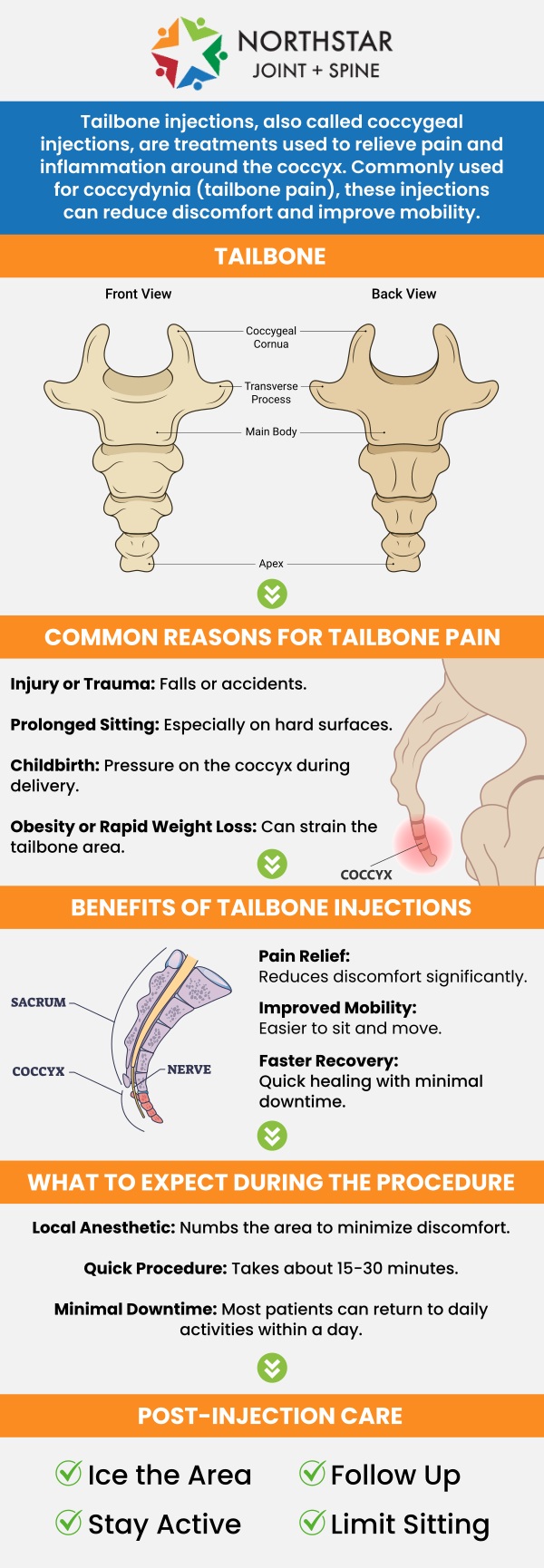
Table of Contents:
What are the most common causes of tailbone pain?
Can sitting for long periods cause tailbone pain?
Why does tailbone pain get worse when sitting or standing?
When should I see a doctor for tailbone pain?
Understanding Tailbone Pain Causes With Board Certified Dr. Robert Nocerini at Northstar Joint and Spine in Plano, TX
Tailbone pain, also known as coccydynia, can develop when the coccyx at the base of the spine becomes irritated, compressed, or inflamed. Common tailbone pain causes may include prolonged sitting, poor sitting posture, pressure from hard surfaces, repetitive seated movement, pelvic floor tension, arthritis-related changes, weight changes, pregnancy-related pressure, or inflammation around the muscles and ligaments that attach near the tailbone. Some patients feel a deep ache, while others notice sharp discomfort when sitting, leaning back, or moving from sitting to standing.
Because the tailbone connects with important muscles, ligaments, and pelvic support structures, pain in this area can affect comfort during work, driving, exercise, bowel movements, and daily activity. Symptoms may also overlap with lower back pain, hip discomfort, or nerve-related pain, making a detailed evaluation important. At Northstar Joint and Spine in Plano, TX, Board-certified Dr. Robert Nocerini focuses on identifying the reason for tailbone pain before recommending care. His patient-centered approach may include reviewing posture, sitting tolerance, pain location, mobility, and related spine or pelvic symptoms. For patients searching for tailbone pain treatment in Plano, TX, Northstar Joint and Spine provides personalized, non-surgical pain management designed to reduce discomfort, improve function, and support long-term mobility with a targeted care plan.
Yes, sitting for long periods can cause tailbone pain because the coccyx helps support body weight when a person sits. When pressure stays concentrated at the base of the spine, the surrounding joints, muscles, and ligaments may become irritated. This is especially common for people who sit for many hours at a desk, drive for long periods, sit on hard chairs, or lean backward while seated. Over time, this pressure can lead to aching, soreness, stiffness, or sharp pain around the tailbone.
Tailbone pain from sitting may feel worse on firm surfaces or after remaining in the same position for too long. Some patients feel relief when standing, leaning forward, changing posture, or using a cushion that reduces pressure on the coccyx. However, if symptoms continue, a professional evaluation can help determine whether the pain is related to posture, pelvic floor tension, inflammation, lower back mechanics, or joint irritation. At Northstar Joint and Spine in Plano, TX, Board-certified Dr. Robert Nocerini evaluates sitting-related tailbone pain with attention to daily habits, movement patterns, and symptom triggers. For patients seeking tailbone pain treatment in Plano, TX, the goal is to create a personalized plan that reduces pressure, improves sitting comfort, supports better posture, and helps patients return to work and daily routines with less discomfort.
Tailbone pain often gets worse when sitting or standing because both positions can place stress on the coccyx and nearby soft tissues. Sitting places direct pressure on the tailbone, especially when posture shifts weight backward. Standing for long periods can also increase tension through the lower back, hips, pelvis, and muscles connected near the coccyx. The transition from sitting to standing may be especially uncomfortable because the tailbone and surrounding tissues move as body weight shifts.
This type of pain may feel like a dull ache, sharp pressure, deep soreness, or stiffness at the base of the spine. Some patients notice symptoms after long desk hours, driving, cycling, rowing, or other activities that create repeated pressure near the tailbone. Others may have pain linked to arthritis, pelvic floor tension, spine mechanics, or inflammation in the tissues around the coccyx. At Northstar Joint and Spine in Plano, TX, Board Certified Dr. Robert Nocerini provides a focused evaluation to understand why tailbone pain becomes worse with sitting, standing, or position changes. His approach looks beyond the painful spot to assess posture, mobility, lower back involvement, and functional limitations. For patients searching for tailbone pain relief in Plano, TX, Northstar Joint and Spine offers personalized non-surgical pain management aimed at reducing discomfort, improving movement, and supporting better daily comfort.
You should see a doctor for tailbone pain when discomfort lasts more than a short period, keeps returning, or begins to interfere with sitting, standing, walking, sleeping, driving, or work. Medical evaluation is also important when pain becomes more intense, spreads into the lower back or hips, or occurs with numbness, tingling, weakness, swelling, warmth, bowel-related discomfort, or difficulty moving comfortably. Tailbone pain that does not improve with posture changes, rest breaks, or supportive seating should be checked to identify the underlying source.
A doctor can evaluate whether tailbone pain is related to coccyx irritation, inflammation, arthritis-related changes, pelvic floor tension, lower back mechanics, or nerve-related symptoms. At Northstar Joint and Spine in Plano, TX, Board Certified Dr. Robert Nocerini provides personalized evaluation for patients with tailbone pain, lower back discomfort, sitting pain, and mobility concerns. His approach focuses on understanding the patient’s symptoms, daily activity limits, and pain triggers before creating a targeted care plan. For patients searching for a tailbone pain doctor in Plano, TX, Northstar Joint and Spine offers non-surgical pain management options designed to reduce discomfort, improve sitting tolerance, support function, and help patients return to everyday activities with greater confidence and long-term comfort.
Understanding tailbone pain causes is important because discomfort at the base of the spine can affect sitting, standing, walking, driving, and daily movement. Tailbone pain may develop from prolonged sitting, pressure on the coccyx, posture changes, pelvic muscle tension, arthritis-related changes, inflammation, or lower spine mechanics that place stress near the tailbone area. At Northstar Joint and Spine in Plano, TX, Board-Certified Dr. Robert Nocerini provides a detailed evaluation to identify the source of tailbone pain and create a personalized treatment plan focused on comfort, mobility, and long-term function.
For patients seeking tailbone pain treatment in Plano, TX, Northstar Joint and Spine offers non-surgical pain management options that may include targeted injections when clinically appropriate. Depending on the source of pain, treatment may involve spine injections, joint injections, sacroiliac joint injections, diagnostic nerve blocks, facet injections, or epidural steroid injections to help reduce inflammation, calm pain signals, and improve movement. Dr. Robert Nocerini uses a patient-centered approach to help patients find relief, improve sitting tolerance, and return to daily activities with greater confidence. For more information, contact us today or book an appointment online. We are conveniently located at 7704 San Jacinto Pl Suite 200 Plano, TX 75024. We proudly serve patients from Plano TX, Frisco TX, Allen TX, McKinney TX, Richardson TX, Carrollton TX, Addison TX, The Colony TX, North Dallas TX, and surrounding communities throughout Collin County and the Dallas-Fort Worth area.

Check Out Our 5 Star Reviews


Additional Services You May Need
▸ Lower Back Pain
▸ Back Pain
▸ Shoulder Pain
▸ Chronic Pain
▸ Epidural Steroid Injections
▸ Spinal Cord Stimulation
▸ Viscosupplementation
▸ Genicular Nerve Blocks
▸ Facet Injections
▸ Joint Injections
▸ Sacroiliac Joint Injections
▸ Lumbar and Cervical
▸ Facet Medial Branch Blocks
▸ Diagnostic Nerve Blocks
▸ Medication Management
▸ Neck Pain Doctor
▸ Diabetic Peripheral Neuropathy
▸ Headaches
▸ Suboxone
▸ Peripheral Nerve Stimulation
▸ Wrist Pain
▸ Spine
▸ Joints
▸ Muscles
▸ Bones

Additional Services You May Need
▸ Lower Back Pain
▸ Back Pain
▸ Shoulder Pain
▸ Chronic Pain
▸ Epidural Steroid Injections
▸ Spinal Cord Stimulation
▸ Viscosupplementation
▸ Genicular Nerve Blocks
▸ Facet Injections
▸ Joint Injections
▸ Sacroiliac Joint Injections
▸ Lumbar and Cervical
▸ Facet Medial Branch Blocks
▸ Diagnostic Nerve Blocks
▸ Medication Management
▸ Neck Pain Doctor
▸ Diabetic Peripheral Neuropathy
▸ Headaches
▸ Suboxone
▸ Peripheral Nerve Stimulation
▸ Wrist Pain
▸ Spine
▸ Joints
▸ Muscles
▸ Bones





 Send Text
 How May I Help You?
