

What Are the Non-Surgical Treatment Options for Shoulder Impingement in Plano, TX?
Shoulder impingement involves compression of soft tissues within the shoulder during movement, often leading to stiffness, reduced mobility, and difficulty with everyday arm use; at Northstar Joint and Spine in Plano, TX, Board-Certified Pain Specialist Dr. Robert J. Nocerini, delivers a precise, diagnosis-driven approach that focuses on identifying the root cause and creating personalized care plans designed to support long-term shoulder function rather than short-term symptom control. For more information, contact us today or schedule an appointment online. We are conveniently located at 7704 San Jacinto Pl Suite 200 Plano, TX 75024.
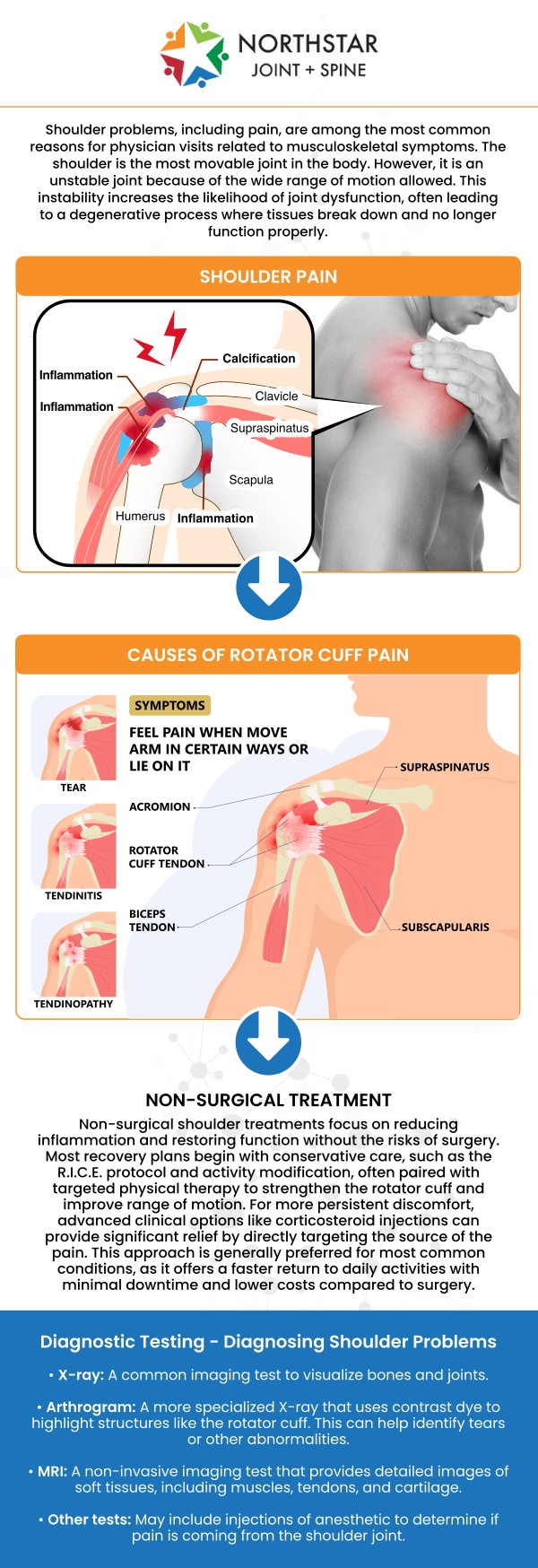
Table of Contents:
What is shoulder impingement?
What causes shoulder impingement syndrome?
What are the common symptoms of shoulder impingement?
How is shoulder impingement diagnosed?
Does Shoulder Impingement Make Everyday Movements Painful? Dr. Robert J. Nocerini, MD Can Help
Shoulder impingement is a condition that develops when the soft tissues within the shoulder—such as tendons and the bursa—become compressed during arm movement. This compression typically occurs in the narrow space beneath the acromion, a bony structure at the top of the shoulder. As the arm is raised or rotated, these tissues may become irritated, leading to discomfort and reduced shoulder efficiency. Over time, repeated narrowing of this space can interfere with smooth joint mechanics and everyday arm function.
The shoulder is one of the most mobile joints in the body, which makes it particularly dependent on coordinated movement between bones, muscles, and connective tissues. When this balance is disrupted, shoulder impingement may gradually develop. Many individuals first notice symptoms during activities that involve lifting, reaching overhead, or repetitive arm motion. Even simple daily tasks such as dressing, grooming, or reaching for items on a shelf can become challenging.
Unlike sudden-onset shoulder conditions, impingement often develops progressively. Early symptoms may be mild and intermittent, making the condition easy to overlook. Without proper evaluation, ongoing irritation within the shoulder space can lead to increasing discomfort and functional limitations. This is why early assessment plays an important role in maintaining shoulder mobility and comfort.
At Northstar Joint and Spine in Plano, TX, shoulder impingement is evaluated with a focus on understanding how joint structure, posture, and movement patterns contribute to symptoms. Board-Certified Pain Specialist Dr. Robert J. Nocerini, MD, emphasizes precise assessment to help determine whether shoulder impingement is the primary source of discomfort or part of a broader shoulder condition. Identifying the issue early allows care to focus on restoring motion, reducing stress on affected tissues, and supporting long-term shoulder function.
Shoulder impingement syndrome develops when structural or functional changes reduce the available space within the shoulder joint. One common contributing factor is age-related joint changes, where natural wear affects bone alignment or soft tissue flexibility. As these changes occur, tendons and surrounding structures may have less room to move freely during arm motion.
Posture also plays a significant role in shoulder impingement. Rounded shoulders or prolonged forward head positioning can alter shoulder mechanics, increasing pressure within the joint. Repetitive arm movements—especially those involving overhead motion—may further strain the shoulder over time. Certain occupations, athletic routines, or daily habits can gradually contribute to these movement patterns without obvious early warning signs.
Muscle imbalance is another important contributor. When some shoulder or upper back muscles become tight while others weaken, the shoulder joint may lose its natural alignment. This imbalance can affect how the arm moves within the joint space, increasing the likelihood of tissue irritation. Limited flexibility in the chest or upper back can further restrict shoulder movement, compounding the problem.
Bone shape variations, such as differences in the contour of the acromion, may also influence how much space is available for shoulder tissues. While these variations are common, they may increase the risk of impingement when combined with repetitive motion or postural strain.
At Northstar Joint and Spine, the focus is on identifying the specific factors contributing to shoulder impingement in each patient. Dr. Robert J. Nocerini, MD evaluates movement patterns, joint alignment, and functional limitations to determine why symptoms are occurring. This personalized approach allows care to address underlying causes rather than simply managing discomfort, helping patients maintain shoulder mobility and daily function.
Shoulder impingement symptoms often begin gradually and may vary in intensity depending on activity level and shoulder use. One of the most common signs is discomfort when lifting the arm, especially during overhead or reaching movements. Many individuals notice increased symptoms when extending the arm away from the body or reaching behind the back.
Stiffness and reduced range of motion are also frequently reported. The shoulder may feel tight or restricted, making routine movements less fluid. Some individuals experience aching sensations that extend into the upper arm, particularly after prolonged use of the shoulder. Symptoms may become more noticeable during the evening or after repetitive daily activities.
Another common symptom is weakness in the shoulder, which can make lifting or carrying objects more difficult. This weakness may not always be constant but can appear during specific movements. Some individuals report difficulty maintaining arm position for extended periods, such as holding objects at shoulder height.
Sleep disruption is also common, particularly when lying on the affected side. Discomfort may increase during certain sleeping positions, leading to frequent repositioning or interrupted rest. Over time, these symptoms can affect overall comfort, productivity, and quality of life.
At Northstar Joint and Spine in Plano, TX, symptom patterns are carefully reviewed to determine whether shoulder impingement is the primary concern or part of a more complex shoulder condition. Dr. Robert J. Nocerini, MD takes a detailed approach to understanding how symptoms present during daily activities, allowing care to focus on improving shoulder comfort, strength, and mobility through targeted, individualized strategies.
Diagnosing shoulder impingement begins with a detailed clinical evaluation focused on movement, function, and symptom history. A thorough discussion of when discomfort occurs, which movements are limited, and how symptoms affect daily activities provides valuable insight into shoulder mechanics. This conversation helps narrow down whether symptoms align with impingement patterns.
A physical examination plays a key role in diagnosis. During the exam, the shoulder range of motion, strength, and flexibility are assessed through controlled movements. Specific positioning of the arm may help reproduce symptoms, offering additional clues about which structures are involved. Posture and upper back alignment are also evaluated, as these factors influence shoulder motion.
Imaging studies may be used when further clarification is needed. These tools help visualize joint structure and identify changes that could be contributing to reduced joint space or tissue irritation. Imaging supports accurate diagnosis while helping rule out other shoulder conditions with overlapping symptoms.
At Northstar Joint and Spine, diagnosis is approached with precision and care. Board-Certified Pain Specialist Dr. Robert J. Nocerini, MD combines clinical findings with imaging when appropriate to develop a clear understanding of each patient’s condition. This detailed diagnostic process allows care to be tailored to the individual, supporting informed decisions and effective management strategies focused on restoring comfortable shoulder movement.
Shoulder impingement can significantly affect everyday movements, especially those involving lifting, reaching, or sustained arm use. Tasks that once felt effortless—such as dressing, reaching overhead, or carrying items—may gradually become uncomfortable. Over time, these limitations can interfere with work responsibilities, recreational activities, and overall independence.
The impact on daily life varies from person to person, but persistent shoulder discomfort often leads individuals to adjust how they move, which may place additional strain on other joints or muscles. Addressing symptoms early helps reduce the likelihood of ongoing limitations and supports long-term shoulder function.
At Northstar Joint and Spine in Plano, TX, Dr. Robert J. Nocerini, MD provides board-certified expertise in evaluating and managing shoulder impingement. His approach focuses on understanding how symptoms affect real-life movement and developing personalized care strategies aimed at improving comfort, mobility, and function. Through careful assessment and targeted planning, patients receive support designed to help them move with greater ease and confidence in daily life. For more information, contact us today or schedule an appointment online. We are conveniently located at 7704 San Jacinto Pl Suite 200 Plano, TX 75024. We serve patients from Plano TX, Willow Bend TX, Frisco TX, Allen TX, Addison TX, North Dallas TX, and surrounding areas

Check Out Our 5 Star Reviews


Additional Services You May Need
▸ Lower Back Pain
▸ Back Pain
▸ Shoulder Pain
▸ Chronic Pain
▸ Epidural Steroid Injections
▸ Spinal Cord Stimulation
▸ Viscosupplementation
▸ Genicular Nerve Blocks
▸ Facet Injections
▸ Joint Injections
▸ Sacroiliac Joint Injections
▸ Lumbar and Cervical
▸ Facet Medial Branch Blocks
▸ Diagnostic Nerve Blocks
▸ Medication Management
▸ Neck Pain Doctor
▸ Diabetic Peripheral Neuropathy
▸ Headaches
▸ Suboxone
▸ Peripheral Nerve Stimulation
▸ Wrist Pain
▸ Spine
▸ Joints
▸ Muscles
▸ Bones

Additional Services You May Need
▸ Lower Back Pain
▸ Back Pain
▸ Shoulder Pain
▸ Chronic Pain
▸ Epidural Steroid Injections
▸ Spinal Cord Stimulation
▸ Viscosupplementation
▸ Genicular Nerve Blocks
▸ Facet Injections
▸ Joint Injections
▸ Sacroiliac Joint Injections
▸ Lumbar and Cervical
▸ Facet Medial Branch Blocks
▸ Diagnostic Nerve Blocks
▸ Medication Management
▸ Neck Pain Doctor
▸ Diabetic Peripheral Neuropathy
▸ Headaches
▸ Suboxone
▸ Peripheral Nerve Stimulation
▸ Wrist Pain
▸ Spine
▸ Joints
▸ Muscles
▸ Bones





 Send Text
 How May I Help You?
