

When Should You See a Doctor for Frozen Shoulder in Plano, TX?
Frozen shoulder, also known as adhesive capsulitis, causes pain, stiffness, and limited movement in the shoulder joint. The condition typically develops gradually and can take one to three years to resolve on its own. It often affects individuals over the age of 40, particularly women, and can make everyday tasks like reaching overhead or lifting objects difficult. Board-certified Dr. Robert J. Nocerini, MD, at Northstar Joint and Spine offers effective treatment options to help improve mobility and alleviate symptoms. For more information, contact us today or schedule an appointment online. We are conveniently located at 7704 San Jacinto Pl Suite 200 Plano, TX 75024.
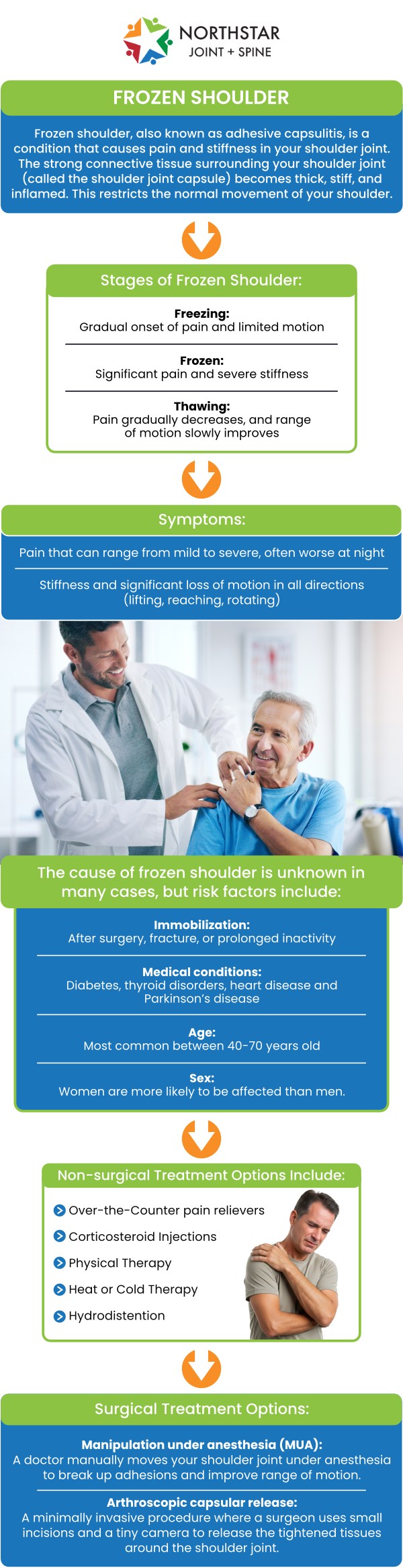
Table of Contents:
What is frozen shoulder?
What are the causes of frozen shoulder?
How is frozen shoulder diagnosed?
What are the signs and symptoms of frozen shoulder?
What are the treatment options for frozen shoulder?
Get Back to Movement: Frozen Shoulder Solutions with Dr. Robert J. Nocerini, MD at Northstar Joint and Spine
Frozen shoulder, also known as adhesive capsulitis, is a condition characterized by pain, stiffness, and restricted movement in the shoulder joint. Symptoms develop gradually and worsen over time, often leading to significant limitations in shoulder mobility. The stiffness caused by frozen shoulder can make it challenging to perform everyday tasks like reaching overhead, lifting, or even combing hair. While the condition often resolves on its own within one to three years, the symptoms can severely impact daily life during this period.
Frozen shoulder most commonly affects individuals over the age of 40, with women being more frequently impacted than men. Although the exact cause of frozen shoulder is not entirely understood, it is often associated with other health conditions, such as diabetes and thyroid disorders. The condition can also occur after prolonged periods of shoulder immobility following surgery or an arm fracture, though it can develop without any identifiable trigger, making it a challenging condition to predict.
Frozen shoulder occurs when the connective tissue capsule surrounding the shoulder joint becomes thickened and tight, restricting the normal range of motion and causing pain. The exact cause of this thickening process is not well understood, but there are several contributing factors. Diabetes is a major risk factor, as individuals with diabetes often experience thicker, more fibrous tissue in the joint capsule, which can lead to tightening and inflammation.
Another common cause of frozen shoulder is prolonged immobilization of the shoulder. When the shoulder is kept still for an extended period—such as during recovery from surgery or a prolonged period of limited movement following an arm fracture—the tissues surrounding the joint can become stiff and inflamed, which may ultimately lead to the development of frozen shoulder.
Other contributing factors include thyroid disorders and systemic inflammatory conditions, which can increase the likelihood of developing frozen shoulder. Additionally, individuals over the age of 40, particularly women, are more likely to develop this condition. Despite these known risk factors, frozen shoulder can sometimes occur without any obvious cause, making it unpredictable and challenging to manage.
Diagnosing frozen shoulder begins with a comprehensive physical examination. Dr. Nocerini will discuss your medical history, focusing on when the pain started, what movements trigger discomfort, and whether you have any conditions that may contribute to the stiffness. During the physical exam, Dr. Nocerini will assess both your active range of motion (movements you perform) and passive range of motion (movements performed by the doctor) to evaluate the level of restriction and stiffness.
In some cases, imaging studies such as X-rays or MRI may be used to confirm the diagnosis and rule out other potential causes of shoulder pain. X-rays can show joint space narrowing or signs of other joint abnormalities, while an MRI provides detailed images of the soft tissues, such as cartilage and tendons, which may help identify inflammation or damage to the joint capsule.
Frozen shoulder develops in three distinct stages, each with its own set of symptoms:
• Freezing Stage:
Pain begins gradually and worsens with movement. As the shoulder becomes stiffer, the range of motion decreases, making movement increasingly difficult. The pain may worsen at night and disrupt sleep.
• Frozen Stage:
Pain starts to lessen, but the stiffness remains. The shoulder becomes very rigid, and mobility is significantly restricted, which can make it difficult to perform basic tasks such as dressing or lifting objects.
• Thawing Stage:
Gradual improvement occurs, with the shoulder gaining mobility and discomfort reducing. Full recovery can take several months to years, with many people experiencing a return of shoulder function over time.
These stages can take a significant amount of time, but with appropriate treatment, many individuals experience substantial recovery and symptom relief.
Treatment for frozen shoulder aims to alleviate pain, reduce inflammation, and restore shoulder movement. Non-invasive treatment options include:
• Pain-relieving medications to reduce discomfort and inflammation.
• Ice or heat therapy to ease swelling and pain.
• Physical therapy exercises to improve range of motion and restore flexibility.
• Corticosteroid injections to reduce inflammation in the joint capsule.
• Joint capsule stretching injections to help loosen tight tissues around the shoulder.
Most patients experience significant improvement with these non-surgical treatments. If the condition does not improve with conservative care, Dr. Nocerini may explore alternative methods to help improve mobility and alleviate symptoms.
If you’re experiencing shoulder pain and stiffness due to frozen shoulder, Dr. Robert J. Nocerini, MD, at Northstar Joint and Spine in Plano, TX, offers expert care to help you regain your range of motion and improve your quality of life. With years of experience in treating adhesive capsulitis, Dr. Nocerini utilizes advanced, non-surgical treatments tailored to address your specific symptoms. Whether it’s physical therapy, pain management strategies, or targeted injections, Dr. Nocerini provides compassionate, individualized care to help you get back to the activities you love without the pain and discomfort associated with frozen shoulder.
At Northstar Joint and Spine, located conveniently in Plano, TX, we specialize in personalized, effective frozen shoulder treatments designed to restore mobility and relieve pain. Dr. Nocerini works closely with each patient to develop a comprehensive treatment plan that aligns with their goals, helping them avoid long-term stiffness and improving overall shoulder function. For more information, contact us today or schedule an appointment online. We are conveniently located at 7704 San Jacinto Pl Suite 200 Plano, TX 75024. We proudly serve patients from Plano TX, Frisco TX, Allen TX, McKinney TX, Richardson TX, Carrollton TX, Addison TX, The Colony TX, North Dallas TX, and surrounding communities throughout Collin County and the Dallas-Fort Worth area.

Check Out Our 5 Star Reviews


Additional Services You May Need
▸ Lower Back Pain
▸ Back Pain
▸ Shoulder Pain
▸ Chronic Pain
▸ Epidural Steroid Injections
▸ Spinal Cord Stimulation
▸ Viscosupplementation
▸ Genicular Nerve Blocks
▸ Facet Injections
▸ Joint Injections
▸ Sacroiliac Joint Injections
▸ Lumbar and Cervical
▸ Facet Medial Branch Blocks
▸ Diagnostic Nerve Blocks
▸ Medication Management
▸ Neck Pain Doctor
▸ Diabetic Peripheral Neuropathy
▸ Headaches
▸ Suboxone
▸ Peripheral Nerve Stimulation
▸ Wrist Pain
▸ Spine
▸ Joints
▸ Muscles
▸ Bones

Additional Services You May Need
▸ Lower Back Pain
▸ Back Pain
▸ Shoulder Pain
▸ Chronic Pain
▸ Epidural Steroid Injections
▸ Spinal Cord Stimulation
▸ Viscosupplementation
▸ Genicular Nerve Blocks
▸ Facet Injections
▸ Joint Injections
▸ Sacroiliac Joint Injections
▸ Lumbar and Cervical
▸ Facet Medial Branch Blocks
▸ Diagnostic Nerve Blocks
▸ Medication Management
▸ Neck Pain Doctor
▸ Diabetic Peripheral Neuropathy
▸ Headaches
▸ Suboxone
▸ Peripheral Nerve Stimulation
▸ Wrist Pain
▸ Spine
▸ Joints
▸ Muscles
▸ Bones





 Send Text
 How May I Help You?
