

What Causes Sacroiliitis?
Sacroiliitis occurs when the sacroiliac joints, which connect the lower spine to the pelvis, become inflamed due to factors such as repetitive stress, structural differences, or underlying inflammatory conditions. Degenerative changes in the joints and hormonal changes during pregnancy can also contribute to discomfort and irritation. At Northstar Joint and Spine, Board-Certified Dr. Robert Nocerini carefully evaluates each patient to identify the root cause and develop a personalized management plan aimed at reducing inflammation, improving mobility, and supporting long-term joint health. For more information, contact us today or schedule an appointment online. We are conveniently located at 7704 San Jacinto Pl Suite 200 Plano, TX 75024.
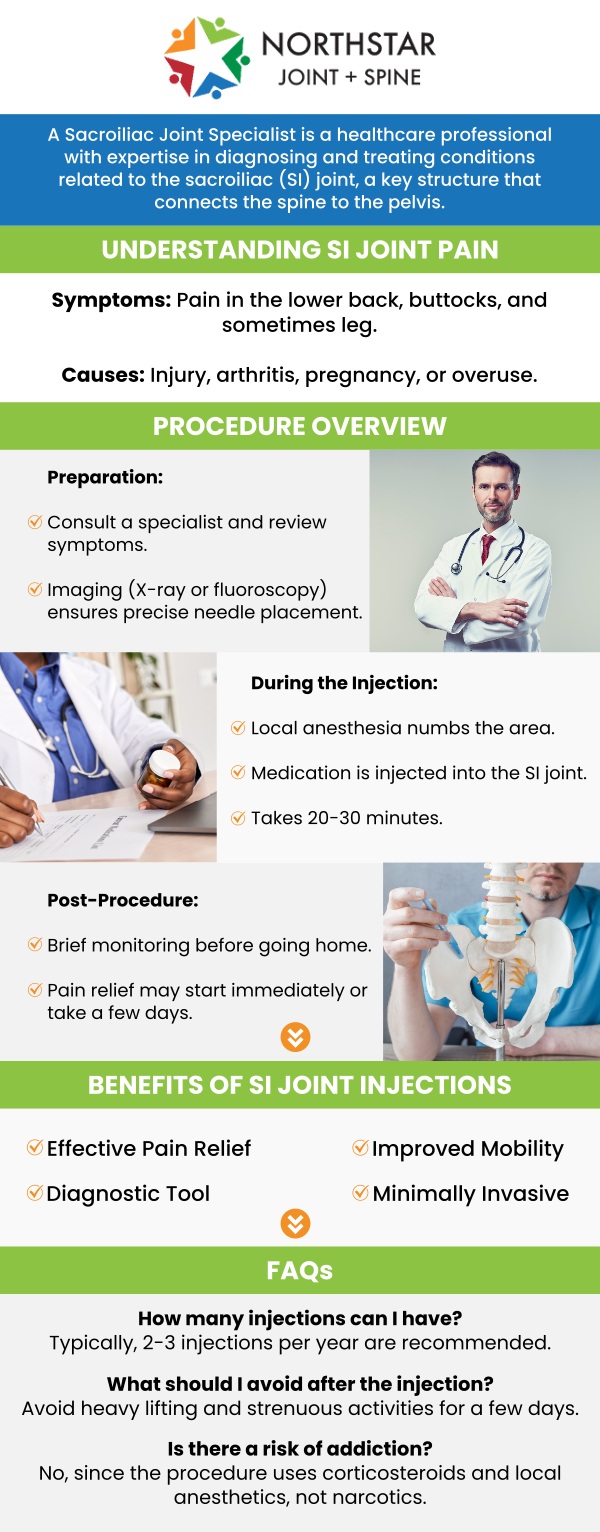
Table of Contents:
What are the causes of sacroiliitis?
What are the complications of sacroiliitis?
How is sacroiliitis diagnosed?
Is sacroiliitis permanent?
Is sacroiliitis the same as sacroiliac joint pain?
Understanding Sacroiliitis Causes With Board-Certified Dr. Robert Nocerini at Northstar Joint and Spine in Plano, TX
Sacroiliitis is a condition characterized by inflammation of one or both sacroiliac (SI) joints, which connect the lower spine to the pelvis. These joints play a critical role in providing stability and absorbing the forces generated during movement. When the SI joints become inflamed, it can lead to significant discomfort, stiffness, and reduced mobility. Understanding sacroiliitis, its causes, symptoms, and management strategies is essential for maintaining overall joint health and quality of life.
Sacroiliitis can develop due to a variety of factors that place stress on the SI joints or lead to inflammation. One common cause is repetitive strain from activities that involve frequent bending, lifting, or prolonged standing. Over time, these motions can irritate the SI joints and surrounding ligaments, leading to localized inflammation. Individuals with physically demanding lifestyles or those who engage in repetitive movements are particularly susceptible.
Inflammatory conditions also contribute to sacroiliitis. Autoimmune disorders, such as ankylosing spondylitis or psoriatic arthritis, can trigger systemic inflammation that affects the SI joints. In some cases, infections may impact the joints, though this is less common. Structural differences in the pelvis, including leg length discrepancies or joint misalignment, can further increase stress on the SI joints, making them more prone to inflammation. Additionally, degenerative changes, such as age-related wear or osteoarthritis, may affect cartilage and connective tissues, contributing to stiffness and discomfort. Pregnancy can also temporarily increase the risk of sacroiliitis due to hormonal changes that loosen ligaments, increasing joint mobility.
If left unmanaged, sacroiliitis can lead to complications that affect daily life. Chronic inflammation can result in persistent pain in the lower back, hips, or buttocks, which may radiate to the legs. This discomfort can interfere with activities such as walking, standing, or climbing stairs, limiting functional independence. Over time, stiffness and decreased flexibility in the lower back and pelvis may develop, making simple movements more challenging.
Muscle weakness around the pelvis can also occur as the body compensates for pain and stiffness. These changes can alter posture and gait, potentially affecting adjacent joints, including the spine, hips, and knees. Poor sleep quality is another indirect complication, as discomfort and stiffness can disrupt rest, leading to fatigue and reduced overall well-being.
Diagnosing sacroiliitis involves a combination of medical history, physical examination, and imaging studies. Healthcare providers begin by assessing symptoms such as lower back pain, stiffness, or discomfort that radiates to the hips or legs. They inquire about activity levels, patterns of pain, and any history of inflammatory conditions to determine possible causes.
During a physical examination, clinicians evaluate tenderness over the SI joints, range of motion, muscle strength, and posture. Specific maneuvers may be performed to reproduce symptoms, helping distinguish sacroiliac pain from other sources such as hip or lumbar spine issues. Imaging studies, including X-rays, magnetic resonance imaging (MRI), or computed tomography (CT) scans, provide detailed views of joint structure, inflammation, and surrounding soft tissues. Laboratory tests may also be ordered to assess inflammatory markers or underlying autoimmune conditions. Accurate diagnosis allows for a personalized approach to symptom management, ensuring better outcomes.
The permanence of sacroiliitis depends on the underlying cause and the timing of treatment. In cases caused by temporary inflammation or mechanical stress, early intervention can alleviate symptoms and restore normal joint function. Lifestyle modifications, physical therapy, and postural adjustments often help reduce inflammation and improve mobility.
When sacroiliitis is linked to chronic degenerative changes or autoimmune conditions, structural alterations may be long-lasting. While full reversal may not be possible, proactive management can control symptoms, preserve mobility, and prevent further joint deterioration. Early recognition and consistent care are critical for reducing the long-term impact on daily life.
Sacroiliitis and sacroiliac joint pain are related but not identical. Sacroiliitis specifically refers to inflammation within the SI joint, whereas sacroiliac joint pain can occur without active inflammation and may result from mechanical stress or degenerative changes. Both conditions share similar symptoms, including lower back or hip pain, stiffness, and difficulty with prolonged standing or bending. Differentiating between inflammation and general joint pain is important for tailoring treatment strategies.
Early symptoms of sacroiliitis often include discomfort in the lower back, buttocks, or hips. Pain may increase with prolonged standing, climbing stairs, or transitioning from sitting to standing. Some individuals notice stiffness, reduced range of motion, or mild instability when walking. Inflammatory sacroiliitis can lead to persistent aching that worsens after periods of inactivity. Identifying symptoms early allows for timely intervention, helping to prevent progression and maintain joint function.
While sacroiliitis may not always be fully reversible, early treatment focuses on reducing inflammation, improving mobility, and minimizing discomfort. Lifestyle adjustments, including regular low-impact exercise, postural guidance, and strengthening exercises for the core and pelvic muscles, play a central role in management. Physical therapy can improve flexibility, balance, and coordination, supporting daily activity and preventing further joint stress.
Activity modification and ergonomic adjustments in daily life also help reduce joint strain. Heat or cold therapy may provide symptom relief, while patient education empowers individuals to recognize early signs of flare-ups. Regular monitoring and follow-up assessments ensure that treatment strategies are adjusted to the patient’s evolving needs, optimizing comfort and function over time.
By addressing sacroiliitis proactively, individuals can maintain independence, reduce discomfort, and support long-term joint health. Understanding the causes, recognizing early symptoms, and seeking timely evaluation are key to effective management. With appropriate care, most patients can experience meaningful improvements in mobility, stability, and overall quality of life, even in chronic or inflammatory cases.
Sacroiliitis is an inflammation of one or both sacroiliac (SI) joints, which connect the lower spine to the pelvis. This condition can develop due to a variety of factors, including repetitive stress from daily activities, structural differences in the pelvis, or underlying inflammatory conditions. At Northstar Joint and Spine in Plano, TX, Board-Certified Dr. Robert Nocerini evaluates each patient to identify the root cause of sacroiliitis, ensuring a personalized approach to diagnosis and management. Early recognition of the underlying cause is essential to reduce inflammation, maintain mobility, and prevent chronic discomfort.
Patients with sacroiliitis may experience lower back, hip, or buttock pain, often exacerbated by prolonged standing, walking, or twisting motions. Dr. Nocerini emphasizes a comprehensive evaluation that includes a review of symptoms, physical assessment, and targeted imaging when necessary. By understanding the causes of sacroiliitis, patients at Northstar Joint and Spine can receive tailored treatment plans that focus on restoring joint function, improving stability, and supporting long-term joint health. Early intervention helps minimize discomfort and enhances quality of life while preserving daily activity levels. For more information, contact us today or schedule an appointment online. We are conveniently located at 7704 San Jacinto Pl Suite 200 Plano, TX 75024. We proudly serve patients from Plano TX, Frisco TX, Allen TX, McKinney TX, Richardson TX, Carrollton TX, Addison TX, The Colony TX, North Dallas TX, and surrounding communities throughout Collin County and the Dallas-Fort Worth area.

Check Out Our 5 Star Reviews


Additional Services You May Need
▸ Lower Back Pain
▸ Back Pain
▸ Shoulder Pain
▸ Chronic Pain
▸ Epidural Steroid Injections
▸ Spinal Cord Stimulation
▸ Viscosupplementation
▸ Genicular Nerve Blocks
▸ Facet Injections
▸ Joint Injections
▸ Sacroiliac Joint Injections
▸ Lumbar and Cervical
▸ Facet Medial Branch Blocks
▸ Diagnostic Nerve Blocks
▸ Medication Management
▸ Neck Pain Doctor
▸ Diabetic Peripheral Neuropathy
▸ Headaches
▸ Suboxone
▸ Peripheral Nerve Stimulation
▸ Wrist Pain
▸ Spine
▸ Joints
▸ Muscles
▸ Bones

Additional Services You May Need
▸ Lower Back Pain
▸ Back Pain
▸ Shoulder Pain
▸ Chronic Pain
▸ Epidural Steroid Injections
▸ Spinal Cord Stimulation
▸ Viscosupplementation
▸ Genicular Nerve Blocks
▸ Facet Injections
▸ Joint Injections
▸ Sacroiliac Joint Injections
▸ Lumbar and Cervical
▸ Facet Medial Branch Blocks
▸ Diagnostic Nerve Blocks
▸ Medication Management
▸ Neck Pain Doctor
▸ Diabetic Peripheral Neuropathy
▸ Headaches
▸ Suboxone
▸ Peripheral Nerve Stimulation
▸ Wrist Pain
▸ Spine
▸ Joints
▸ Muscles
▸ Bones





 Send Text
 How May I Help You?
