

How Does Peripheral Nerve Stimulation (PNS) Work?
Peripheral nerve stimulation (PNS) works by delivering gentle electrical pulses to specific nerves, blocking pain signals from reaching the brain. This process helps to reduce pain and improve overall nerve function, particularly in individuals with chronic conditions like neuropathy. The device is implanted near the targeted nerve and can be adjusted to provide optimal pain relief. Dr. Robert J. Nocerini, MD, in Plano, TX, offers PNS treatment to help patients manage chronic pain effectively, improving their quality of life without the need for invasive surgery. For more information, contact us today or schedule an appointment online. We are conveniently located at 7704 San Jacinto Pl Suite 200 Plano, TX 75024.
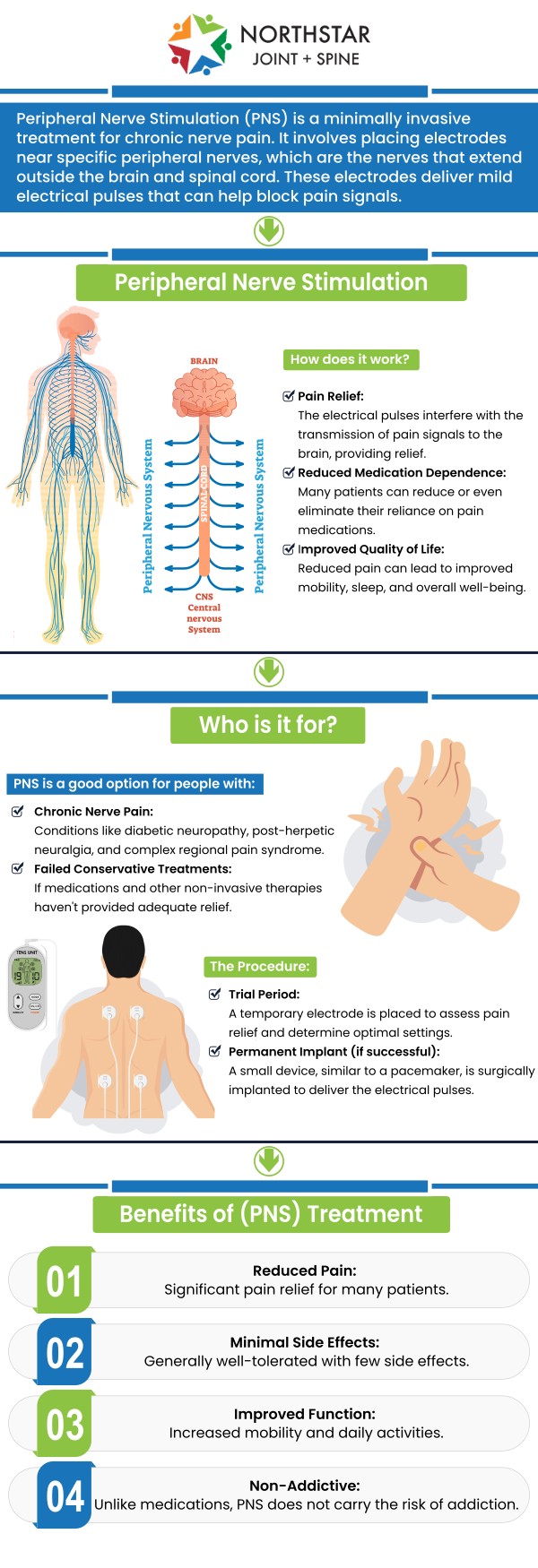
Table of Contents:
What is a peripheral nerve?
How long does it take for the PNS implant to start working?
How long does the PNS implant last?
Who qualifies for a PNS implant?
What are the common causes of neuropathic pain?
Understanding the Advantages of Peripheral Nerve Stimulation with Dr. Robert J. Nocerini, MD at Northstar Joint and Spine in Plano, TX
A peripheral nerve is part of the peripheral nervous system (PNS), which includes all the nerves outside the brain and spinal cord. These nerves transmit signals from the central nervous system (CNS) to various parts of the body, including muscles, organs, and skin. Peripheral nerves are essential for movement, sensation, and autonomic functions such as regulating heart rate and digestion. The PNS is responsible for transmitting sensory information, such as touch or pain, from the body to the brain and conveying motor commands from the brain to the muscles.
Damage to peripheral nerves can result in various symptoms, including numbness, weakness, and pain. Conditions such as neuropathy, caused by diabetes or inflammation, can affect the function of these nerves. Dr. Robert J. Nocerini, MD, at Northstar Joint and Spine in Plano, TX, specializes in treating conditions related to peripheral nerves, offering personalized solutions to manage symptoms and improve overall nerve function.
The time it takes for a peripheral nerve stimulation (PNS) implant to start working can vary from person to person. Some individuals may begin to feel relief from pain or discomfort within a few days to weeks after the implant is placed. The PNS device works by delivering electrical pulses to specific nerves, helping to block pain signals from reaching the brain. These pulses gradually reduce nerve sensitivity, leading to a reduction in pain and improvement in overall function.
While the initial relief can be noticeable fairly quickly, full benefits of the PNS implant may take a few weeks to be fully realized. The process is gradual, and it may require adjustments to the settings of the implant to achieve optimal results. Dr. Robert J. Nocerini, MD, in Plano, TX, provides ongoing monitoring and adjustments to ensure the PNS implant works effectively for each patient’s needs, improving quality of life and pain management.
A PNS implant typically lasts several years, with most devices functioning optimally for 3 to 5 years before requiring replacement or maintenance. However, the lifespan of the device can depend on factors such as the model of the implant, how well the device is maintained, and individual patient factors like overall health and activity levels. Regular check-ups and monitoring are essential to ensure that the PNS implant continues to work effectively and that any issues are addressed promptly.
If the implant’s battery begins to deplete or the device malfunctions, it can be replaced or adjusted during a minor procedure. Dr. Robert J. Nocerini, MD, in Plano, TX, offers continuous care and follow-up to ensure the PNS implant continues to provide effective pain management over the long term, helping patients maintain their desired level of comfort and function.
Not everyone is a candidate for a PNS implant. Typically, patients who suffer from chronic pain that is not well-controlled by traditional treatments, such as medications or physical therapy, may qualify for a PNS implant. Ideal candidates usually have neuropathic pain, which is pain caused by nerve damage, and have tried other pain management methods without significant relief. Common conditions treated with PNS implants include diabetic neuropathy, post-surgical pain, and certain types of chronic back or neck pain.
To qualify for a PNS implant, patients must undergo a thorough evaluation by a healthcare provider to determine if they are suitable candidates. Dr. Robert J. Nocerini, MD, in Plano, TX, offers detailed consultations to assess a patient’s medical history, pain levels, and overall health to determine if a PNS implant is the right choice. He ensures that patients fully understand the procedure, its benefits, and its potential risks before proceeding with treatment.
Neuropathic pain occurs when there is damage to the nerves themselves, leading to symptoms like burning, tingling, numbness, or sharp, shooting pain. Some of the most common causes of neuropathic pain include diabetes, which can damage peripheral nerves over time, and shingles, which affects nerve pathways. Other conditions that can cause nerve damage and lead to neuropathic pain include infections.
Damage to the nerves, such as from surgery or a medical condition like herniated discs, can also result in neuropathic pain. Poor circulation or certain medications, including chemotherapy drugs, can further damage nerves and cause pain. Dr. Robert J. Nocerini, MD, at Northstar Joint and Spine in Plano, TX, specializes in identifying the underlying causes of neuropathic pain and offers tailored treatments to help patients manage their symptoms and improve their quality of life.
Peripheral nerve stimulation (PNS) offers a non-invasive solution for patients suffering from chronic pain, particularly neuropathic pain. The PNS implant works by delivering mild electrical pulses to targeted nerves, which helps block pain signals before they reach the brain. This approach offers a significant advantage for patients who have not found relief with traditional pain management methods, such as medications or physical therapy.
Dr. Robert J. Nocerini, MD, at Northstar Joint and Spine in Plano, TX, is committed to providing patients with personalized care using PNS implants. His expertise in spinal health and pain management allows him to assess each patient’s condition thoroughly and offer the most effective treatment options. With the help of PNS, patients can experience long-lasting pain relief and improve their overall quality of life without the need for invasive procedures. For more information, contact us today or schedule an appointment online. We are conveniently located at 7704 San Jacinto Pl Suite 200 Plano, TX 75024. We proudly serve patients from Plano TX, Frisco TX, Allen TX, McKinney TX, Richardson TX, Carrollton TX, Addison TX, The Colony TX, North Dallas TX, and surrounding communities throughout Collin County and the Dallas-Fort Worth area.

Check Out Our 5 Star Reviews


Additional Services You May Need
▸ Lower Back Pain
▸ Back Pain
▸ Shoulder Pain
▸ Chronic Pain
▸ Epidural Steroid Injections
▸ Spinal Cord Stimulation
▸ Viscosupplementation
▸ Genicular Nerve Blocks
▸ Facet Injections
▸ Joint Injections
▸ Sacroiliac Joint Injections
▸ Lumbar and Cervical
▸ Facet Medial Branch Blocks
▸ Diagnostic Nerve Blocks
▸ Medication Management
▸ Neck Pain Doctor
▸ Diabetic Peripheral Neuropathy
▸ Headaches
▸ Suboxone
▸ Peripheral Nerve Stimulation
▸ Wrist Pain
▸ Spine
▸ Joints
▸ Muscles
▸ Bones

Additional Services You May Need
▸ Lower Back Pain
▸ Back Pain
▸ Shoulder Pain
▸ Chronic Pain
▸ Epidural Steroid Injections
▸ Spinal Cord Stimulation
▸ Viscosupplementation
▸ Genicular Nerve Blocks
▸ Facet Injections
▸ Joint Injections
▸ Sacroiliac Joint Injections
▸ Lumbar and Cervical
▸ Facet Medial Branch Blocks
▸ Diagnostic Nerve Blocks
▸ Medication Management
▸ Neck Pain Doctor
▸ Diabetic Peripheral Neuropathy
▸ Headaches
▸ Suboxone
▸ Peripheral Nerve Stimulation
▸ Wrist Pain
▸ Spine
▸ Joints
▸ Muscles
▸ Bones





 Send Text
 How May I Help You?
