

Elbow Tendonitis Treatment in Plano, TX
Elbow tendonitis causes pain, tenderness, and discomfort around the elbow, often resulting from repetitive arm and wrist movements. It can affect grip strength and make everyday activities such as lifting, carrying, or gripping objects difficult. At Northstar Joint and Spine in Plano, TX, Dr. Robert J. Nocerini, MD, provides personalized evaluations and pain management for persistent elbow discomfort. Treatment options may include medication management and joint injections when clinically appropriate. For more information, contact us today or schedule an appointment online. We are conveniently located at 7704 San Jacinto Pl Suite 200 Plano, TX 75024.
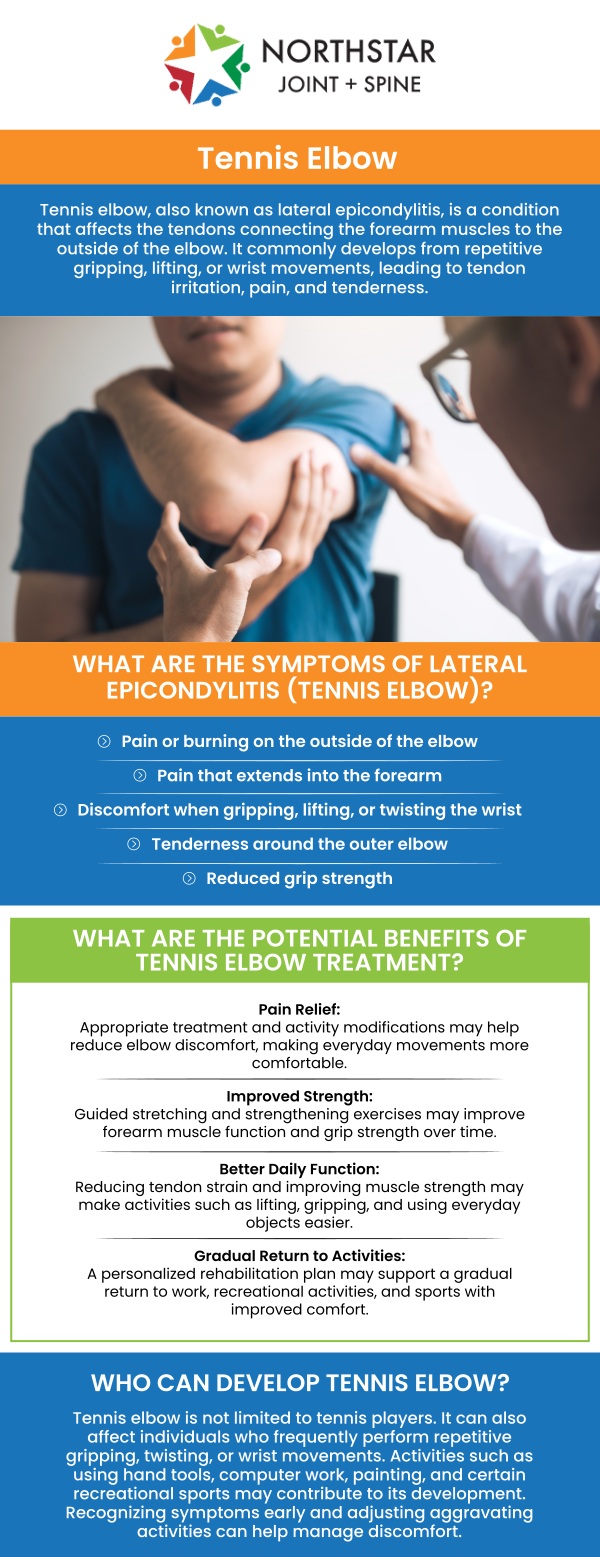


Table of Contents:
What Is Elbow Tendonitis?
Common Causes of Elbow Tendonitis
Symptoms of Elbow Tendonitis
Types of Elbow Tendonitis
How Elbow Tendonitis Is Diagnosed
Treatment and Pain Management Options
How Long Elbow Tendonitis Takes to Heal
Precautions and When to Seek Medical Care
Frequently Asked Questions
Personalized Care With Dr. Robert J. Nocerini
About Dr. Robert J. Nocerini
Medical References
Elbow tendonitis is a common condition that causes pain, tenderness, and difficulty moving the arm comfortably. It often develops from repetitive movements that place stress on the tendons connecting the forearm muscles to the elbow. Depending on the affected area, the condition may be called tennis elbow or golfer’s elbow. Persistent symptoms can interfere with everyday activities such as lifting, gripping, and carrying objects.
At Northstar Joint and Spine in Plano, TX, Dr. Robert J. Nocerini, MD, a board-certified pain management physician, provides personalized evaluations and care for elbow tendonitis. With more than 26 years of clinical experience, Dr. Nocerini focuses on identifying the source of discomfort and developing individualized pain management plans, which may include medication management and targeted joint injections when clinically appropriate.
Elbow tendonitis refers to irritation or inflammation affecting tendons around the elbow. Tendons are strong bands of tissue that connect muscles to bones and support movement. Repeated gripping, lifting, or wrist movements can place excessive stress on these tissues, causing discomfort around the inner or outer elbow.
Although commonly described as inflammation, persistent elbow tendon pain may also involve gradual changes in tendon structure, known as tendinopathy. According to the American Academy of Orthopaedic Surgeons (AAOS), repetitive movements can contribute to tendon degeneration and pain around the elbow.
Elbow Tendonitis at a Glance
Elbow tendonitis commonly develops from repetitive stress on the tendons surrounding the elbow. Tennis elbow affects the outer elbow, while golfer’s elbow affects the inner elbow. Both conditions may cause pain, tenderness, reduced grip strength, and difficulty performing everyday activities. Identifying the affected tendons helps guide appropriate care.
What Are the Common Causes of Elbow Tendonitis?
Elbow tendonitis frequently develops when repeated movements place more strain on the forearm tendons than they can comfortably tolerate.
Common contributing factors include:
• Repetitive hand and wrist movements: Frequent gripping, twisting, or extending the wrist may place additional stress on elbow tendons.
• Work-related activities: Jobs involving repeated lifting, tool use, or sustained gripping can contribute to discomfort.
• Sports and recreational activities: Tennis, golf, weightlifting, and other activities requiring repetitive arm movements may increase tendon stress.
• Changes in activity levels: A sudden increase in the frequency or intensity of repetitive movements can contribute to symptoms.
• Age-related tendon changes: Tendons may become less adaptable to repeated mechanical demands over time.
The AAOS explains that tennis elbow is associated with repetitive forearm movements and can affect individuals who do not participate in racquet sports.
What Are the Symptoms of Elbow Tendonitis?
Elbow tendonitis symptoms may develop gradually and become more noticeable during activities involving the hands, wrists, and forearms.
Common signs include:
• Pain or tenderness along the inner or outer elbow
• Discomfort when gripping or lifting objects
• Reduced grip strength
• Stiffness around the elbow
• Pain when twisting the wrist or forearm
• Discomfort extending toward the forearm
• Difficulty performing repetitive hand movements
Some individuals notice discomfort when opening jars, carrying groceries, shaking hands, or using household tools.
Persistent symptoms may indicate tendon-related discomfort or another condition affecting nearby joints or nerves.
What Are the Different Types of Elbow Tendonitis?
Elbow tendonitis commonly affects one of two tendon groups, depending on where discomfort develops.
Tennis Elbow (Lateral Epicondylitis)
Tennis elbow affects tendons on the outside of the elbow. It is associated with repeated wrist extension and gripping movements.
Individuals may experience tenderness along the outer elbow, reduced grip strength, and discomfort when lifting objects or straightening the wrist against resistance.
Tennis elbow can occur in athletes and individuals performing everyday work or household activities.
Golfer’s Elbow (Medial Epicondylitis)
Golfer’s elbow affects tendons on the inside of the elbow. It is associated with repetitive wrist flexion, gripping, and forearm movements.
Symptoms often include inner elbow tenderness, discomfort when making a fist, and pain that extends along the forearm.
According to the Mayo Clinic’s guide to golfer’s elbow, discomfort may worsen during gripping, lifting, or activities requiring repeated wrist movements.
How Is Elbow Tendonitis Diagnosed?
Diagnosing elbow tendonitis usually begins with a review of symptoms, medical history, and the movements that cause discomfort.
A physician may examine the elbow for tenderness, assess grip strength, evaluate wrist and arm movements, and determine whether specific activities reproduce pain.
When symptoms are persistent or the diagnosis is uncertain, additional testing may be considered. X-rays can help assess certain bone or joint conditions, while MRI or ultrasound imaging may provide information about tendons and nearby structures.
The Mayo Clinic’s guide to tennis elbow diagnosis explains that a medical examination is often sufficient for diagnosis, although additional testing may be necessary in selected cases.
At Northstar Joint and Spine, Dr. Robert J. Nocerini evaluates musculoskeletal pain conditions and considers examination findings, previous treatments, and daily functional limitations when recommending appropriate care.
What Treatment and Pain Management Options Are Available for Elbow Tendonitis?
Elbow tendonitis management depends on symptom duration, pain severity, and the underlying tendon condition.
Initial measures may include reducing activities that aggravate discomfort, applying cold packs for temporary relief, and considering an appropriate forearm brace. Medication may also be considered when suitable.
For persistent symptoms, Northstar Joint and Spine offers individualized pain management services, including medication management and joint injections.
Medication Management for Elbow Tendonitis
Medication management is one of the services available at Northstar Joint and Spine.
Depending on the patient’s symptoms and medical history, medications may help manage pain or associated inflammation. The choice of medication should account for existing health conditions, current prescriptions, and potential side effects.
Dr. Nocerini reviews each patient’s medical history and previous treatments before determining whether medication management is appropriate.
Joint Injections for Persistent Elbow Pain
Joint injections are another pain management service offered by Northstar Joint and Spine. Our practice’s joint injection services include evaluation of conditions such as tennis elbow and golfer’s elbow.
For selected patients, a targeted injection may be considered to help manage localized discomfort. The type of medication, injection location, and expected benefit depend on the diagnosis.
Corticosteroid injections may provide temporary pain relief in some cases, but their long-term benefit for elbow tendinopathy is uncertain. Repeated corticosteroid injections may also weaken tendon tissue. The AAOS advises caution regarding steroid injections for tennis elbow.
Dr. Nocerini considers potential benefits, limitations, and risks before recommending an injection. Not every patient with elbow tendonitis requires or is a suitable candidate for this procedure.
Elbow Pain Management at Northstar Joint and Spine
Common signs include:
• Pain or tenderness along the inner or outer elbow
• Discomfort when gripping or lifting objects
• Reduced grip strength
• Stiffness around the elbow
• Pain when twisting the wrist or forearm
• Discomfort extending toward the forearm
• Difficulty performing repetitive hand movements
How Long Does Elbow Tendonitis Take to Heal?
Recovery from elbow tendonitis varies depending on symptom severity, the duration of discomfort, and ongoing demands on the affected tendon.
Some individuals notice improvement within several weeks after reducing aggravating activities. Others may experience symptoms lasting several months, particularly when the tendon has been irritated for an extended period.
Recovery may take longer when repetitive movements continue to aggravate the affected area. Gradual adjustments to daily activities, appropriate pain management, and follow-up evaluations may help support progress.
At Northstar Joint and Spine, Dr. Nocerini considers how symptoms have changed over time and how they affect daily function when developing individualized care recommendations.
Precautions and When to Seek Medical Care
Persistent elbow pain should be evaluated when it interferes with sleep, gripping, lifting, work activities, or routine movements.
Patients should avoid repeatedly forcing movements that significantly worsen discomfort. Changes in symptoms, increasing weakness, or new tingling sensations may require further evaluation to determine whether nearby nerves are involved.
Seek prompt medical attention if elbow pain is accompanied by significant swelling, redness, warmth, or fever. An inability to move the elbow or rapidly worsening weakness also warrants urgent assessment.
Early identification of the underlying cause can help guide appropriate medical decisions.
When Should You Seek Medical Attention for Elbow Pain?
Persistent elbow pain, increasing weakness, or difficulty gripping and lifting objects may require medical evaluation. Seek prompt medical attention if discomfort is accompanied by significant swelling, redness, warmth, or fever. Identifying the underlying cause helps guide appropriate care and prevent prolonged discomfort.
Frequently Asked Questions
Can elbow tendonitis occur without playing tennis or golf?
Yes. Tennis elbow and golfer’s elbow are names for tendon conditions that can affect anyone. Repetitive lifting, gripping, household tasks, and certain work activities may place stress on the elbow tendons, even in individuals who do not participate in sports.
Why does elbow tendonitis cause pain when shaking hands?
Shaking hands activates muscles and tendons involved in gripping and wrist stabilization. When the affected elbow tendons are sensitive, this movement may reproduce discomfort. The location and intensity of pain can vary depending on the tendon involved.
Can elbow tendonitis cause numbness in the fingers?
Numbness is not a typical symptom of isolated elbow tendonitis. Tingling or numbness may indicate irritation or compression of a nearby nerve. A medical evaluation can help distinguish tendon-related discomfort from conditions affecting nerve function.
Are joint injections appropriate for every patient with elbow tendonitis?
No. Joint injections are considered according to the diagnosis, symptom severity, previous treatments, and overall medical history. They may provide temporary relief for selected individuals, but they are not necessary or recommended for everyone. Potential benefits and risks should be discussed before treatment.
Can elbow tendonitis return after symptoms improve?
Yes. Symptoms may return when repetitive activities continue placing excessive stress on the affected tendons. Adjusting activity demands, allowing adequate recovery time, and following individualized medical recommendations may help reduce recurring discomfort.
Personalized Elbow Tendonitis Care With Dr. Robert J. Nocerini, MD, in Plano, TX
Dr. Robert J. Nocerini, MD, is a board-certified physician specializing in pain management at Northstar Joint and Spine in Plano, TX. With more than 26 years of clinical experience, he evaluates persistent elbow discomfort, chronic joint pain, and other musculoskeletal conditions. His medical background in Pain Medicine, Anesthesiology, and Emergency Medicine supports his approach to evaluating complex pain conditions and identifying appropriate management options.
Dr. Nocerini develops individualized care plans based on each patient’s symptoms, medical history, and daily functional needs. His services include medication management and targeted joint injections when clinically appropriate. Patients experiencing ongoing elbow pain can request an appointment at Northstar Joint and Spine to discuss potential causes and available care options.
Location: 7704 San Jacinto Pl, Suite 200, Plano, TX 75024.
Northstar Joint and Spine serves patients in Plano, Frisco, Allen, McKinney, Richardson, Carrollton, Addison, The Colony, North Dallas, and surrounding communities.
About Dr. Robert J. Nocerini, MD
Board-Certified Pain Management Physician · Northstar Joint and Spine, Plano, TX
Board Certifications
• Pain Medicine — American Board of Anesthesiology
• Anesthesiology — American Board of Anesthesiology
• Emergency Medicine — American Board of Emergency Medicine
Education and Training
• Doctor of Medicine — Temple University School of Medicine, Philadelphia, PA (1996)
• Emergency Medicine Residency — Cooper University Hospital, Camden, NJ (1996–1999)
• Anesthesiology Residency — UT Southwestern Medical Center, Dallas, TX (2010–2013)
• Pain Medicine Fellowship — UT Southwestern Medical Center, Dallas, TX (2013–2014)
Professional Memberships
• Texas Medical Association
NPI
1164451761 — View in the Official CMS NPI Registry
Read Dr. Robert J. Nocerini’s Full Biography
Medical References

Check Out Our 5 Star Reviews


Additional Services You May Need
▸ Lower Back Pain
▸ Back Pain
▸ Shoulder Pain
▸ Chronic Pain
▸ Epidural Steroid Injections
▸ Spinal Cord Stimulation
▸ Viscosupplementation
▸ Genicular Nerve Blocks
▸ Facet Injections
▸ Joint Injections
▸ Sacroiliac Joint Injections
▸ Lumbar and Cervical
▸ Facet Medial Branch Blocks
▸ Diagnostic Nerve Blocks
▸ Medication Management
▸ Neck Pain Doctor
▸ Diabetic Peripheral Neuropathy
▸ Headaches
▸ Suboxone
▸ Peripheral Nerve Stimulation
▸ Wrist Pain
▸ Spine
▸ Joints
▸ Muscles
▸ Bones

Additional Services You May Need
▸ Lower Back Pain
▸ Back Pain
▸ Shoulder Pain
▸ Chronic Pain
▸ Epidural Steroid Injections
▸ Spinal Cord Stimulation
▸ Viscosupplementation
▸ Genicular Nerve Blocks
▸ Facet Injections
▸ Joint Injections
▸ Sacroiliac Joint Injections
▸ Lumbar and Cervical
▸ Facet Medial Branch Blocks
▸ Diagnostic Nerve Blocks
▸ Medication Management
▸ Neck Pain Doctor
▸ Diabetic Peripheral Neuropathy
▸ Headaches
▸ Suboxone
▸ Peripheral Nerve Stimulation
▸ Wrist Pain
▸ Spine
▸ Joints
▸ Muscles
▸ Bones





 Send Text
 How May I Help You?

